
Understanding the nuances of overtime pay in California is crucial for both employees and employers, impacting everything from individual earnings to business operational costs. The Golden State boasts some of the most robust worker protections in the nation, and its overtime regulations are a cornerstone of these protections. This guide delves into the specifics of what constitutes overtime in California, the different thresholds, exceptions, and related considerations, ensuring clarity for all parties involved.
California’s Daily and Weekly Overtime Standards
California law establishes two primary benchmarks for overtime pay: daily and weekly. This dual system provides a more comprehensive safety net for workers, ensuring they are compensated for extended hours regardless of how those hours are accumulated.
Daily Overtime
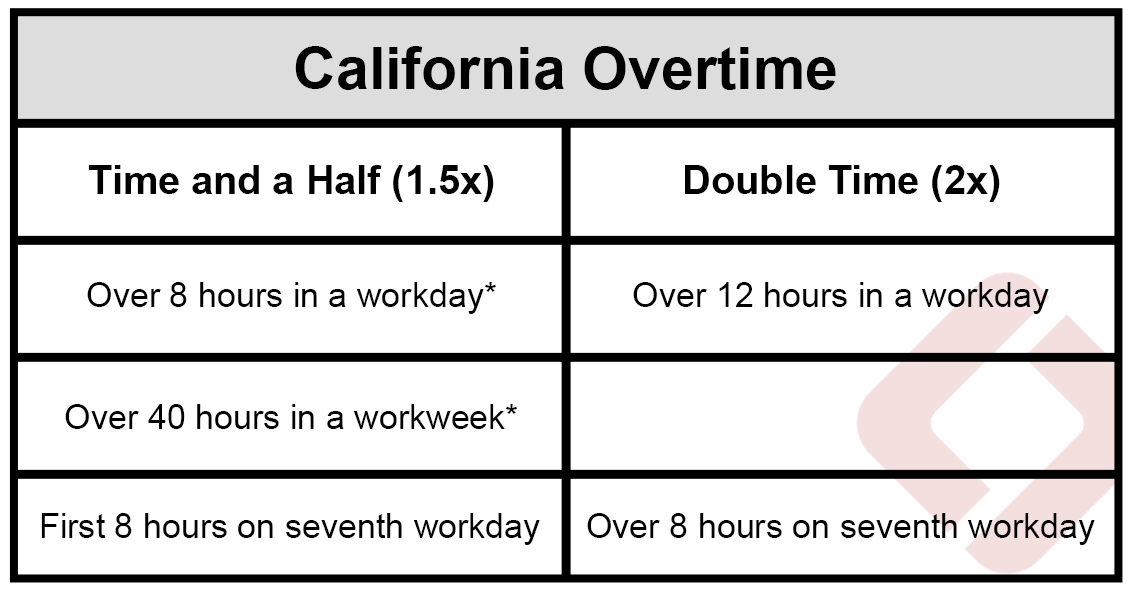
In California, non-exempt employees are entitled to overtime pay for any hours worked over eight (8) hours in a single workday. A workday is defined as any consecutive 24-hour period beginning at the same time each calendar day. This means that even if an employee’s total hours for the week are within the standard 40, they can still accrue daily overtime if they work more than 8 hours on any given day. The overtime rate for daily overtime is 1.5 times the employee’s regular rate of pay.
Weekly Overtime
In addition to daily overtime, California also mandates weekly overtime. Employees are entitled to overtime pay for any hours worked over forty (40) hours in a single workweek. A workweek is defined as any consecutive seven (7) day period, starting on the same calendar day each week. Similar to daily overtime, the overtime rate for weekly overtime is 1.5 times the regular rate of pay.
Double Time: The Higher Threshold
California law further distinguishes a higher tier of overtime known as “double time.” This premium rate is designed to discourage employers from requiring employees to work excessively long hours.
Double Time Eligibility
Employees are entitled to double time, which is twice (2x) their regular rate of pay, under the following circumstances:
- Over 12 hours in a workday: Any hours worked over twelve (12) hours in a single workday are compensated at the double-time rate. This applies irrespective of whether the employee has already earned daily or weekly overtime.
- Over 8 hours on the seventh consecutive day: For non-exempt employees working more than eight (8) hours on any seventh consecutive day of work in a workweek, the hours worked are paid at the double-time rate. This “seventh consecutive day” rule applies even if the total hours for that specific workweek are less than 40. The concept here is to discourage the continuous cycle of work without adequate rest days.
It’s important to note that double time is an additional premium. For example, if an employee works 13 hours in a day, the first 8 hours are regular pay, hours 9 through 12 are paid at 1.5 times their rate, and the 13th hour is paid at 2 times their rate.
Calculating the Regular Rate of Pay
Accurately calculating the “regular rate of pay” is fundamental to determining overtime and double-time wages. This rate is not always simply the stated hourly wage. California law requires that the regular rate of pay include all remuneration for employment paid to an employee, with a few specific exceptions.
Inclusions in the Regular Rate
The regular rate of pay typically includes:
- Hourly wages
- Salaries (for non-exempt employees)
- Commissions
- Bonuses (unless specifically excluded by law or agreement)
- Piece rates
- Discretionary bonuses (though rules around these can be complex)
Exclusions from the Regular Rate
Certain payments are generally excluded from the regular rate of pay calculation, including:
- Discretionary bonuses that are not paid as a factor of hours worked, production, or efficiency.
- Gifts from the employer that are not in any way contingent upon hours worked, production, or efficiency.
- Payments for periods when no work is performed, such as vacation pay or holiday pay, unless the agreement or plan provides for them to be included.
- Payments made under a retirement, pension, or profit-sharing plan.
The California Division of Labor Standards Enforcement (DLSE) provides detailed guidance on these calculations, and employers must be diligent to ensure compliance.
Exemptions to Overtime Rules
While California’s overtime laws are comprehensive, certain categories of employees are exempt from these provisions. It is crucial to correctly classify employees to ensure compliance.

Executive, Administrative, and Professional Exemptions
The most common exemptions apply to employees who meet strict criteria for executive, administrative, and professional roles. To qualify for these exemptions, an employee must generally satisfy both a salary basis test and a duties test.
Salary Basis Test
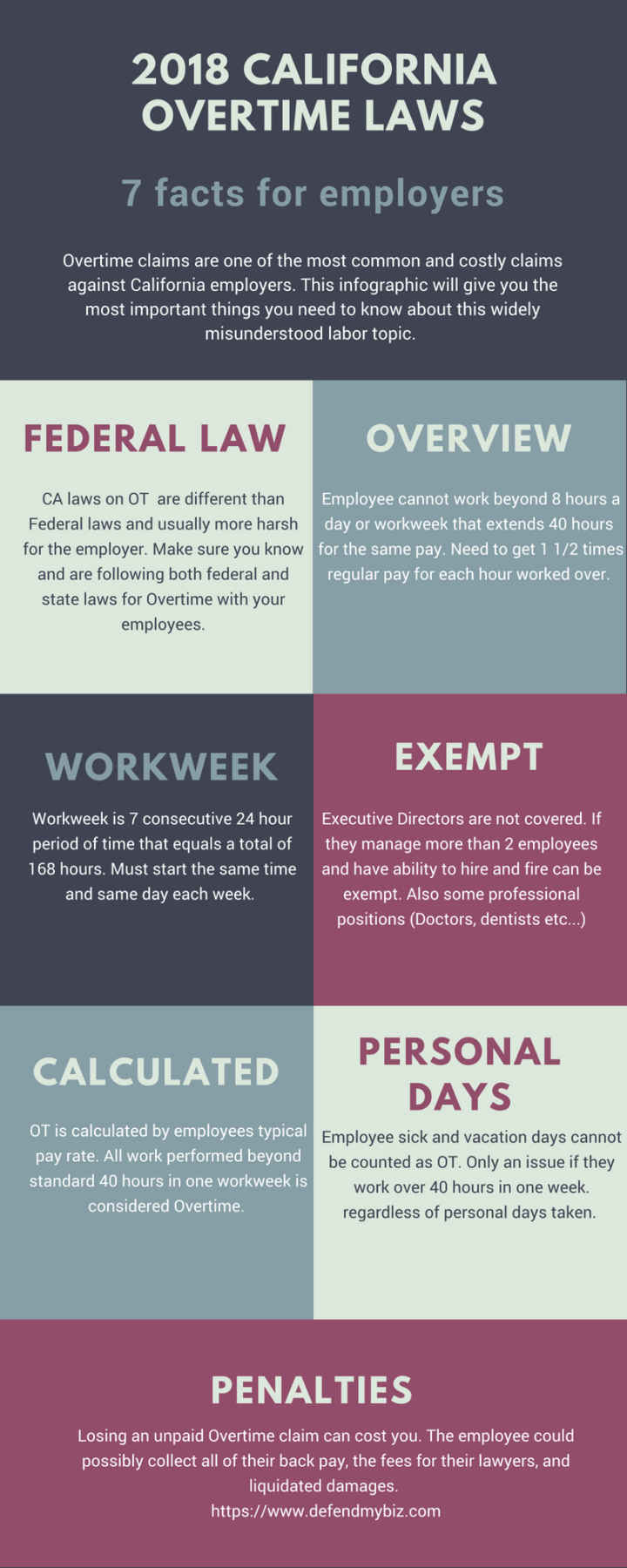
The employee must be paid a fixed salary on a salary basis, which means they receive their full salary regardless of the quantity or quality of work performed. The salary amount must also meet or exceed a minimum threshold, which is periodically updated. As of recent updates, this minimum salary is typically 2 times the state minimum wage for a 40-hour workweek.
Duties Test
Beyond the salary requirement, the employee’s primary duties must align with the specific requirements for the executive, administrative, or professional exemption.
- Executive Exemption: Duties typically involve managing a department or subdivision, directing the work of at least two full-time employees, and having the authority to hire or fire or make recommendations that carry particular weight.
- Administrative Exemption: Duties usually involve performing office work directly related to management policies or general business operations and exercising discretion and independent judgment on significant matters.
- Professional Exemption: This typically applies to individuals engaged in work requiring specialized knowledge in fields like law, medicine, accounting, teaching, or the performing arts. Their work must be predominantly intellectual and involve invention, imagination, or original and creative thought.
Other Potential Exemptions
Other categories of employees may also be exempt, such as:
- Certain outside sales employees.
- Certain computer professionals who meet specific salary and technical requirements.
- Individuals employed in the motion picture or television industry who meet specific criteria related to their work and pay.
It is vital for employers to consult the relevant sections of the California Labor Code or seek legal counsel to ensure accurate employee classification. Misclassification can lead to significant back pay liabilities, penalties, and legal fees.
Recordkeeping Requirements
A critical aspect of managing overtime in California is maintaining accurate records. Employers are legally obligated to keep detailed records of hours worked by non-exempt employees.
Essential Record Details
These records must include:
- Full name and social security number of the employee.
- Total hours worked each workday and each workweek.
- The regular rate of pay and basis on which wages are paid.
- Total wages paid each pay period.
- The actual sum paid each pay period to the employee, showing the dates covered, rate of pay, and number of hours and fractions thereof worked at such rate.
Retention Period
Under California law, employers must retain payroll records for a minimum of three (3) years. Timekeeping records, however, must be kept for a minimum of two (2) years. These records are essential for verifying compliance with wage and hour laws and are crucial in the event of an audit or employee dispute.
Addressing Potential Pitfalls and Best Practices
Navigating California’s overtime regulations can be complex, and employers often encounter common pitfalls. Adopting proactive best practices can mitigate risks and foster a compliant and equitable work environment.
Common Pitfalls
- Misclassification of employees: This is perhaps the most frequent and costly error, leading to substantial back pay claims and penalties.
- Inaccurate calculation of regular rate of pay: Failing to include all forms of compensation when calculating overtime rates.
- “Off-the-clock” work: Allowing or expecting employees to perform work without recording their time. This is strictly prohibited.
- Improperly denying overtime: Failing to pay overtime when an employee has worked beyond the statutory thresholds.
- Lack of clear policies: Ambiguous policies regarding work hours and overtime can lead to confusion and disputes.
Best Practices for Employers
- Regularly review employee classifications: Ensure that employees are correctly classified as exempt or non-exempt based on current laws and their actual job duties.
- Implement robust timekeeping systems: Utilize reliable systems that accurately track all hours worked by non-exempt employees.
- Educate managers and supervisors: Train those responsible for managing employees on overtime laws and company policies.
- Establish clear written policies: Develop and communicate comprehensive policies on work hours, overtime authorization, and timekeeping procedures.
- Consult with legal counsel or HR professionals: Seek expert advice to ensure compliance with California’s dynamic wage and hour laws.
- Conduct regular internal audits: Periodically review payroll and timekeeping records to identify and correct any discrepancies or non-compliance issues.
By understanding and diligently adhering to California’s overtime laws, businesses can ensure fair compensation for their employees, avoid legal entanglements, and contribute to a thriving economic landscape within the state.
LifeOutOfTheBox is a participant in the Amazon Services LLC Associates Program, an affiliate advertising program designed to provide a means for sites to earn advertising fees by advertising and linking to Amazon.com. Amazon, the Amazon logo, AmazonSupply, and the AmazonSupply logo are trademarks of Amazon.com, Inc. or its affiliates. As an Amazon Associate we earn affiliate commissions from qualifying purchases.