
When planning a journey to the sun-drenched shores, bustling cities, or serene national parks of California, a common question might arise: “What is the California area code?” The simple answer is there isn’t just one. As the third-largest state by area and the most populous in the United States, California boasts a vibrant and extensive telecommunications landscape, segmented by dozens of distinct area codes. For travelers, understanding this patchwork of numbers is more than just a logistical detail; it’s a key to unlocking the diverse regions, unique lifestyles, and myriad attractions that make the Golden State an unparalleled destination.

From the iconic landmarks of Los Angeles to the majestic redwoods of Northern California and the serene vineyards of Napa Valley, each area code essentially acts as a geographical marker, hinting at the type of experience that awaits. Whether you’re researching a luxury resort in Beverly Hills, booking a family apartment near Disneyland Resort, or seeking a remote cabin in the wilderness, knowing the local area code can streamline your planning. This comprehensive guide will delve into the tapestry of California’s area codes, revealing how they are intricately tied to the state’s travel, tourism, accommodation, and lifestyle offerings, helping you navigate your next California adventure with ease and insight.
The Golden State’s Telephonic Tapestry: Understanding California Area Codes
California’s telephonic structure is a testament to its vastness and dynamic growth. What began with a few primary area codes in 1947 has expanded dramatically over the decades, reflecting population booms, technological advancements, and the ever-increasing demand for communication services. Each new area code split or overlay signifies a new chapter in the state’s development, often corresponding to the rise of new urban centers, tourist destinations, or economic powerhouses.
For visitors, these seemingly arbitrary three-digit prefixes offer a subtle but powerful clue about the geographical and cultural nuances of their surroundings. An area code doesn’t just route a phone call; it often evokes images of specific landscapes, a particular way of life, or a cluster of famous places. For instance, the mere mention of 310 immediately brings to mind the glamour of Hollywood and the beaches of Santa Monica, while 415 is synonymous with the fog-kissed hills and vibrant culture of San Francisco.
This intricate system is particularly useful for those planning multi-destination itineraries across the state. Moving from the bustling urban sprawl of Los Angeles to the tranquil wine country of Sonoma Valley or the rugged beauty of Big Sur means transitioning between different area code regions. A traveler trying to book a restaurant in San Diego (619) will be calling a different telephonic region than if they were reserving a hotel in Sacramento (916). Understanding this distribution can assist in everything from making local calls without incurring long-distance charges (though less common with modern cell plans) to simply better visualizing the journey ahead on a map. It’s a subtle layer of information that enhances the overall travel experience, providing a deeper connection to the local context and making communication with local businesses and services more intuitive.
Navigating California’s Diverse Regions by Area Code
California’s sprawling geography and diverse topography mean that its area codes are best understood by dividing the state into its primary geographical and cultural regions. Each region offers a unique blend of attractions, accommodation options, and lifestyle experiences, all identifiable by their associated area codes.
Southern California: Beaches, Glamour, and Desert Escapes
Southern California is arguably the most famous and populous region, characterized by its sunny beaches, entertainment industry, and vibrant cultural scene. Its area codes are among the most recognized:
- Los Angeles County: The heart of Southern California is served by numerous area codes due to its immense size and population. The original 213 (downtown Los Angeles) was split and overlaid, leading to 323 (central Los Angeles), 310 and 424 (Westside and South Bay, covering areas like Beverly Hills, Santa Monica, and Malibu), and 626 (San Gabriel Valley) and 818/747 (San Fernando Valley). These codes encompass an incredible array of tourist attractions, from the Walk of Fame in Hollywood and the luxury shopping of Rodeo Drive to the historic Getty Center and the scenic beauty of the Santa Monica Pier. Accommodation options range from iconic luxury hotels like The Beverly Hills Hotel to charming boutique hotels in Venice Beach and family-friendly suites in Anaheim, home to the famous Disneyland Resort. Lifestyle here is diverse, from celebrity sightings to surf culture.
- Orange County: Adjacent to Los Angeles to the south, Orange County is covered by 714 and 657, serving cities like Anaheim, Santa Ana, Huntington Beach, and Newport Beach. This region is a family tourism hub, particularly known for theme parks and beautiful coastlines perfect for beach vacations. Resorts and long-term stay apartments are popular here.
- San Diego County: Further south, the San Diego area codes include 619, 858, and 760 (which also covers parts of the Inland Empire and Palm Springs). San Diego offers a relaxed pace, stunning beaches, Balboa Park, the San Diego Zoo, and a vibrant culinary scene, especially for Mexican food. It’s a prime destination for tourism focused on outdoor activities, history, and food.
- Inland Empire & Desert: The sprawling Inland Empire east of Los Angeles is primarily served by 909 and 951, while the desert regions like Palm Springs fall under 760 (with a new 935 overlay). This area attracts visitors with its golf courses, spa resorts, mid-century modern architecture, and proximity to Joshua Tree National Park. It represents a distinct lifestyle focused on relaxation and desert adventures.
Central California: Wine Country, Coastlines, and Agricultural Heartlands
Moving north, Central California offers a diverse range of experiences, from fertile agricultural valleys to picturesque coastlines and burgeoning wine regions.
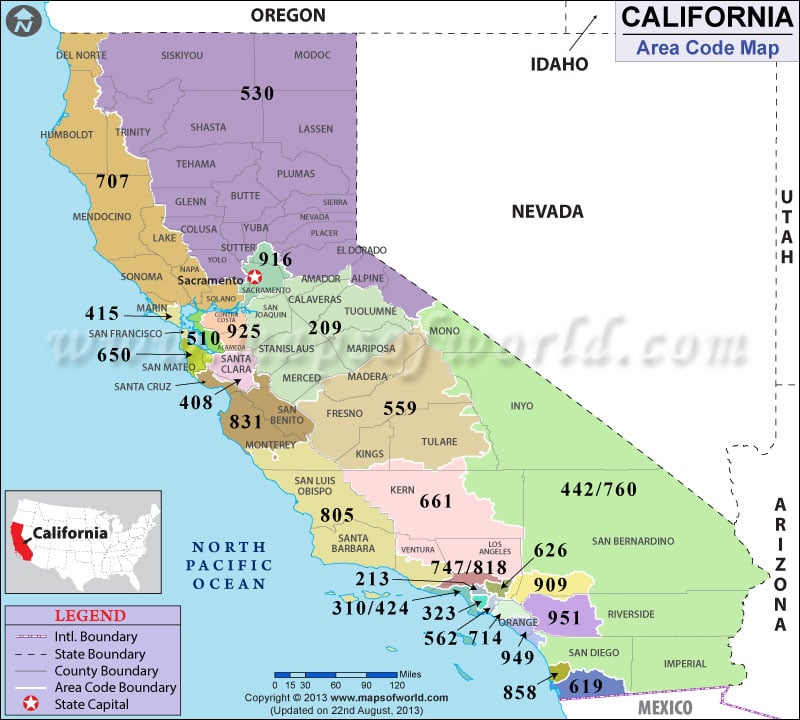
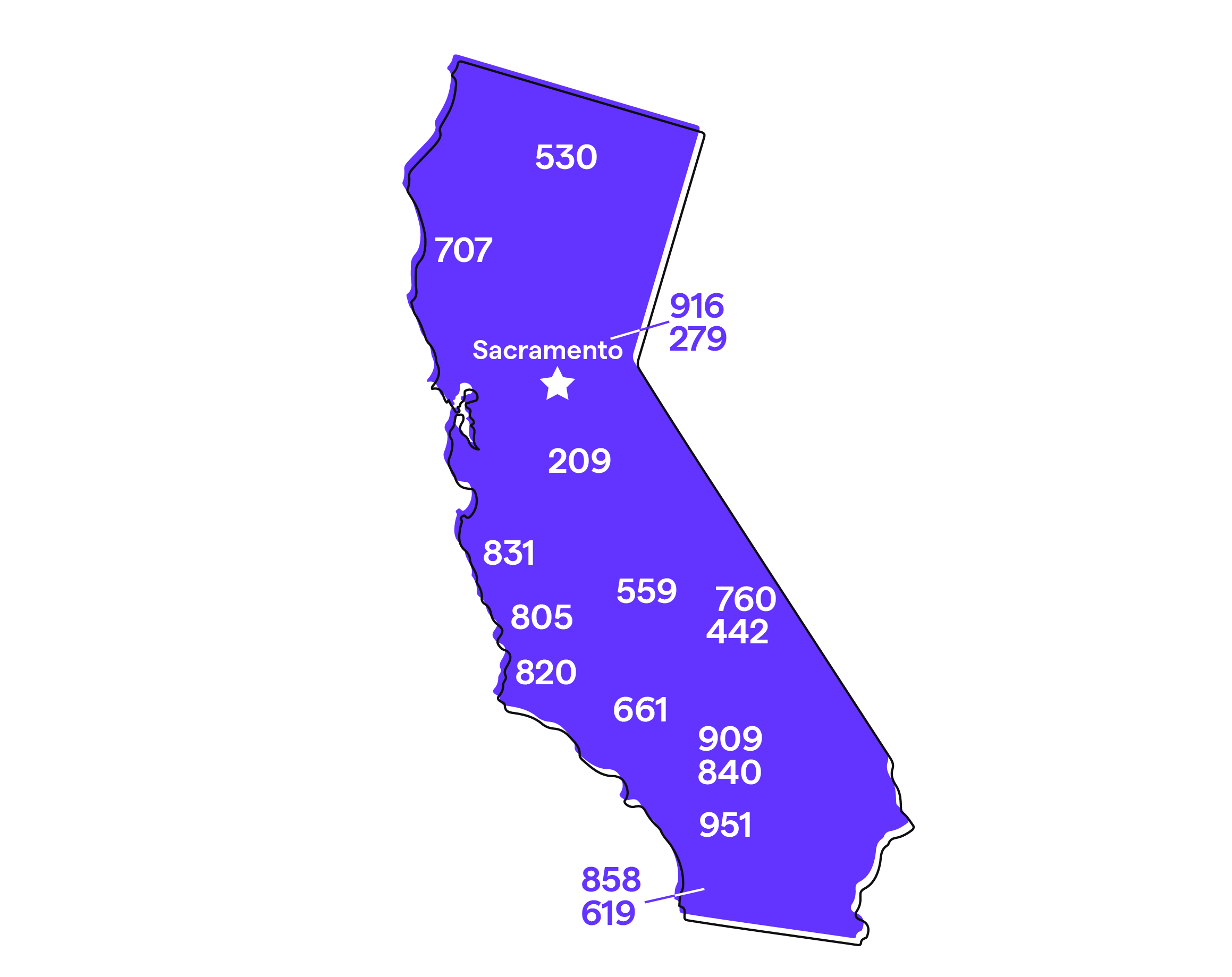
- Central Coast: The scenic Central Coast is covered by 805 (and its new 820 overlay), encompassing charming cities like Santa Barbara, San Luis Obispo, and the acclaimed Paso Robles wine region. This area is perfect for those seeking a blend of coastal beauty, wine tasting tours, and laid-back luxury. Boutique hotels and guesthouses are prevalent, offering unique accommodation experiences. Landmarks include historic missions and stunning coastal drives along Highway 1.
- Silicon Valley & Monterey Bay: While often grouped with Northern California, the San Jose area (408, with 669 overlay) and the Monterey Bay region (831, covering Monterey and Santa Cruz) serve as a bridge. Silicon Valley is a hub for business stays and tech tourism, while Monterey Bay offers the famous Monterey Bay Aquarium, scenic golf courses like Pebble Beach, and vibrant beach towns. Tourism here blends natural beauty with innovation.
- Central Valley: The agricultural heartland of California is served by codes like 559 (Fresno, Visalia), 661 (Bakersfield), and 209 (Stockton, Modesto). While primarily agricultural, this region serves as a gateway to national parks like Yosemite National Park, offering more budget-friendly accommodation options for park visitors and showcasing a different aspect of California’s lifestyle and food production.
Northern California: Urban Wonders, Redwoods, and Volcanic Landscapes
Northern California is characterized by its iconic cities, dramatic coastline, ancient redwood forests, and rugged volcanic terrain.
- San Francisco Bay Area: The vibrant Bay Area is home to several key codes. San Francisco itself is covered by 415 (and its 628 overlay), while the East Bay (Oakland, Berkeley) uses 510, and the inner East Bay suburbs like Walnut Creek use 925. The Peninsula and part of Marin County use 650. This region boasts world-famous landmarks like the Golden Gate Bridge, Alcatraz Island, and Fisherman’s Wharf. San Francisco is a hub for luxury travel, cultural tourism, and diverse culinary experiences. Accommodation ranges from historic hotels in Union Square to charming bed and breakfasts in the Marina District.
- Sacramento & Gold Country: Sacramento, the state capital, uses 916. Surrounding areas, including the historic Gold Country and parts of the Sierra Nevada foothills, are largely covered by 530, which also extends into the far north. This region offers historical tourism, outdoor recreation, and the burgeoning wine regions of Napa Valley (part of the larger 707 area code) and Sonoma Valley.
- Far North California: The vast northern reaches of the state, including the redwood forests, Mount Shasta, and the Shasta Cascade region, primarily fall under 530 and 707 (covering the North Coast, including Mendocino and Humboldt Counties). This is an ideal destination for nature lovers, offering camping, hiking, and stunning natural landmarks. Accommodation here often includes rustic cabins, eco-lodges, and family-run motels, catering to a lifestyle focused on adventure and tranquility.
Planning Your California Adventure: Area Codes as Travel Tools
Beyond simply routing phone calls, California’s area codes serve as invaluable tools for planning a seamless travel experience. For anyone embarking on a trip, whether it’s a short city break or an extended tour across the state, understanding these geographical markers can significantly enhance trip preparation and on-the-ground navigation.
When it comes to accommodation, knowing the area code of your target destination can simplify your search. Many booking platforms or hotel websites allow you to filter by location, and recognizing an area code immediately gives you a sense of where that specific hotel or resort is situated within the broader context of California. For example, if you’re looking for a luxury stay near the beaches of Laguna Beach, you’d naturally gravitate towards properties within the 949/714/657 regions, knowing these cover Orange County. Conversely, if a budget-friendly long-term stay near a university in the Central Valley is your priority, area codes like 559 or 661 would guide your search. This insight can help compare options, whether you’re seeking a boutique hotel, a spacious villa, or an apartment for an extended visit.
For tourism and attractions, area codes delineate regions that often share common themes or landscapes. Planning a wine-tasting tour? Focus on the 707 (for Napa and Sonoma) or 805 (for Paso Robles) regions. Interested in tech landmarks and innovation? The 408/669 of Silicon Valley is your target. This regional awareness, prompted by area codes, helps craft itineraries that flow logically from one experience to the next, minimizing travel time and maximizing enjoyment of local culture, food, and activities.
Furthermore, area codes can hint at the lifestyle and associated costs of a particular destination. A 310 area code often signifies the upscale, high-end lifestyle of West Los Angeles, with its luxury travel options and exclusive amenities. In contrast, an area code from a more rural or agricultural part of the state might suggest a budget-friendly travel experience, offering authentic local charm and access to nature without the premium price tag. For business travelers, being aware of the area codes for major business hubs like San Francisco (415/628) or San Jose (408/669) is crucial for scheduling meetings and understanding local communication patterns.
Even for simpler tasks like looking up local restaurants, transportation services, or emergency contacts, subconsciously recognizing the area code reinforces your geographical awareness. It provides a foundational understanding of the interconnectedness of different Californian destinations, making travel not just easier, but also more enriching.
Beyond the Digits: The Cultural Significance of California’s Area Codes
In California, area codes have transcended their original function as mere telephonic identifiers to become embedded in the state’s cultural fabric. They are often shorthand for regional identity, influencing everything from local slang to marketing campaigns and even personal brand. The area code isn’t just a number; it’s a badge of honor, a declaration of where you’re from, and what kind of California lifestyle you embody.
Think of the “213” or “310” associated with classic Los Angeles glamour, conjuring images of movie stars, sun-drenched beaches, and a vibrant, aspirational lifestyle. Or the “415” that immediately brings to mind the innovative spirit, progressive culture, and iconic landmarks of San Francisco. These numbers have become intrinsically linked with the distinct vibes of their respective regions. Tourists often seek out experiences that align with these perceived identities – whether it’s the laid-back surf culture of the 714, the tech-driven pulse of the 408, or the rustic charm of the 530.
This cultural significance extends to various aspects of tourism and lifestyle. Local businesses often incorporate their area code into their branding, solidifying their connection to the community and catering to a specific demographic. Restaurants might pride themselves on being “a true 805 eatery,” emphasizing locally sourced ingredients from the Central Coast wine region. Fashion brands might design products inspired by the “949 life” of Orange County beaches. This phenomenon deepens a traveler’s understanding of local culture, making their visit more authentic and immersive. It allows them to connect with the nuances of each destination, appreciate the subtle differences in regional character, and truly experience the rich tapestry that is California living.
In conclusion, “the California area code” is not a singular entity but a dynamic, evolving system that mirrors the state’s incredible diversity and growth. For anyone planning to travel through this magnificent state, these three-digit prefixes offer more than just a way to make a phone call. They are subtle guides to California’s geographical divisions, cultural identities, and the myriad experiences that await. From world-class hotels and luxurious resorts to charming bed and breakfasts and long-term stay apartments, each area code region offers a distinct flavor of accommodation, landmarks, and lifestyle. By understanding this intricate telephonic tapestry, travelers can better plan their journeys, delve deeper into local cultures, and unlock the full potential of their Golden State adventure, ensuring every call, and every step, connects them more intimately with the heart of California.
LifeOutOfTheBox is a participant in the Amazon Services LLC Associates Program, an affiliate advertising program designed to provide a means for sites to earn advertising fees by advertising and linking to Amazon.com. Amazon, the Amazon logo, AmazonSupply, and the AmazonSupply logo are trademarks of Amazon.com, Inc. or its affiliates. As an Amazon Associate we earn affiliate commissions from qualifying purchases.