
The Hawaiian flag is a rich tapestry of history, symbolism, and cultural significance, instantly recognizable and deeply embedded in the identity of the Aloha State. More than just a colorful emblem, it tells a story of a proud kingdom, its eventual annexation, and its enduring spirit as a US state. For travelers planning a trip to the beautiful islands, understanding the flag can offer a deeper appreciation of the local culture, history, and the very essence of Hawaiʻi. Whether you’re exploring the vibrant streets of Honolulu on Oʻahu, relaxing on the beaches of Maui, or delving into the volcanic wonders of the Big Island, the Hawaiian flag will be a ubiquitous presence, a constant reminder of the unique heritage you’re experiencing.

This article will delve into the origins of the Hawaiian flag, explore its striking design elements and their meanings, and discuss its historical journey through different eras of Hawaiian history, from its regal past to its status today.
The Genesis of the Hawaiian Flag: A Royal Decree
The story of the Hawaiian flag is intrinsically linked to the establishment of a unified Hawaiian Kingdom. Before the adoption of a national flag, various banners and emblems were used by individual islands and ruling chiefs. However, the need for a singular symbol that represented the burgeoning unified nation became apparent as Hawaiʻi asserted its presence on the international stage.
The First Royal Standard
The earliest precursor to the modern Hawaiian flag is often attributed to King Kamehameha I, the formidable warrior and statesman who unified the islands in the late 18th and early 19th centuries. While there isn’t a definitive, universally agreed-upon “first” official flag, historical accounts suggest that various ensigns were used during this period. One of the most prominent early flags, though its exact design is debated, is often described as having stripes representing the different islands and a Union Jack in the canton.
The introduction of the Union Jack is a significant element that hints at the early diplomatic relations and influences Hawaiʻi experienced. British explorers, most notably Captain James Cook, had made significant contact with the islands. It’s believed that the Union Jack was incorporated to acknowledge the perceived alliance or friendly relations with Great Britain, which was a dominant global power at the time. This wasn’t an act of subservience, but rather a diplomatic gesture in a world where such symbols were crucial for international recognition and trade.
The Eight-Striped Flag and its Successors
Over time, the design evolved. One notable iteration, often referred to as the “King’s Colors” or the “Hawaiian flag with eight stripes,” became increasingly recognized. The eight stripes were introduced to represent the eight major islands of the Hawaiian archipelago: Hawaiʻi, Maui, Lānaʻi, Kahoʻolawe, Oʻahu, Kauaʻi, Molokaʻi, and Niʻihau. This iteration solidified the flag’s connection to the land and its people.
The flag underwent further refinements under subsequent monarchs. King Kamehameha III, for example, commissioned a flag that featured the Union Jack prominently in the canton, alongside the eight stripes. This design persisted for a considerable period, symbolizing the continued engagement with international powers, particularly Great Britain. It’s important to note that the Hawaiian monarchy was a sovereign entity, and its adoption of certain symbols was part of establishing its own distinct national identity while navigating the complex geopolitical landscape of the 19th century. The Hawaiian Kingdom maintained diplomatic relations with various countries, including the United States, France, and Great Britain, and its flag was a critical component of these interactions.
Decoding the Design: Symbolism and Significance
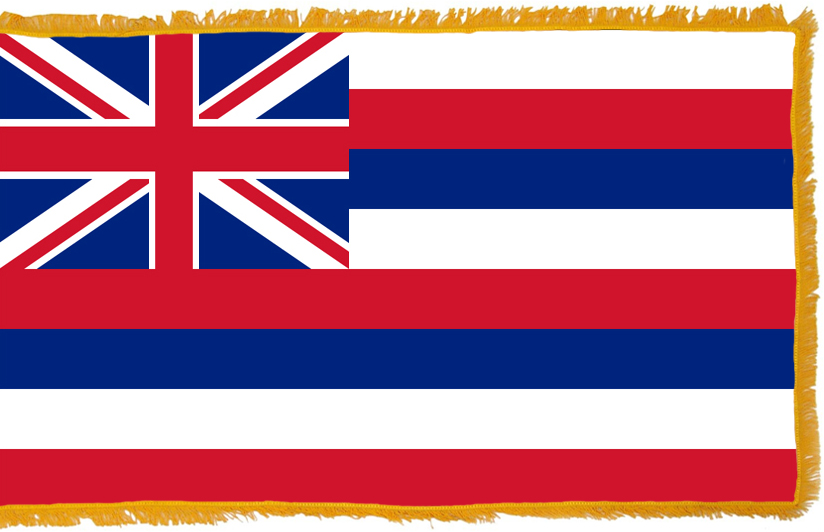
The most enduring version of the Hawaiian flag, the one most recognized today, is characterized by its distinctive design featuring the Union Jack in the upper hoist-side quarter (the canton) and alternating red and white stripes. The symbolism embedded within this design is profound, reflecting the historical narrative of the islands and their people.
The Union Jack: A Symbol of Diplomacy and Early Influence
The presence of the Union Jack in the canton is a direct link to the early history of the Hawaiian Kingdom and its diplomatic ties. As mentioned, the incorporation of the British flag was an acknowledgment of the influence and perceived alliance with Great Britain. This was a common practice among nations seeking to establish their legitimacy and secure favorable trade agreements during the age of exploration and colonial expansion.
It’s crucial to understand that this wasn’t a symbol of conquest or subjugation. Instead, it represented a pragmatic approach by the Hawaiian monarchs to engage with global powers. For much of its existence as a kingdom, Hawaiʻi maintained its independence and sovereignty. The Union Jack in its flag was a nod to this complex relationship, a visual representation of Hawaiʻi’s place in a world dominated by European empires. It also reflects the efforts of figures like Kamehameha I to create a unified and recognized kingdom.
The Eight Stripes: Representing the Islands
The eight alternating red and white stripes that fill the remainder of the flag are perhaps the most straightforward and enduring symbol of the Hawaiian Islands themselves. Each stripe historically represented one of the eight main islands of the Hawaiian archipelago. This visual representation underscores the unity of the islands under a single sovereign banner. While the original number of stripes might have varied in earlier versions, the eight-stripe design became the most prevalent and is maintained in the current official flag.
The colors themselves, red and white, are also believed to hold significance. Red, in many cultures, symbolizes power, courage, and sacrifice. White often represents purity, peace, and divinity. The combination of these colors, along with their representation of the islands, creates a powerful emblem of the Hawaiian nation – a people of strength, unity, and deep spiritual connection to their land. The specific shades of red and white also have historical context, though variations exist in interpretation and historical depiction.
The Evolution of the Stripes: A Shift in Representation
It’s worth noting that the number of stripes has seen some variation throughout history, reflecting changes in the political landscape and the understanding of the archipelago. For a period, there were nine stripes, with the ninth stripe thought to represent one of the northwestern islands, or sometimes the sovereign itself. However, the eight-stripe design, representing the eight major islands, ultimately became the standard and remains so today. This continuity of the eight stripes emphasizes the enduring connection between the flag and the physical geography of Hawaiʻi, a constant reminder of the islands’ distinct identities and their collective strength.
The Hawaiian Flag Through History: From Kingdom to Statehood
The journey of the Hawaiian flag mirrors the tumultuous and transformative history of the islands themselves. From its origins as a symbol of a thriving independent kingdom, it transitioned through periods of significant political upheaval, eventually becoming the state flag of Hawaii, a state within the United States of America.
The Reign of the Monarchy
During the 19th century, the Hawaiian flag was a proud symbol of a sovereign nation. It was flown from government buildings, naval vessels, and at diplomatic events, representing the power and legitimacy of the Hawaiian monarchy. The Hawaiian Kingdom engaged in a complex dance with foreign powers, skillfully maintaining its independence for decades. The flag was a crucial element in these diplomatic endeavors, communicating Hawaiʻi’s status as a recognized nation on the world stage. Travelers visiting the islands during this era would have seen the flag proudly displayed, a testament to the strength and sovereignty of the Hawaiian people. Many historical landmarks and royal residences, such as ʻIolani Palace, still bear witness to this era.
The Overthrow and Annexation
The late 19th century marked a turning point. In 1893, the Hawaiian monarchy was overthrown by a group of American and European businessmen, leading to the establishment of a provisional government. This event drastically altered the political landscape and, consequently, the symbolism associated with the Hawaiian flag. For a brief period, the flag of the Republic of Hawaiʻi was used, which differed from the royal standard.
However, the most significant shift came with the annexation of Hawaiʻi by the United States in 1898. Following annexation, the Stars and Stripes became the official flag. The Hawaiian flag, while no longer the national ensign, retained immense cultural and historical significance. It continued to be revered by many Hawaiians as a symbol of their heritage and a reminder of their independent past. This period of transition was deeply impactful, and understanding it provides crucial context for the enduring emotional connection many feel to the Hawaiian flag.

The State Flag: A Legacy Preserved
When Hawaiʻi officially became the 50th state of the United States in 1959, a new state flag was adopted. This flag is essentially the historical Hawaiian flag of the Kingdom – the one with the Union Jack and the eight stripes – that was in use prior to the overthrow. This decision was a deliberate and meaningful act. By adopting the royal Hawaiian flag as the state flag, the United States acknowledged and honored the distinct history and cultural heritage of Hawaiʻi.
This means that today, when you see the Hawaiian flag flying, you are looking at a symbol that represents both the historical sovereignty of the Hawaiian Kingdom and the current status of Hawaiʻi as a state. It’s a dual symbol, embodying a rich past and a vibrant present. For visitors, encountering this flag across the islands – perhaps outside a hotel in Waikīkī, near a historic site like Pearl Harbor, or even on a tour boat navigating the Na Pali Coast – offers a tangible link to the island’s unique story. It’s a symbol of pride for the people of Hawaiʻi and a fascinating piece of history for anyone who takes the time to understand its depth.
Whether you’re staying at a luxury resort on Kauaʻi or exploring the natural beauty of the Haleakalā National Park, the Hawaiian flag is an ever-present reminder of the islands’ captivating history and enduring spirit. It serves as a beautiful emblem of a people deeply connected to their land and their legacy.
LifeOutOfTheBox is a participant in the Amazon Services LLC Associates Program, an affiliate advertising program designed to provide a means for sites to earn advertising fees by advertising and linking to Amazon.com. Amazon, the Amazon logo, AmazonSupply, and the AmazonSupply logo are trademarks of Amazon.com, Inc. or its affiliates. As an Amazon Associate we earn affiliate commissions from qualifying purchases.