
While many may instinctively associate the iconic skyline and bustling energy with the term “New York Capital,” a common misconception often arises. The question itself, “What is the New York Capital?”, immediately invites a deeper exploration beyond the most populous and globally recognized metropolis. This article aims to clarify this very point, delving into the official designation of the capital city of the state of New York, and contrasting it with the widely perceived capital of global influence and commerce. We will journey through the history, significance, and unique characteristics of both, shedding light on why this distinction is important for understanding the diverse facets of the Empire State.

The Official Capital: Albany’s Enduring Legacy
The designation of a capital city is a matter of official governmental importance, reflecting historical decisions and administrative necessity. In the case of the state of New York, this honor belongs to Albany. Nestled along the Hudson River, Albany is not only the political heart of the state but also a city with a rich and complex history that predates even the formation of the United States. Its selection as the capital was a deliberate choice, rooted in its strategic location and its historical significance as a trading post and administrative center.
A Strategic Location and Historical Roots
Albany’s claim to capital status is deeply intertwined with its geographical advantages. Situated at the confluence of the Mohawk River and the Hudson River, it served as a crucial hub for trade and transportation for centuries. This strategic positioning made it a vital center for the Dutch, who established the settlement of Fort Orange in the early 17th century, the precursor to modern-day Albany. Later, under English rule, it became the seat of colonial government.
The transition to statehood in 1776 solidified Albany’s role. While the capital has shifted within the state’s history, Albany has held this position for the majority of its existence, recognized for its central location within the state’s geography and its historical continuity as a seat of power. The decision to establish Albany as the permanent capital was made in the late 18th century, cementing its status as the administrative nucleus for the growing state.
Architectural and Governmental Significance
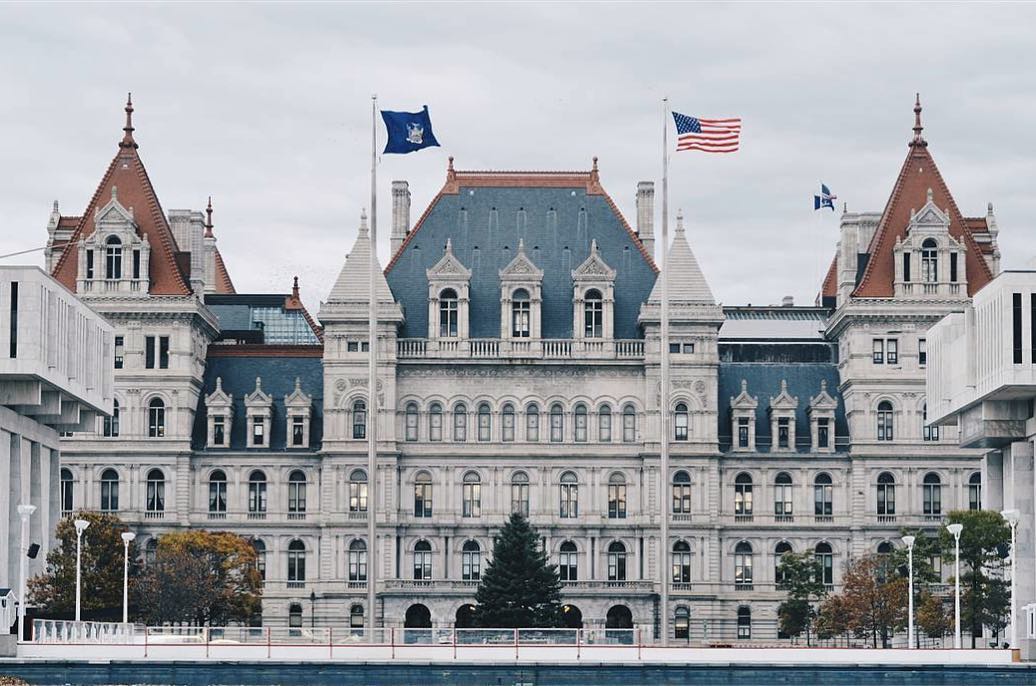
The presence of the New York State Capitol building is the most visible testament to Albany’s capital status. This magnificent edifice, a masterpiece of Romanesque Revival and Renaissance architecture, stands as a symbol of the state’s governance and its enduring democratic institutions. Inside, legislators convene, laws are debated and enacted, and the executive branch carries out its duties, all contributing to the vital functions of state government.
Beyond the capitol building, Albany is home to numerous other government agencies, legislative offices, and judicial bodies. The New York State Museum offers insights into the state’s rich natural and cultural history, further underscoring the city’s role as a center for education and preservation. The continuous operation of these governmental and cultural institutions solidifies Albany’s identity as the undisputed political capital of New York.
The Perceived Capital: New York City’s Global Dominance
While Albany officially holds the title, the immense global influence, economic power, and cultural impact of New York City often lead to its perception as the “capital” of New York in a broader, more influential sense. New York City is a city that transcends state boundaries, captivating imaginations worldwide. Its vibrant streets, iconic landmarks, and diverse population make it a magnet for tourism, business, and artistic expression.
Economic Powerhouse and Financial Hub

New York City is synonymous with global finance. The New York Stock Exchange on Wall Street is a powerful symbol of economic activity, driving markets and influencing global financial trends. The city is a nexus for banking, investment, and corporate headquarters, attracting talent and capital from every corner of the globe. This economic dynamism fuels its reputation as a leading global city, often overshadowing its administrative counterpart.
Cultural Epicenter and Global Iconography
The cultural landscape of New York City is unparalleled. From the dazzling lights of Times Square to the artistic treasures of the Metropolitan Museum of Art and the theatrical magic of Broadway, the city offers an endless array of experiences. Its diverse neighborhoods, each with its own distinct character and culinary offerings, contribute to a rich tapestry of global cultures. The iconic imagery of the Statue of Liberty and the Empire State Building are instantly recognizable worldwide, making New York City a global icon and a perennial favorite for travelers and dreamers alike.
A Hub for Innovation and Global Influence
New York City is not just a center for finance and culture; it is also a leading hub for innovation and global influence. It attracts leading minds in technology, media, fashion, and countless other industries. International organizations, diplomatic missions, and media outlets have a strong presence here, further cementing its position as a global player. This pervasive influence, extending far beyond the borders of New York, is what often leads to its informal designation as the “capital” in the minds of many.
Understanding the Distinction: Political vs. Perceived Capital
The distinction between Albany as the official capital and New York City as the perceived capital is crucial for a comprehensive understanding of the state of New York. While Albany serves as the seat of government, the engine of policy, and the administrative core, New York City embodies the state’s economic might, cultural vibrancy, and global reach.
The Importance of Official Designation
The official designation of Albany as the capital city ensures the orderly functioning of the state government. It provides a central location for legislative action, executive decision-making, and judicial proceedings. This governmental infrastructure is vital for the day-to-day administration of New York and for the implementation of policies that affect millions of its residents. Without this designated political capital, governance would be fragmented and less effective.
The Power of Perception and Global Recognition
Conversely, the perception of New York City as a capital stems from its undeniable global recognition and its profound impact on international affairs. Its towering skyscrapers, its diverse population, and its role as a nexus of commerce and culture create an image of power and influence that resonates worldwide. For many, the “capital” of New York is intrinsically linked to the opportunities, the excitement, and the global stage that New York City uniquely offers. It is a capital of dreams, of innovation, and of a global lifestyle that attracts millions annually for travel, business, and cultural immersion.
A Symbiotic Relationship
Ultimately, the state of New York benefits from this dual identity. Albany provides the stable foundation of governance, while New York City acts as its dynamic, globally recognized emblem. Understanding the distinction between the official capital and the perceived capital allows for a richer appreciation of the multifaceted nature of this influential state and its two most significant urban centers.
LifeOutOfTheBox is a participant in the Amazon Services LLC Associates Program, an affiliate advertising program designed to provide a means for sites to earn advertising fees by advertising and linking to Amazon.com. Amazon, the Amazon logo, AmazonSupply, and the AmazonSupply logo are trademarks of Amazon.com, Inc. or its affiliates. As an Amazon Associate we earn affiliate commissions from qualifying purchases.