
California beckons millions of visitors each year with its stunning coastlines, vibrant cities, and diverse landscapes. From the iconic Golden Gate Bridge in San Francisco to the glamorous boulevards of Los Angeles and the historic state capital of Sacramento, the Golden State offers an unforgettable experience for every traveler. However, like any destination, California has its unique set of laws and regulations, some of which might surprise tourists accustomed to different rules in their home states or countries. Among these, knife laws are a particularly nuanced area that can lead to unintentional legal missteps if not understood. For a seamless and enjoyable trip, being informed about what knives are legal and illegal in California is not just a recommendation—it’s a necessity. This guide aims to provide a clear, insightful, and engaging overview for tourists, ensuring your focus remains on experiencing all that California has to offer, free from legal worries.
The Foundations of California Knife Law for Tourists
Navigating knife laws in California can feel like a labyrinth, primarily because they encompass both statewide statutes and numerous local ordinances that can vary significantly from one city or county to another. Understanding the fundamental distinctions regarding knife types, carry methods, and prohibited locations is the first step towards ensuring compliance during your visit. For tourists, the key is to err on the side of caution and always prioritize safety and legality.
Open vs. Concealed Carry: A Critical Distinction
The way you carry a knife in California is often as important as the type of knife itself. The distinction between open and concealed carry forms a cornerstone of the state’s knife regulations.
- Folding Knives: Generally, common folding knives are legal to own and carry in California. When it comes to concealed carry, a folding knife can typically be carried concealed (e.g., in a pocket or purse) as long as it is in a folded or closed position and is not classified as a “dirk” or “dagger” (which we will discuss shortly). There are no statewide blade length restrictions for folding knives that are carried openly or concealed while folded, unless they fall into a prohibited category like switchblades over a certain length. However, local ordinances might impose length limits, especially in public spaces.
- Fixed-Blade Knives: This category includes knives like daggers, dirks, hunting knives, and tactical knives where the blade does not fold into the handle. In California, fixed-blade knives must be carried openly. This means they must be carried in a sheath and displayed in plain view, typically on a belt. Concealing a fixed-blade knife in any manner (e.g., under clothing, in a bag where it’s not readily visible) is generally illegal and can lead to serious charges. There is no statewide maximum blade length for open-carried fixed-blade knives, but again, local jurisdictions may have specific rules.
Prohibited Knives: Know What to Avoid
Certain types of knives are outright illegal to possess, import, or manufacture in California, regardless of how they are carried. Tourists bringing knives from other regions must be especially vigilant about these.
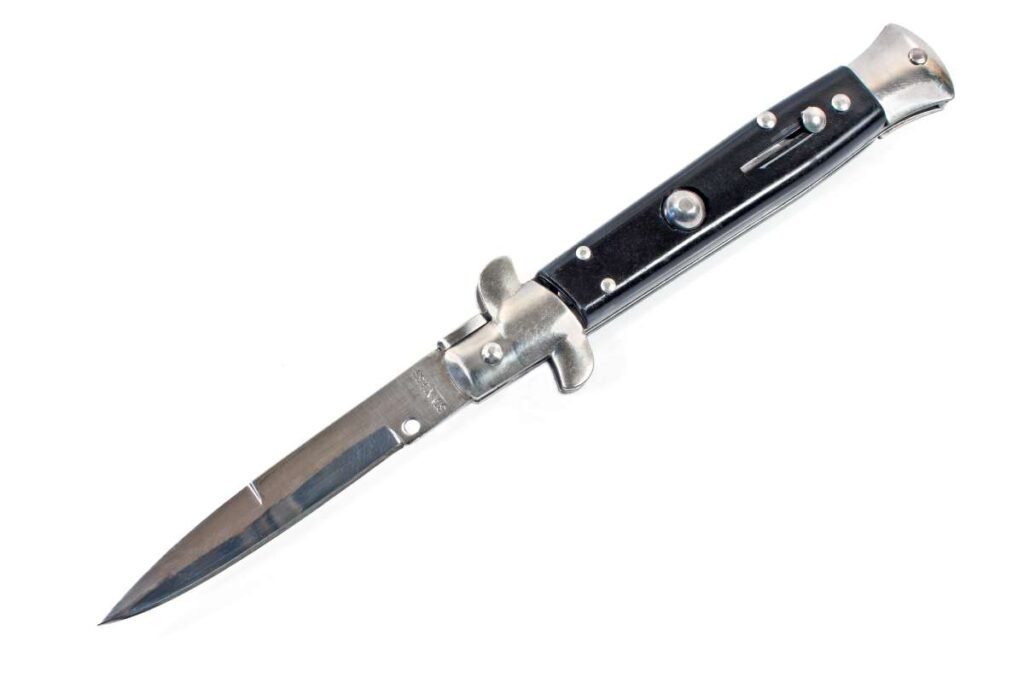
- Switchblades/Automatic Knives: These knives deploy their blade automatically by pressing a button or switch. In California, it is illegal to carry, possess, or sell any switchblade knife with a blade longer than 2 inches. This is a critical point for travelers from states where longer switchblades are legal.
- Ballistic Knives: Designed to propel a knife blade by a spring or other device, these are strictly illegal in California and most other states.
- Gravity Knives: These knives open by the force of gravity or centrifugal force, often with a button or lever assisting the release. They are also illegal to possess or carry in California.
- Butterfly Knives (Balisongs): The legality of butterfly knives has been a complex issue. While historically often treated as switchblades or gravity knives (and thus largely illegal), recent legal interpretations, such as those arising from the case of People v. Godek, have sometimes focused on their manual operation. However, the safest advice for tourists is to avoid carrying balisongs, as their legal status can be ambiguous and subject to local law enforcement interpretation, potentially leading to arrest.
- Dirks and Daggers: While often defined by their double-edged blades designed for stabbing, California law defines a “dirk” or “dagger” more broadly as any knife or instrument with a blade that is “capable of ready use as a stabbing weapon.” This broad definition means that many fixed-blade knives can be classified as dirks or daggers. It is illegal to conceal carry any dirk or dagger. As mentioned, they must be open-carried.
- Disguised Knives: Knives concealed within everyday objects (e.g., belt buckle knives, lipstick knives, cane knives, pen knives, air gauge knives) are generally illegal to possess or carry in California. The intent of concealment through disguise makes these problematic.
Location-Based Restrictions: Where Knives Are Absolutely Prohibited
Even otherwise legal knives can become illegal if carried in specific locations. These restrictions are particularly important for tourists visiting attractions, educational institutions, or government facilities.
- Schools and Universities: It is generally illegal to possess any knife on the grounds of K-12 schools, colleges, or universities in California. This includes both public and private institutions. Exceptions are typically for authorized activities, such as culinary arts classes.
- Courthouses and Government Buildings: Knives are prohibited in courthouses, government administrative buildings, and often other public facilities. Security checkpoints are common at these locations.
- Airports: Beyond TSA regulations for air travel (which strictly prohibit knives in carry-on luggage), many airport terminal areas themselves may have restrictions on knife possession, even if not boarding a flight. Knives must be securely packed in checked luggage when flying.
- Jails and Prisons: Understandably, knives are strictly forbidden in correctional facilities.
Understanding “Concealed Carry” in California
For many travelers, the concept of “concealed carry” can be a point of confusion, especially given the various interpretations and local nuances. In California, understanding what constitutes a concealed weapon is crucial for avoiding unintended legal infractions.
What Does “Concealed” Truly Mean?
In legal terms, a knife is considered “concealed” if it is not readily observable to the ordinary person. This means if a knife is hidden under clothing, tucked away in a backpack, purse, or even deep within a pocket, where its presence isn’t obvious, it is likely considered concealed. The intent behind carrying the knife also plays a role in how law enforcement might interpret the situation. If a knife is carried in a manner that suggests an attempt to hide it, especially if it’s a fixed-blade or a “dirk/dagger,” it raises red flags.
Exceptions and Nuances for Folding Knives
While fixed-blade knives must always be openly carried (unless specifically prohibited), folding knives have more flexibility, but with important caveats.
- Folded and Concealed: A key point for folding knives is that they are generally permissible for concealed carry when in a folded or closed position. This allows for carrying a pocket knife in a pocket or bag without it being considered an illegal concealed weapon, provided it isn’t a prohibited type (like a switchblade over 2 inches) or an item explicitly defined as a dirk/dagger by its design for stabbing.
- Locking vs. Non-Locking Blades: For folding knives with locking blades that are longer than 2 inches, while they can be openly carried, their concealed carry when deployed (or in a manner that makes them quickly deployable) could be problematic. The law often looks at the “ready use” aspect. A non-locking folding knife that requires two hands to open, for example, is generally viewed with less suspicion than a rapidly deployable locking folder.
- The “Clip Carry” Grey Area: Many modern folding knives come with a pocket clip, allowing them to be clipped to the edge of a pocket with the handle partially exposed. In some interpretations, if the clip and a portion of the handle are visible, it might be considered open carry. However, this is a grey area, and discretion often lies with the individual law enforcement officer. To be absolutely safe, if you’re carrying a knife with a clip, ensure as much of the handle as possible is visible, or consider it in the same category as any other concealed folding knife – permissible only if folded and not classified as a dirk/dagger. For any fixed-blade knife, this method of carry is definitively not considered open carry and would be illegal.
Local Ordinances: A Crucial Consideration for Tourists
While statewide laws provide a baseline, ignoring local ordinances can quickly lead to trouble. California’s diverse cities and counties often impose additional, stricter regulations on knives. What might be legal in one part of the state could be illegal just a few miles down the road.
City and County Variations
Major metropolitan areas are particularly prone to having their own specific knife laws, often reflecting concerns about public safety in densely populated environments.
- Los Angeles: The City of Los Angeles has specific ordinances, such as prohibiting the open carrying of knives with blades longer than 3 inches in plain view in public places. This is a significant restriction that goes beyond state law for open carry. For example, a chef’s knife or a large hunting knife that would be legal to open carry elsewhere in California might violate Los Angeles municipal code if carried openly.
- San Francisco: Known for generally stricter regulations, San Francisco also has ordinances that can affect knife possession. While state law governs many aspects, local police departments and district attorneys in San Francisco may interpret “dirk or dagger” broadly and enforce concealed carry prohibitions rigorously.
- Oakland, San Diego, and Beyond: Other cities like Oakland and San Diego, along with various other municipalities and counties throughout California, may have their own unique ordinances concerning blade length, specific types of knives, or prohibitions in certain public areas (e.g., parks, beaches, entertainment districts).
The Importance of Research
For tourists, the takeaway is clear: do your homework. Before traveling to a specific city or county in California, especially if you plan to carry any type of knife (even a utility tool), make an effort to research the local municipal codes. A quick search for “[City Name] knife laws” can often yield crucial information. Relying solely on statewide laws can leave you vulnerable to local enforcement actions.
Practical Advice for Tourists Carrying Knives in California
Given the complexities, practical guidance is paramount for tourists. The goal is to ensure your visit is memorable for all the right reasons, not for an unexpected encounter with the law over a knife.
When in Doubt, Leave it Out
This is perhaps the simplest and most effective piece of advice. If you are unsure about the legality of a particular knife, how it should be carried, or the regulations in the specific California location you are visiting, it is always safest to err on the side of caution and leave the knife at home or securely stored in your accommodation. Ask yourself: Is this knife truly essential for my tourist activities? For most casual sightseeing, dining, or beach visits, a knife is rarely a necessity. For outdoor activities like camping or hiking in designated areas, a utility knife might be appropriate, but even then, understanding local park regulations is essential. Consider the perceived intent: a small, utilitarian folding knife for opening packages is often viewed differently than a large, fixed-blade tactical knife.
Transportation and Storage: Staying Compliant
When you must transport a knife, whether it’s for an outdoor excursion or simply moving between accommodations, specific rules apply to vehicles.
- Knives in Vehicles: Generally, knives can be transported in a vehicle in California if they are in a locked container or in the trunk of the car. The key is that they should not be readily accessible to anyone in the vehicle’s passenger compartment. This applies especially to fixed-blade knives and any knives that could be considered “dirks or daggers.” Keeping them out of immediate reach helps avoid the appearance of concealed carry or intent to use as a weapon.
- Air Travel: For those flying into or out of California, remember that all knives must be packed in checked luggage. They are strictly prohibited in carry-on bags by TSA regulations. Ensure they are securely sheathed or wrapped to prevent injury to baggage handlers.
What to Do If Stopped by Law Enforcement
Despite your best efforts to comply, situations can arise where you are stopped by law enforcement. Knowing how to react can significantly impact the outcome.
- Remain Calm and Polite: Always maintain a calm and respectful demeanor. Agitation or argumentative behavior can escalate the situation.
- Inform, Don’t Reach: If you are carrying a knife and an officer asks if you have any weapons, or if they are conducting a search, calmly inform them that you are carrying a knife and where it is located. Do not reach for the knife or make any sudden movements. Allow the officer to retrieve it safely if they deem it necessary.
- Follow Instructions: Always follow the officer’s instructions. If you believe your rights are being violated, address it through appropriate legal channels after the immediate interaction has concluded, not during the stop itself. Your cooperation can often lead to a swifter and less problematic resolution.
Conclusion
Exploring the magnificent state of California should be an exciting and stress-free experience. Understanding and adhering to its knife laws is a simple yet crucial step to ensure your trip remains enjoyable and free from unexpected legal complications. The intricacies of statewide regulations, coupled with varying local ordinances, demand a thoughtful approach, particularly for tourists unfamiliar with California’s legal landscape.
By being aware of the distinctions between open and concealed carry, identifying prohibited knife types, respecting location-based restrictions, and exercising practical caution, you can navigate California confidently. When in doubt, remember the safest course of action is to leave questionable knives at home or securely stored. Your focus should be on soaking in the sun, exploring diverse cultures, and creating lasting memories. Staying informed about knife laws is just one way to ensure that your California adventure is a smooth and memorable one, for all the right reasons.
Disclaimer: This article provides general information and should not be considered legal advice. Knife laws are complex and subject to interpretation and change. For specific legal guidance regarding your situation, it is always recommended to consult with a qualified legal professional in California.
LifeOutOfTheBox is a participant in the Amazon Services LLC Associates Program, an affiliate advertising program designed to provide a means for sites to earn advertising fees by advertising and linking to Amazon.com. Amazon, the Amazon logo, AmazonSupply, and the AmazonSupply logo are trademarks of Amazon.com, Inc. or its affiliates. As an Amazon Associate we earn affiliate commissions from qualifying purchases.