
Florida, often celebrated for its sun-drenched beaches and vibrant cities, also harbors a collection of extraordinary natural and historical landmarks managed by the National Park Service. These national parks represent some of the most unique ecosystems and historically significant sites in the United States, offering an unparalleled glimpse into the state’s diverse natural beauty and past. Far beyond typical tourist attractions, these are places of profound ecological importance, home to rare wildlife and pristine landscapes, preserved for their intrinsic value as natural and cultural landmarks.
The Everglades National Park: A Wetland Wilderness
Spanning over 1.5 million acres across southern Florida, Everglades National Park stands as a monumental wetland wilderness, a testament to the power and fragility of freshwater ecosystems. Designated a UNESCO World Heritage Site, International Biosphere Reserve, and Wetland of International Importance, it is the largest tropical wilderness in the United States and the third-largest national park in the lower 48 states. This vast expanse is not a swamp in the traditional sense, but rather a slow-moving river of grass, typically only a few inches deep, flowing gradually from Lake Okeechobee southwards into Florida Bay and the Gulf of Mexico. Its unique hydrology creates an unparalleled mosaic of interdependent habitats, from sawgrass prairies and cypress swamps to pinelands and mangrove forests.
Unique Ecosystems and Wildlife
The ecological structure of Everglades National Park is defined by its water flow, which dictates the distribution of its diverse flora and fauna. The park is a critical habitat for an incredible array of species, including several endangered and threatened ones, making it a globally significant landmark for biodiversity. Its distinct ecosystems support life adapted to both freshwater and saltwater environments.
The most iconic inhabitants of the Everglades are arguably its reptiles. Both American Alligators and American Crocodiles coexist here, the only place on Earth where this phenomenon occurs naturally. The alligators prefer freshwater sloughs and marshes, while the crocodiles thrive in the brackish waters of the coastal estuaries. Beyond these apex predators, the park is home to a rich variety of snakes, turtles, and lizards.
Avian life is equally spectacular, with the Everglades serving as a vital breeding ground and migratory stopover for over 360 species of birds. Wading birds like roseate spoonbills, great egrets, herons, and wood storks are a common sight, elegantly foraging in the shallow waters. Their synchronized movements across the vast landscape are a mesmerizing natural spectacle, highlighting the health of the park’s aquatic food web.
Mammalian species, though often more elusive, also form an integral part of this landmark’s ecology. The endangered Florida panther, one of the most critically endangered large mammals in North America, finds refuge in the park’s dense hammocks and pinelands. Other notable mammals include the West Indian Manatee, primarily found in coastal and estuarine waters, and the white-tailed deer. The park’s plant life is equally unique, with extensive mangrove forests along the coast acting as crucial nurseries for marine life and natural barriers against storms, alongside cypress domes and pine rocklands.
Historical Significance and Conservation
Beyond its natural marvels, Everglades National Park carries significant historical weight, particularly in the context of conservation. Established in 1934 and dedicated in 1947, it was the first national park created solely for its biological diversity, rather than its scenic grandeur. Its designation marked a pivotal shift in environmental policy, recognizing the intrinsic value of wetlands and their ecosystems. The park’s establishment was a hard-won victory for conservationists, who sought to protect this unique wilderness from agricultural development and drainage projects that historically threatened its delicate balance.
Today, the park faces ongoing challenges, primarily related to water management and climate change. Restoration efforts, such as the Comprehensive Everglades Restoration Plan, aim to reestablish the natural flow of water, which is crucial for the health of its ecosystems. The park’s existence as a landmark underscores a continuous commitment to preserving vital, yet vulnerable, natural heritage for future generations.
Biscayne National Park: An Aquatic Sanctuary
Directly east of Everglades National Park, stretching south from Miami-Dade County to the northern Florida Keys, lies Biscayne National Park. Unlike its terrestrial counterpart, Biscayne is predominantly an aquatic park, with 95% of its 172,971 acres covered by water. This makes it one of the largest marine parks in the U.S. National Park System. It encompasses the southern portion of Biscayne Bay, a narrow strip of mangrove shoreline on the mainland, a string of 44 offshore islands (northern Florida Keys), and the breathtaking northernmost sections of the Florida Reef system, the only living coral barrier reef in the continental United States. This convergence of four distinct ecosystems—mangrove forest, Biscayne Bay, the keys, and the coral reef—creates an unparalleled landmark for marine biodiversity and coastal ecology.
Marine Life and Coral Reefs
Biscayne National Park’s primary allure lies beneath its turquoise surface. The vibrant coral reefs, part of the extensive Florida Reef system, are teeming with life, a true underwater landmark. These reefs support over 500 species of reef fish, including parrotfish, angelfish, barracuda, and snappers, creating a kaleidoscope of color and activity. Critically endangered species like the green sea turtle, loggerhead sea turtle, and hawksbill sea turtle frequent these waters, along with various species of dolphins and the gentle West Indian Manatee.
The bay itself, sheltered by the keys, serves as a crucial nursery for juvenile fish and invertebrates, while the extensive mangrove forests along the mainland shore provide vital habitat and shoreline protection. The clarity of the water allows for exceptional snorkeling and diving experiences, revealing the intricate structures of brain coral, elkhorn coral, and pillar coral, among others. These living structures are the foundation of a complex food web, demonstrating the interconnectedness of marine ecosystems and underscoring the park’s importance as a landmark of natural marine heritage.
Historic Shipwrecks and Maritime Heritage
Beyond its natural splendor, Biscayne National Park is also a significant cultural landmark, preserving a rich maritime history. The park’s waters contain the remains of numerous shipwrecks, testament to centuries of navigation along the treacherous Florida coast. These underwater archaeological sites range from ancient Spanish galleons to 19th-century schooners and modern steamships, each telling a story of maritime trade, exploration, and disaster. The “Maritime Heritage Trail” within the park offers divers and snorkelers the opportunity to explore several of these submerged historical landmarks, providing a unique blend of ecological immersion and historical discovery.

One notable site is the wreck of the “Mandalay,” a 200-foot steel-hulled freighter that sank in 1966, now a popular diving spot teeming with marine life. These wrecks are not merely relics; they have become artificial reefs, contributing to the park’s biodiversity by providing habitat for fish and corals. This dual role—as historical artifacts and ecological anchors—solidifies Biscayne National Park’s status as a multifaceted landmark, where natural processes and human history are inextricably intertwined.
Dry Tortugas National Park: Remote Island Fortifications
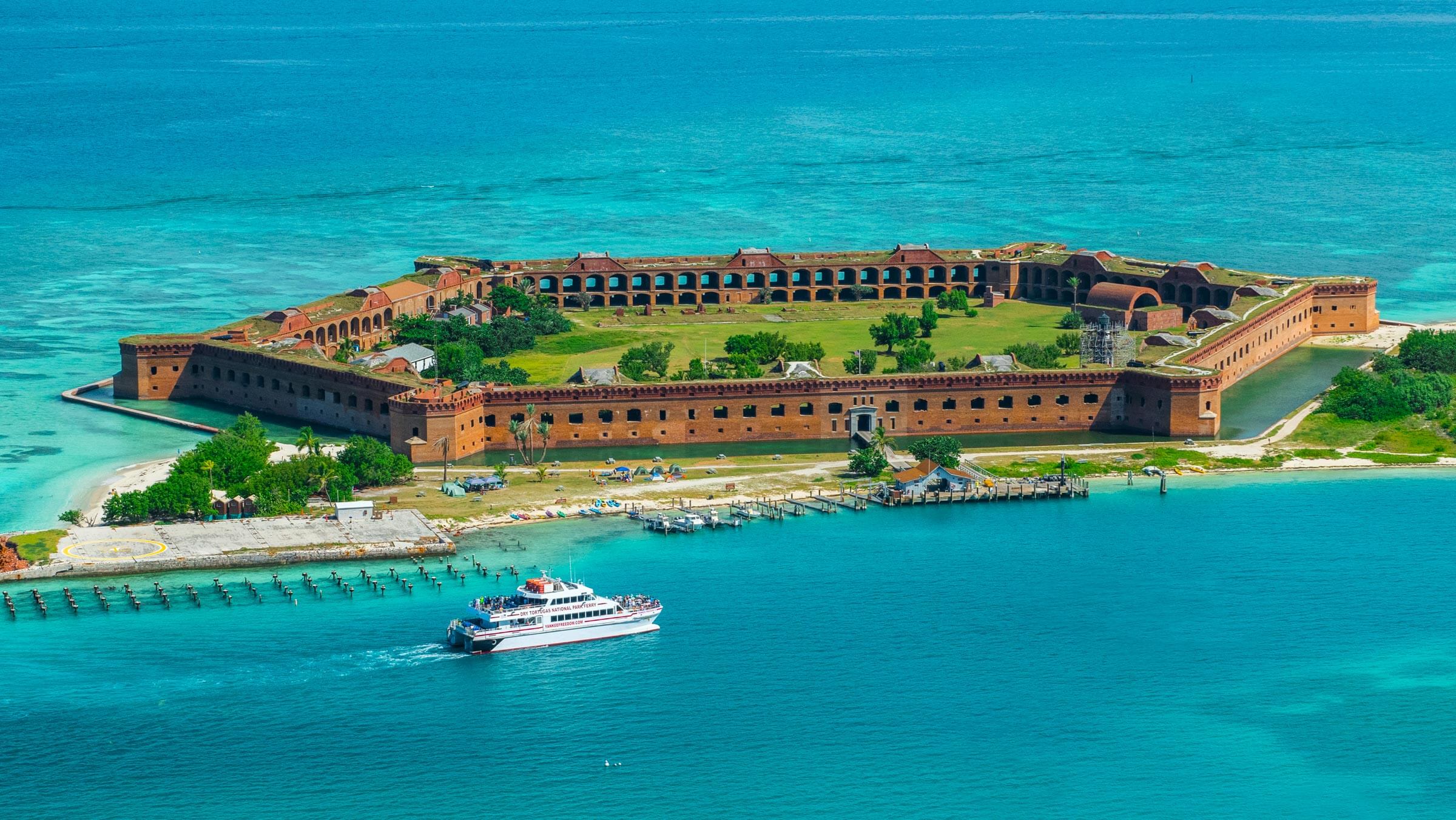
Approximately 70 miles west of Key West, nestled in the Gulf of Mexico, lies Dry Tortugas National Park, one of America’s most remote and unique national parks. Accessible primarily by ferry or seaplane, this park is a cluster of seven small islands, or “keys,” surrounded by pristine coral reefs, crystal-clear waters, and home to a colossal 19th-century fort. Only 1% of the park is dry land, making it overwhelmingly a marine landmark of extraordinary beauty and historical significance. The “Tortugas” name, bestowed by Ponce de León in 1513, refers to the abundant sea turtles, while “Dry” highlights the lack of fresh water on the islands.
Fort Jefferson and Historical Importance
The undisputed centerpiece of Dry Tortugas National Park is Fort Jefferson, an immense, unfinished coastal fortress that dominates Garden Key. This six-sided, brick masonry fort is the largest of its kind in the United States, a true architectural and historical landmark. Construction began in 1846 and continued for 30 years, though it was never fully completed or armed to its intended capacity. Designed to protect the critical shipping lanes of the Gulf of Mexico, particularly the valuable trade route between the Mississippi River and the Atlantic Ocean via the Florida Straits, Fort Jefferson served as a military prison during the Civil War. Its most famous prisoner was Dr. Samuel Mudd, convicted of conspiracy in the assassination of President Abraham Lincoln.
The fort’s monumental scale, with over 16 million bricks, multiple levels of casemates, and surrounding moat, stands as a powerful testament to 19th-century engineering and strategic thinking. Exploring its vast interior and walking atop its ramparts offers a tangible connection to a pivotal era in American history, allowing visitors to ponder the lives of soldiers, prisoners, and construction workers who once inhabited this isolated outpost. It remains one of the most significant military landmarks in the Caribbean region.
Pristine Reefs and Avian Sanctuaries
Beyond the historical allure of Fort Jefferson, Dry Tortugas National Park is celebrated for its remarkably pristine coral reefs and abundant marine life. Its remote location and protected status have allowed these underwater ecosystems to flourish, making it a prime landmark for snorkeling and diving enthusiasts. The shallow, clear waters surrounding the keys reveal vibrant coral formations, tropical fish, nurse sharks, and the occasional sea turtle. The park’s isolation means less human impact, contributing to the exceptional health and biodiversity of its marine environment.
The islands themselves, though small, are vital nesting and migratory sites for thousands of tropical birds. Bush Key, often connected to Garden Key by a sand spit, hosts the largest sooty tern colony in North America, with tens of thousands of birds nesting there annually. Other species like brown noddies, magnificent frigatebirds, and various shorebirds also use the islands as critical resting and breeding grounds, solidifying the park’s status as a significant landmark for avian conservation. The blending of a formidable historical structure with a vibrant, untouched natural world makes Dry Tortugas National Park a truly unique and compelling landmark destination.
Other National Park Service Sites in Florida
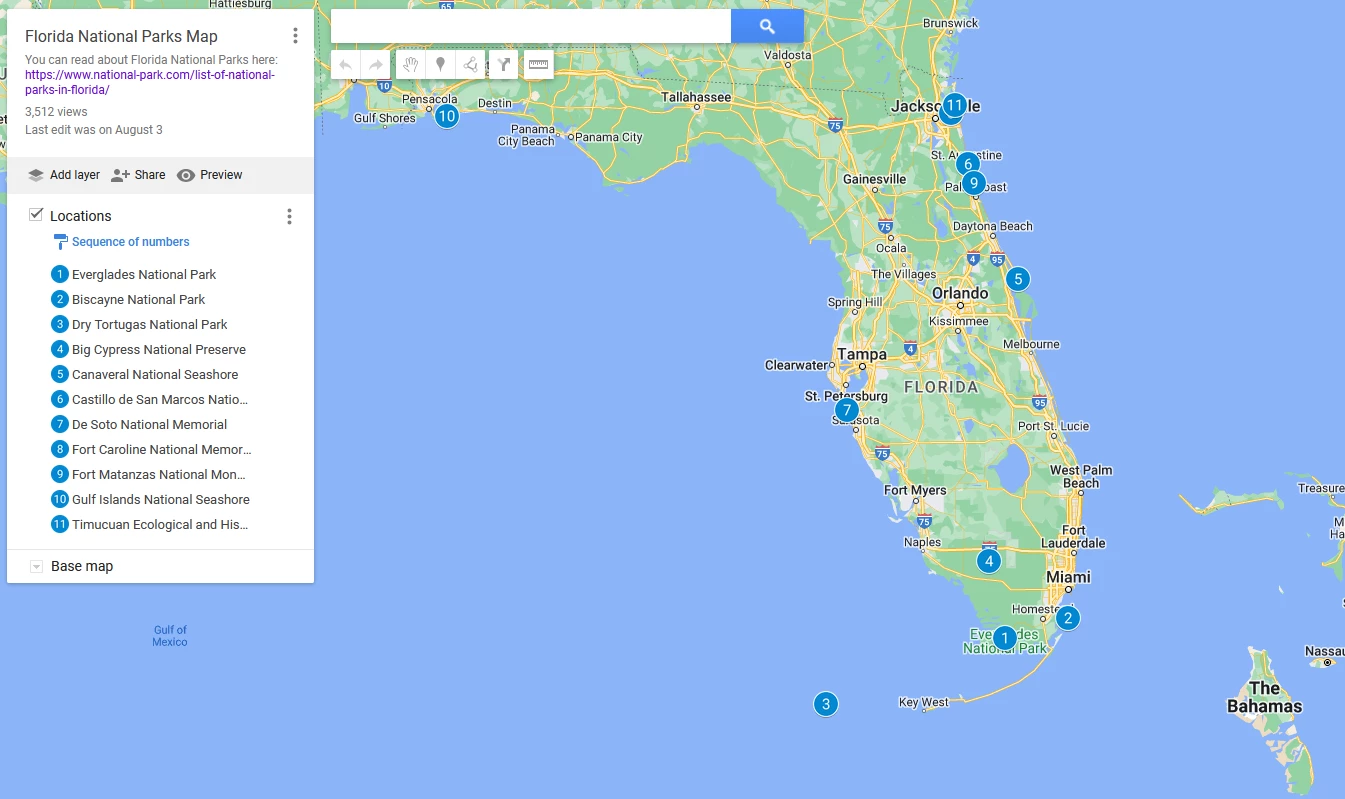
While Everglades, Biscayne, and Dry Tortugas are Florida’s three designated National Parks, the National Park Service manages several other significant sites across the state. These sites, though categorized differently (National Preserves, National Seashores, National Monuments, and National Memorials), are equally crucial landmarks, preserving important natural landscapes, historical narratives, and cultural heritage. They complement the National Parks by offering diverse perspectives on Florida’s rich tapestry.
National Preserves and Seashores
Big Cypress National Preserve, adjacent to Everglades National Park, is a prime example of a preserved natural landmark. This 729,000-acre freshwater swamp is essential to the health of the Everglades ecosystem, providing water and habitat for many of the same species, including the Florida panther and black bear. Its cypress forests and wet prairies are distinctive, offering a rugged, wild landmark for backcountry exploration.
Timucuan Ecological and Historic Preserve in northeastern Florida protects coastal wetlands and salt marshes, along with significant historical landmarks related to Native American and colonial history. It includes sites like Fort Caroline National Memorial, commemorating 16th-century French attempts at settlement, and the Kingsley Plantation, one of the oldest surviving plantation houses in Florida. This preserve beautifully marries ecological preservation with the interpretation of human history.
Gulf Islands National Seashore, stretching from Mississippi to Florida, protects pristine barrier islands, white sand beaches, and historic forts along the Gulf of Mexico. The Florida portion, near Pensacola, includes landmarks like Fort Pickens, a 19th-century brick fort, and expansive dunes, offering both natural beauty and historical insight.
National Monuments and Memorials
Florida is also home to several National Monuments and Memorials, each preserving unique aspects of the state’s historical landscape.
Castillo de San Marcos National Monument in St. Augustine is the oldest masonry fort in the continental United States, a formidable landmark dating back to the 17th century. Its coquina walls have withstood sieges and centuries of weather, standing as a symbol of Spanish colonial power.
Nearby, Fort Matanzas National Monument preserves a smaller, but equally significant, Spanish outpost built to guard the southern approach to St. Augustine, offering a glimpse into the strategic military landmarks of colonial Florida.
Finally, De Soto National Memorial near Bradenton commemorates the 1539 landing of Hernando de Soto and the first major European exploration of what is now the southeastern United States. This memorial serves as a landmark for understanding the profound impacts of European contact on Native American cultures and the landscape of Florida. These diverse sites collectively underscore Florida’s rich heritage, from its sprawling wetlands and vibrant reefs to its pivotal role in American history, all preserved as enduring national landmarks.
LifeOutOfTheBox is a participant in the Amazon Services LLC Associates Program, an affiliate advertising program designed to provide a means for sites to earn advertising fees by advertising and linking to Amazon.com. Amazon, the Amazon logo, AmazonSupply, and the AmazonSupply logo are trademarks of Amazon.com, Inc. or its affiliates. As an Amazon Associate we earn affiliate commissions from qualifying purchases.