
For travelers planning a journey to the stunning landscapes of Arizona, understanding the local time zone is often one of the first, and most crucial, details to clarify. Unlike most of the [United States], which observes Daylight Saving Time ([DST]), the Grand Canyon State proudly marches to its own rhythm, maintaining a consistent schedule year-round. This unique approach to timekeeping can be a source of confusion but also offers a refreshing simplicity once understood. From booking accommodation to planning your visits to world-famous landmarks and immersing yourself in local culture, navigating Arizona’s time zone is key to a seamless and enjoyable travel experience. This guide will unravel the mysteries of Arizona’s time, helping you synchronize your watch with the desert sun and make the most of your adventure.

Unraveling Arizona’s Unique Time Zone
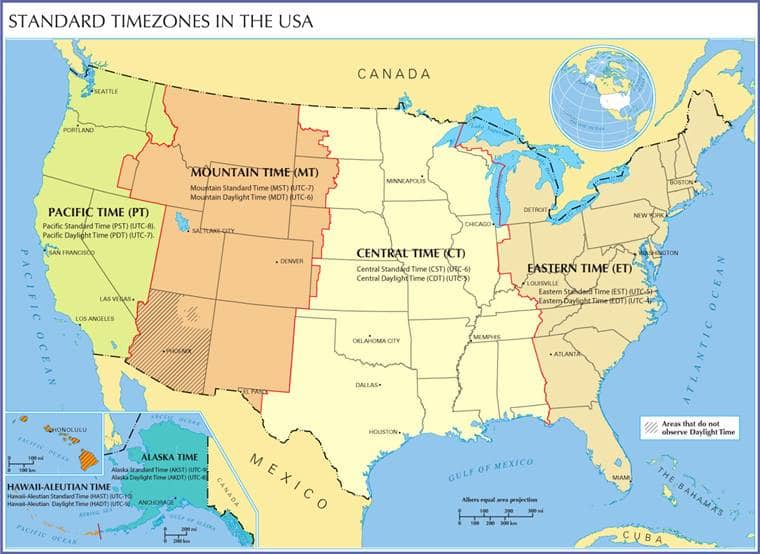
The question “What time is it in Arizona?” often elicits a nuanced answer, as the state operates under a distinct timekeeping philosophy. For the majority of its expansive territory, Arizona adheres to Mountain Standard Time ([MST]) year-round, making it one of the few states that does not adjust for Daylight Saving Time. This creates an interesting dynamic where, depending on the season, Arizona’s time may align with Pacific Daylight Time or Mountain Standard Time, causing it to effectively “change” its relationship with neighboring states without changing its own clock.
A Dive into Mountain Standard Time (MST)
At its core, MST is seven hours behind Coordinated Universal Time. During the spring and summer months, when most of the country “springs forward” for Daylight Saving Time (moving to [MDT]), Arizona remains steadfast on MST. This means that from early March to early November, Arizona’s clocks are effectively aligned with Pacific Daylight Time (PDT), sharing the same time with cities like [Los Angeles] and [San Francisco] in [California]. When Daylight Saving Time ends in the fall, and the rest of the Mountain Time Zone “falls back” to MST, Arizona’s clocks suddenly realign with its geographical zone.
The decision for Arizona to forgo DST dates back to the 1960s, largely driven by practical considerations related to the state’s intense summer heat. The argument was that extending daylight into the evening hours would only exacerbate energy consumption by increasing the demand for air conditioning. Furthermore, many outdoor activities are best enjoyed in the cooler mornings or later evenings, and maintaining a consistent time zone simplifies scheduling without forcing residents to adjust to hotter afternoon sun for an extra hour. This historical context underscores a commitment to a lifestyle that prioritizes comfort and energy efficiency, a principle deeply ingrained in the state’s identity. For visitors, this translates into a generally consistent schedule that, once understood, simplifies planning and reduces confusion, particularly for those coming from states that do observe DST. Knowing that Arizona’s time doesn’t fluctuate ensures that your morning hikes or sunset views will always adhere to the same clock throughout your stay, regardless of the time of year.
The Curious Case of the Navajo Nation
While the vast majority of Arizona observes MST year-round, there is a significant and notable exception that every traveler should be aware of: the Navajo Nation. This sovereign nation, with substantial territory within northeastern Arizona, adheres to Daylight Saving Time. This means that for roughly eight months of the year, the Navajo Nation operates on Mountain Daylight Time, which is UTC-6, placing it one hour ahead of the rest of Arizona during that period.
This unique situation arises from the fact that the Navajo Nation extends into [Utah] and [New Mexico], both of which observe Daylight Saving Time. For administrative and logistical consistency across its tribal lands, the Navajo Nation follows suit. This creates an intriguing time zone “island” within Arizona, where merely crossing a tribal boundary can mean instantaneously changing your watch by an hour. For instance, if you are driving from Flagstaff to visit [Monument Valley] (within the [Navajo Nation], MDT), you will need to set your watch forward by an hour during DST.
The practical implications for travelers are significant. When planning visits to iconic sites like [Antelope Canyon], [Canyon de Chelly], or [Monument Valley], which are all located within the [Navajo Nation], it is absolutely crucial to confirm the local time. Tour operators, entry points, and local businesses within the [Navajo Nation] will operate on MDT during Daylight Saving Time. Failure to account for this one-hour difference can lead to missed tours, appointments, or even difficulty with hotel check-ins. Always double-check the time for specific destinations within the [Navajo Nation], especially if you are coordinating with local guides or participating in time-sensitive experiences. Understanding this exception is vital for a smooth and respectful exploration of these culturally rich and geographically stunning areas.
Planning Your Trip: Navigating Time Zones and Travel Logistics
Understanding Arizona’s time zone complexities is more than just a matter of setting your watch; it’s a fundamental aspect of planning a well-organized and stress-free trip. From seamless bookings to maximizing your sightseeing, integrating time zone awareness into your itinerary is paramount. The unique situation, especially concerning the [Navajo Nation], demands a thoughtful approach to logistics, ensuring you’re always on time for your next adventure.
Seamless Travel Planning and Accommodation
When booking hotels, resorts, or other forms of accommodation in [Arizona], remembering the consistent MST can simplify things significantly for most of the state. Cities like Phoenix, Tucson, Sedona, and areas around Grand Canyon National Park operate on MST year-round. This means that if you are arriving from a region observing DST, you will effectively “gain an hour” in spring and summer when landing in Arizona. Keep this in mind for flight schedules, as your arrival time might seem earlier than expected. Similarly, check-in and check-out times for your suites, apartments, or villas will consistently follow MST.
For example, if you book a tour in [Sedona] that starts at 8:00 AM, it will be 8:00 AM MST, regardless of whether it’s April or December. This consistency reduces the mental overhead of constantly calculating time differences. However, the critical caveat remains for bookings within the [Navajo Nation]. If you’re staying in a hotel near [Monument Valley] or [Page], which are often within the [Navajo Nation] boundaries or very close to them, confirm their operating time zone, especially during the DST period. Most booking platforms will display the local time, but a quick verification call to the [accommodation] directly can save potential confusion and ensure you don’t miss that early morning [Antelope Canyon] tour. When arranging transfers, reserving tables for food, or coordinating with travel guides, always specify “Arizona time” or “Navajo Nation time” to avoid any ambiguity, particularly during the months when the clocks differ. This careful attention to detail ensures your arrival and stay are as smooth as the desert’s shifting sands.
Exploring Arizona’s Landmarks and Attractions
[Arizona]’s breathtaking landmarks and diverse attractions offer endless possibilities for exploration, but a keen awareness of time zones is essential to optimize your itinerary. For the majority of sites across the state, including the majestic Grand Canyon, [Saguaro National Park], and the vibrant city attractions of [Phoenix] and [Tucson], the year-round observance of MST simplifies scheduling. You can plan your early morning hikes to beat the heat or your sunset photography sessions with the confidence that the clock won’t suddenly jump forward or back.However, cross-state travel and visits to attractions near state lines or within the [Navajo Nation] require extra vigilance. When planning a day trip to the Hoover Dam, for instance, you’ll be crossing into [Nevada], which observes Pacific Daylight Time during the summer months. This means [Nevada] will be the same time as most of Arizona (MST) during DST. If you’re coming from states like [Utah] or [New Mexico] that observe MDT, you’ll need to adjust your watch upon entering Arizona. Similarly, a journey to Petrified Forest National Park (MST) from within the [Navajo Nation] (MDT during DST) means adjusting your clock back an hour.
Many tourism experiences, such as river rafting trips on the [Colorado River], horseback riding excursions, or guided tours of ancient ruins, are time-sensitive. Always confirm the local time zone of the starting point for these activities. Websites and booking confirmations should ideally specify the time zone, but a quick call or email can prevent a missed opportunity. Maximizing daylight hours for exploration is often a goal for travelers, and Arizona’s consistent time zone, for the most part, makes this straightforward. However, for those venturing into the unique temporal bubble of the [Navajo Nation], diligent planning with an awareness of the time difference will ensure you experience every wonder without a hitch.
Lifestyle and Local Culture: Embracing Arizona’s Rhythm
Beyond mere scheduling, Arizona’s unique time zone contributes to a distinctive rhythm of life that visitors can embrace to fully immerse themselves in the state’s vibrant local culture. The consistent MST, for the majority of the state, shapes everything from daily routines to [food] schedules and the pacing of activities, offering a refreshing consistency that differentiates it from many other popular travel destinations.
Dining, Activities, and Cultural Immersion
The absence of Daylight Saving Time across most of [Arizona] means that residents and businesses operate on a fixed clock year-round. This consistency trickles down into daily life, affecting restaurant hours, event schedules, and the timing of various activities. For instance, dinner reservations in [Phoenix] or [Tucson] will always be set according to MST, simplifying coordination. Cultural events, festivals, and local markets also adhere to this stable schedule, allowing for easier planning, whether you’re on a family trip, a budget travel adventure, or indulging in luxury travel experiences.
One notable aspect influenced by the fixed time is the pacing of daily life, particularly during the hot summer months. With extended daylight hours in the evenings (due to not “springing forward”), many outdoor activities shift to earlier mornings or later evenings to avoid the peak heat. This is a local adaptation that visitors can easily adopt. Enjoying a sunrise hike in [Sedona] or a late-evening stroll through [Old Town Scottsdale] becomes a natural part of the rhythm. The [food] scene, from casual diners to upscale restaurants, also adapts, with many establishments extending evening hours to accommodate the later sunset. Tipping into a consistent time zone allows for a more relaxed approach to planning, letting you enjoy spontaneous moments without constantly recalculating. For those seeking genuine cultural immersion, observing how Arizonans interact with their unique time offers a subtle yet profound insight into their resilient and adaptive lifestyle.

Maximizing Your Arizona Experience
For travelers coming from regions that observe [Daylight Saving Time], adjusting to Arizona’s consistent MST can initially feel disorienting, but it quickly becomes a benefit. During the spring and summer months, when much of the country moves an hour ahead, arriving in Arizona means you effectively “gain” an hour relative to your departure point. This can be fantastic for combating jet lag, giving you an extra hour of morning light or evening relaxation upon arrival. Conversely, when traveling to Arizona from a non-DST region (like much of [Asia] or [Europe]), the time difference remains stable throughout the year, simplifying calculations.
The simplicity of a single time zone for the majority of the state reduces mental fatigue, allowing you to focus more on the breathtaking scenery, the rich history, and the vibrant [tourism] opportunities that [Arizona] offers. Whether you’re exploring the ancient cliff dwellings, soaring over the [Grand Canyon] in a helicopter, or relaxing by the pool at a [resort] in [Phoenix], the consistent time ensures that your schedule remains predictable. It allows for seamless transitions between different parts of the state (outside of the [Navajo Nation]), making multi-city itineraries much easier to manage. Embracing Arizona’s unique approach to time means embracing a slightly different pace of life – one that is often more deliberate, more connected to the natural cycles of the sun, and ultimately, more relaxed. By understanding and respecting this distinctive aspect of Arizona, you’re not just telling time; you’re stepping into the flow of an extraordinary destination, ready to maximize every moment of your journey.
LifeOutOfTheBox is a participant in the Amazon Services LLC Associates Program, an affiliate advertising program designed to provide a means for sites to earn advertising fees by advertising and linking to Amazon.com. Amazon, the Amazon logo, AmazonSupply, and the AmazonSupply logo are trademarks of Amazon.com, Inc. or its affiliates. As an Amazon Associate we earn affiliate commissions from qualifying purchases.