
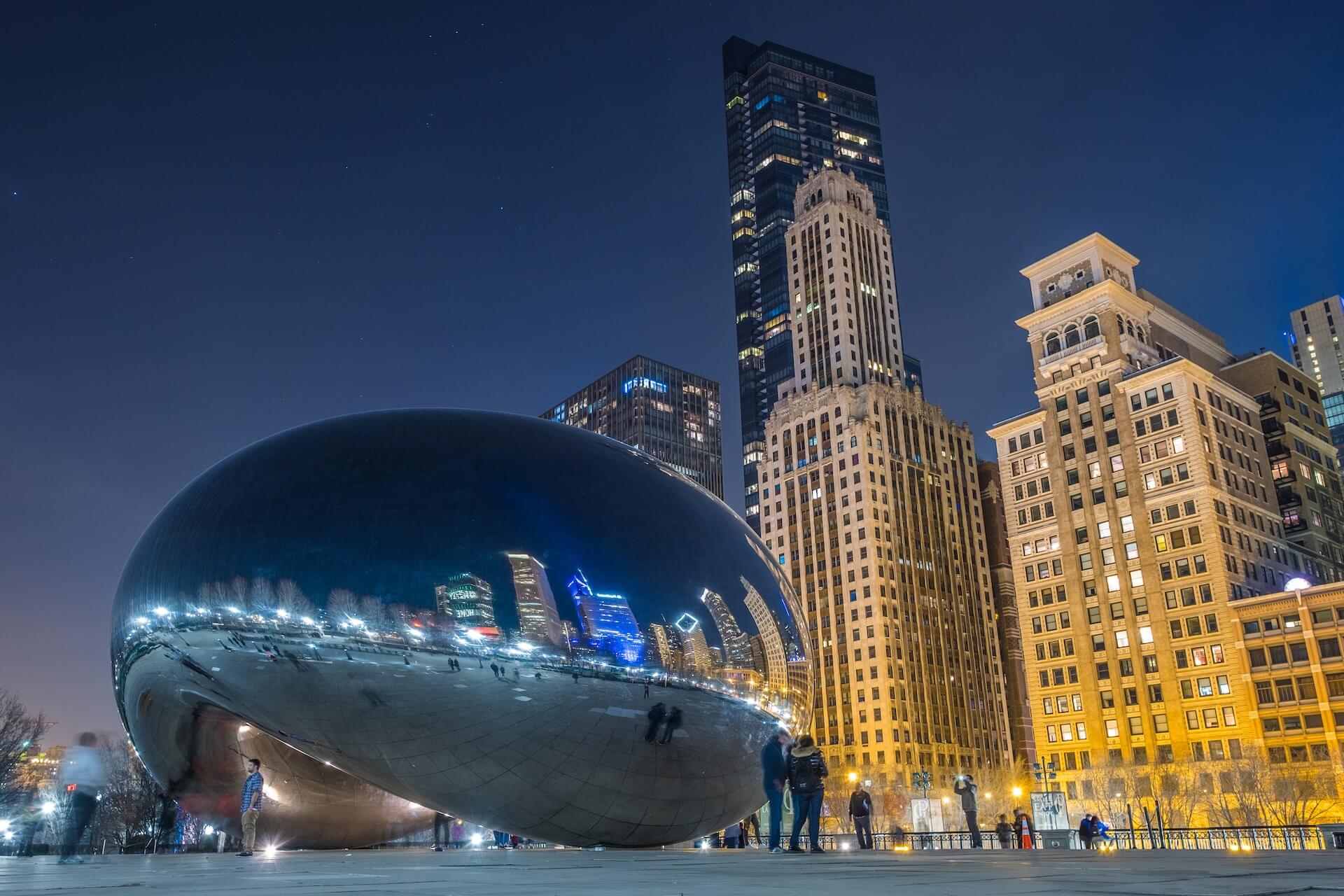
The iconic, reflective sculpture known affectionately as The Chicago Bean, officially titled Cloud Gate, stands as a monumental work of public art and a definitive landmark in the heart of Chicago’s Millennium Park. Its seamless, mirrored surface, which distorts and reflects the city skyline, the sky, and visitors in mesmerizing ways, has made it one of the most photographed and recognizable attractions in the United States. To understand “when” it was built is to delve into a story of artistic vision, complex engineering, and a city’s ambition to transform an industrial wasteland into a vibrant cultural hub. While its unveiling was a grand affair, its construction was a multi-year endeavor that captured public imagination and overcame significant technical hurdles.
Unveiling an Icon: The Genesis of Cloud Gate
The journey of Cloud Gate began long before its formal dedication, rooted in a broader vision for Millennium Park itself. This ambitious urban park project, initiated in 1998, aimed to transform 24.5 acres of former railroad tracks and parking lots in the northwest corner of Grant Park into a stunning showcase of landscape art, architecture, and design.
Concept and Vision: Anish Kapoor’s Masterpiece
The artistic concept for Cloud Gate originated with world-renowned British artist Anish Kapoor. Born in Mumbai, India, and based in London, Kapoor was selected in 1999 as the finalist among a group of artists invited to submit proposals for a major sculpture at the park’s central AT&T Plaza. His vision was for a sculpture that would be a gateway to the 21st century, a “liquid mercury” structure that would draw people in and reflect its surroundings without a visible seam. The title “Cloud Gate” itself evokes the interplay of the sky and the city, a central theme of the piece.
Kapoor’s design was radical: an elliptical, reflective shell that would present an unbroken surface, free of any visible bolts or seams, mirroring the sky and distorting the cityscape. This challenging aesthetic demanded unprecedented fabrication and assembly techniques, pushing the boundaries of what was considered possible for public art. The sheer scale and ambition of the project quickly became apparent, setting the stage for a complex construction phase that would stretch over several years.
The Millennium Park Context
Cloud Gate’s development was intrinsically linked to the overall progress of Millennium Park. The park itself faced numerous delays and budget overruns, primarily due to the intricate engineering required to build a complex urban park over active railroad lines and a massive underground parking garage. The original estimated completion date of 2000 was pushed back multiple times.
The decision to place Cloud Gate at the heart of Millennium Park’s AT&T Plaza was strategic. It was envisioned as a central magnet, drawing visitors into the park and encouraging interaction with its diverse elements, including the nearby Jay Pritzker Pavilion, Crown Fountain, and Lurie Garden. The reflective quality of the sculpture was specifically designed to integrate its surroundings, making it not just an object to be viewed, but an experience to be had within the larger park setting.
Funding and Public Art Initiatives
The creation of Cloud Gate, like many other significant artworks in Millennium Park, was largely funded through private donations. Philanthropic efforts played a crucial role in bringing Kapoor’s vision to life, demonstrating Chicago’s strong commitment to public art and urban development. The initial budget for the sculpture was estimated at $6 million, but as the complexity of the project became clear, the costs escalated significantly. Ultimately, the total cost for Cloud Gate exceeded $23 million, all covered by private funds. This substantial investment underscored the belief in the artwork’s potential to become a globally recognized symbol for the city.
The Engineering Marvel: Construction and Challenges
The “when” of The Chicago Bean’s construction is best understood as a period spanning from approximately 2004 to 2006. While Millennium Park itself was officially opened on July 16, 2004, Cloud Gate was still under construction. Its complex fabrication and assembly meant it was one of the last major features of the park to be completed. The sculpture was publicly unveiled in an unfinished state during the park’s grand opening in 2004, allowing visitors a glimpse of the work in progress, but it was not truly completed until much later.
Fabrication: From Steel Sheets to Seamless Mirror
The fabrication process for Cloud Gate was an engineering feat unprecedented in scale and precision. The sculpture is made of 168 stainless steel plates, each measuring 10 millimeters thick. These plates were polished to a mirror finish, then cut and shaped in a factory in Oakland, California, by Performance Structures, Inc. (PSI). The sheer size and intricate curvature of each plate required advanced computer-aided design and manufacturing techniques.
The challenge wasn’t just in creating the individual plates but in ensuring they could be welded together on-site to create a single, unbroken, seamless surface. This required extremely tight tolerances and a sophisticated understanding of metallurgy and polishing. The interior structure of Cloud Gate consists of a load-bearing steel frame that supports the exterior skin, allowing the sculpture to withstand the dynamic forces of weather and human interaction.
On-Site Assembly: A Complex Puzzle
The individual plates, after being fabricated and pre-polished, were transported to Chicago and assembled on-site at AT&T Plaza. The assembly process began in 2004, immediately after the initial foundations were laid. Each plate was carefully lifted into place and welded to its neighbors. The complexity lay in the thousands of linear feet of welds that had to be ground down and polished to create the illusion of a single, continuous piece of metal.
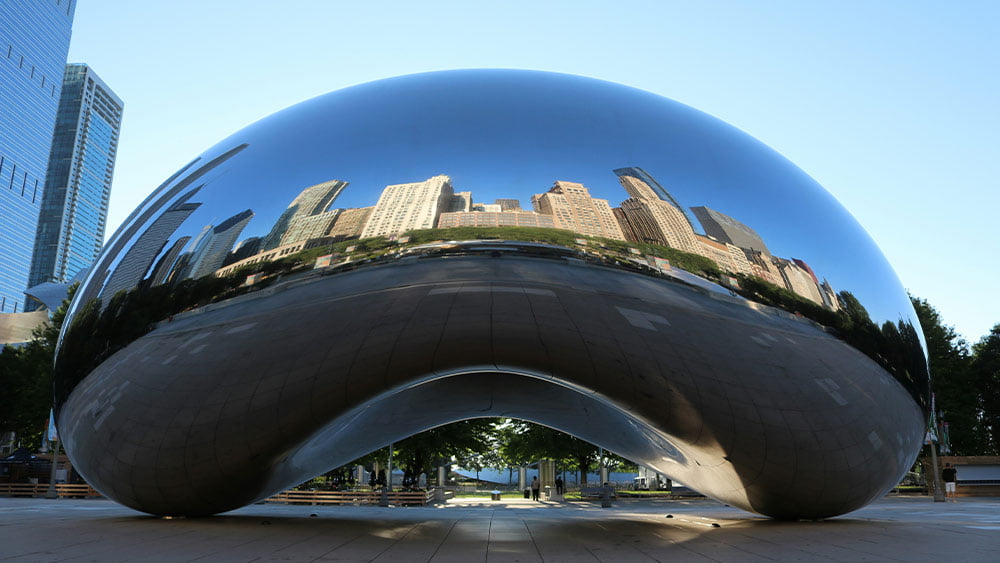
This meticulous work was undertaken by a dedicated team of specialists who worked tirelessly to meet Anish Kapoor’s demanding artistic specifications. The process of welding, grinding, and polishing continued for over a year and a half, often shielded from public view by temporary barriers to protect both the workers and the delicate surfaces. The interior concave chamber, known as the “omphalos” (meaning “navel” in Greek), which provides a unique warped reflection, also required specialized construction techniques to achieve its smooth, seamless curve.
Overcoming Technical Hurdles
Throughout its construction, Cloud Gate presented numerous technical hurdles. One of the primary challenges was achieving the perfect mirror finish across the entire surface without any visible distortion or seams. The process involved multiple stages of grinding, sanding, and polishing, using custom-designed equipment and techniques. Weather conditions in Chicago, particularly the cold winters, posed additional difficulties for the specialized welding and polishing work, necessitating protective enclosures and temperature controls.
Another significant challenge was the sheer weight of the sculpture, which stands at 110 tons. Its structural integrity relies on the internal framework and its ability to distribute the load evenly. The design had to account for expansion and contraction due to temperature fluctuations, as well as the unique stresses placed on the reflective surfaces by hundreds of thousands of daily interactions. The success in overcoming these challenges is a testament to the ingenuity of the engineers, fabricators, and artists involved. The final polishing stage, where the last visible seams were meticulously erased, was completed in April 2006, marking the true completion of Cloud Gate as we know it today.
Public Reception and Enduring Legacy
Upon its official completion and full public unveiling in 2006, Cloud Gate immediately captured global attention, solidifying its place as a contemporary landmark.
Initial Reactions and Critical Acclaim
Initial reactions to Cloud Gate were overwhelmingly positive. Critics lauded Anish Kapoor’s innovative design and the engineering marvel that brought it to life. The sculpture was praised for its interactive qualities, transforming passive viewers into active participants in the artwork. Its ability to reflect and integrate the surrounding cityscape, including architectural giants like the John Hancock Center and Willis Tower (formerly Sears Tower), was seen as a brilliant homage to Chicago’s architectural heritage.
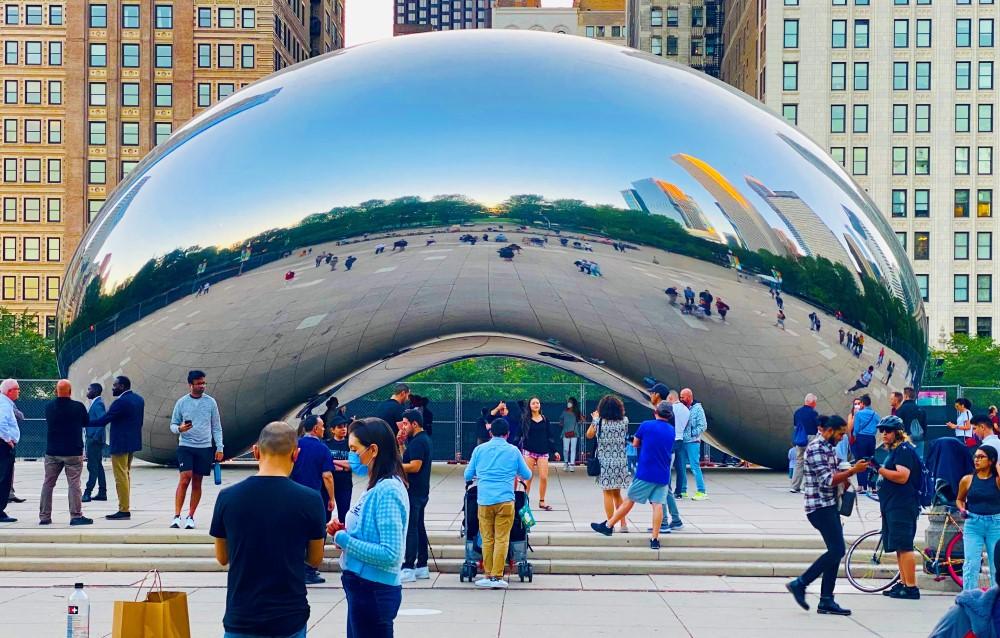
The public’s response was equally enthusiastic. Visitors were captivated by its seamless surface and the funhouse-mirror effect it created, particularly in the concave underside. Long lines quickly formed as people sought to touch its surface, photograph their reflections, and walk underneath its towering arch. Cloud Gate swiftly became a “must-see” attraction, injecting new life into Millennium Park and the city’s cultural landscape.
A Symbol of Chicago
Since its completion in 2006, Cloud Gate has transcended its status as merely a piece of public art to become an undeniable symbol of Chicago. It’s featured prominently in tourism campaigns, movies, television shows, and countless social media posts. The sculpture embodies the spirit of Chicago: bold, innovative, and deeply connected to its urban environment. It represents a forward-looking city that values art, design, and public spaces, seamlessly blending contemporary aesthetics with a rich history of urban planning. Its unique form provides a fresh perspective on the city’s celebrated skyline, constantly changing with the light and seasons.
Impact on Tourism and Urban Landscape
The impact of Cloud Gate on Chicago’s tourism has been profound. Millennium Park, anchored by Cloud Gate and other significant artworks, consistently ranks as one of the most visited attractions in the United States. The “Bean” alone draws millions of visitors annually, significantly boosting the city’s economy and its global profile as a cultural destination. It has helped to redefine the perception of Chicago from a purely industrial or business hub to a vibrant center for art, architecture, and leisure. The success of Cloud Gate also catalyzed further investment in public art and urban development, inspiring other cities to reimagine their public spaces.
Experiencing Cloud Gate Today
For visitors today, Cloud Gate remains an irresistible draw, offering a unique blend of architectural wonder and interactive art. Understanding its history only deepens the appreciation for this modern marvel.
Best Times to Visit
To fully experience Cloud Gate, timing your visit can enhance the experience. Early mornings are ideal for those seeking fewer crowds and the opportunity to capture unobstructed reflections, especially as the sun rises and casts a soft glow on its surface. The morning light also offers crisp reflections of the surrounding architecture. Late afternoons, particularly closer to sunset, provide a different aesthetic, with the sculpture reflecting the warm hues of the setting sun and the sparkling lights of the city coming to life. During the winter months, when temperatures drop, the crowds thin considerably, offering a more serene, albeit chillier, interaction with the sculpture against a stark, often snow-dusted, backdrop.
Photography Tips and Interactions
Cloud Gate is a photographer’s dream. Its reflective surface offers endless opportunities for creative shots. Experiment with angles, capturing the warped reflections of yourself, the skyline, or the sky. The concave underside is particularly popular for its dizzying, kaleidoscopic effects. Don’t be afraid to get low, stand tall, or walk around the entire sculpture to discover its many perspectives. The dynamic nature of the reflections means that no two photos will ever be exactly alike, making each visit a fresh photographic adventure.
Surrounding Attractions in Millennium Park
A visit to Cloud Gate is incomplete without exploring the other magnificent attractions within Millennium Park. Just a short walk away, you’ll find the stunning Crown Fountain, an interactive public art piece featuring two 50-foot glass block towers displaying digital videos of Chicago citizens’ faces, who periodically “spit” water onto a shallow reflecting pool. The architectural marvel of the Jay Pritzker Pavilion, designed by Frank Gehry, hosts free concerts and events throughout the warmer months. The tranquil beauty of the Lurie Garden offers a serene escape, while the nearby Art Institute of Chicago provides world-class artistic treasures. The area around Cloud Gate is a testament to urban renewal and artistic innovation, offering a rich tapestry of experiences for every visitor.
LifeOutOfTheBox is a participant in the Amazon Services LLC Associates Program, an affiliate advertising program designed to provide a means for sites to earn advertising fees by advertising and linking to Amazon.com. Amazon, the Amazon logo, AmazonSupply, and the AmazonSupply logo are trademarks of Amazon.com, Inc. or its affiliates. As an Amazon Associate we earn affiliate commissions from qualifying purchases.