
Navigating Unexpected Roadbumps: Your Guide to California Traffic Tickets
Exploring the scenic routes and vibrant cities of California by car offers unparalleled freedom, allowing tourists to soak in everything from the sun-drenched beaches of San Diego to the majestic redwoods of the north, and the bustling streets of Los Angeles and San Francisco. However, even the most meticulous travelers can sometimes find themselves facing an unexpected challenge: a traffic ticket. For visitors, understanding the specifics of a California citation, particularly locating the crucial citation number, is essential for a smooth resolution and to ensure your memorable trip isn’t tarnished by administrative woes. This guide is tailored to help tourists understand what to look for and what steps to take.
Why a Citation Number Matters for Tourists
The citation number is the unique identifier for your traffic violation, akin to a social security number for your ticket. It’s the primary piece of information you’ll need to look up your case online, pay fines, enroll in traffic school, or contest the violation. Without this number, navigating the California court system or communicating with the relevant authorities becomes exceedingly difficult, if not impossible. For out-of-state or international visitors, this number is particularly critical as it provides the direct link to resolving the issue remotely, often before you even return home. It’s your access key to understanding the charges, due dates, and available options, ensuring you don’t miss crucial deadlines that could lead to escalating penalties or even a warrant.
Common Traffic Violations Tourists Encounter in California
While California’s traffic laws are generally similar to those in other U.S. states, certain rules and enforcement priorities can catch visitors off guard. Common violations include speeding, especially on vast stretches of highway where speed limits might seem low for the road conditions, or in construction zones. Drivers unfamiliar with the dense traffic patterns of cities like Los Angeles or San Francisco might also receive tickets for illegal turns, lane violations, or failing to yield. Distracted driving, particularly using a handheld cell phone, is strictly enforced. Parking violations are also prevalent, especially in busy tourist areas, and can range from expired meters to parking in preferential permit zones without the required display. Being aware of these common pitfalls can help tourists enjoy their journey without unnecessary interruptions.
Decoding Your California Citation: Finding the Key Information
Receiving a traffic ticket can be unsettling, but taking a moment to understand its layout will demystify the process. California traffic tickets, issued by agencies like the California Highway Patrol (CHP) or local police departments, follow a relatively standardized format, designed to convey all necessary information clearly.
The Anatomy of a California Traffic Ticket
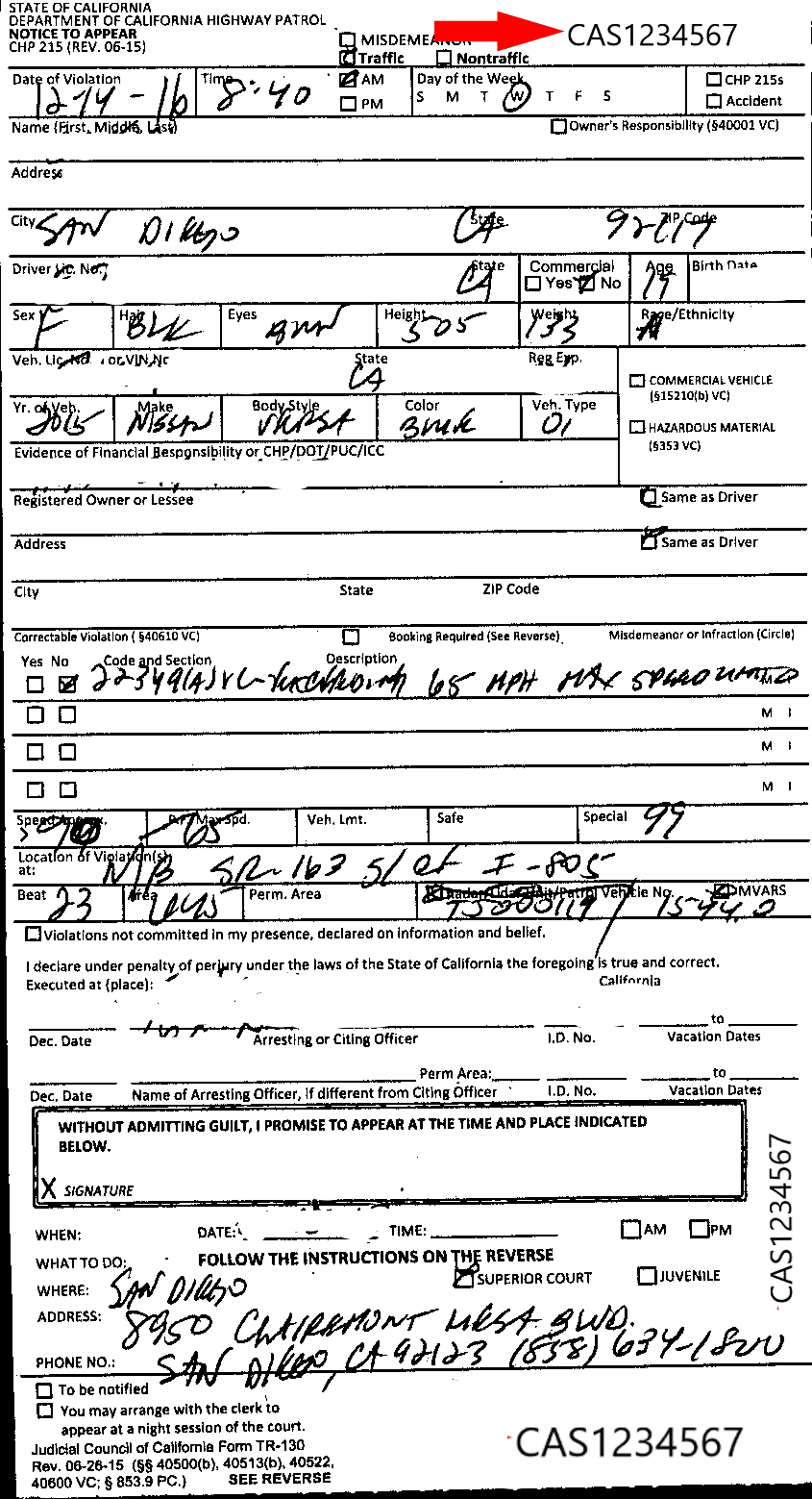
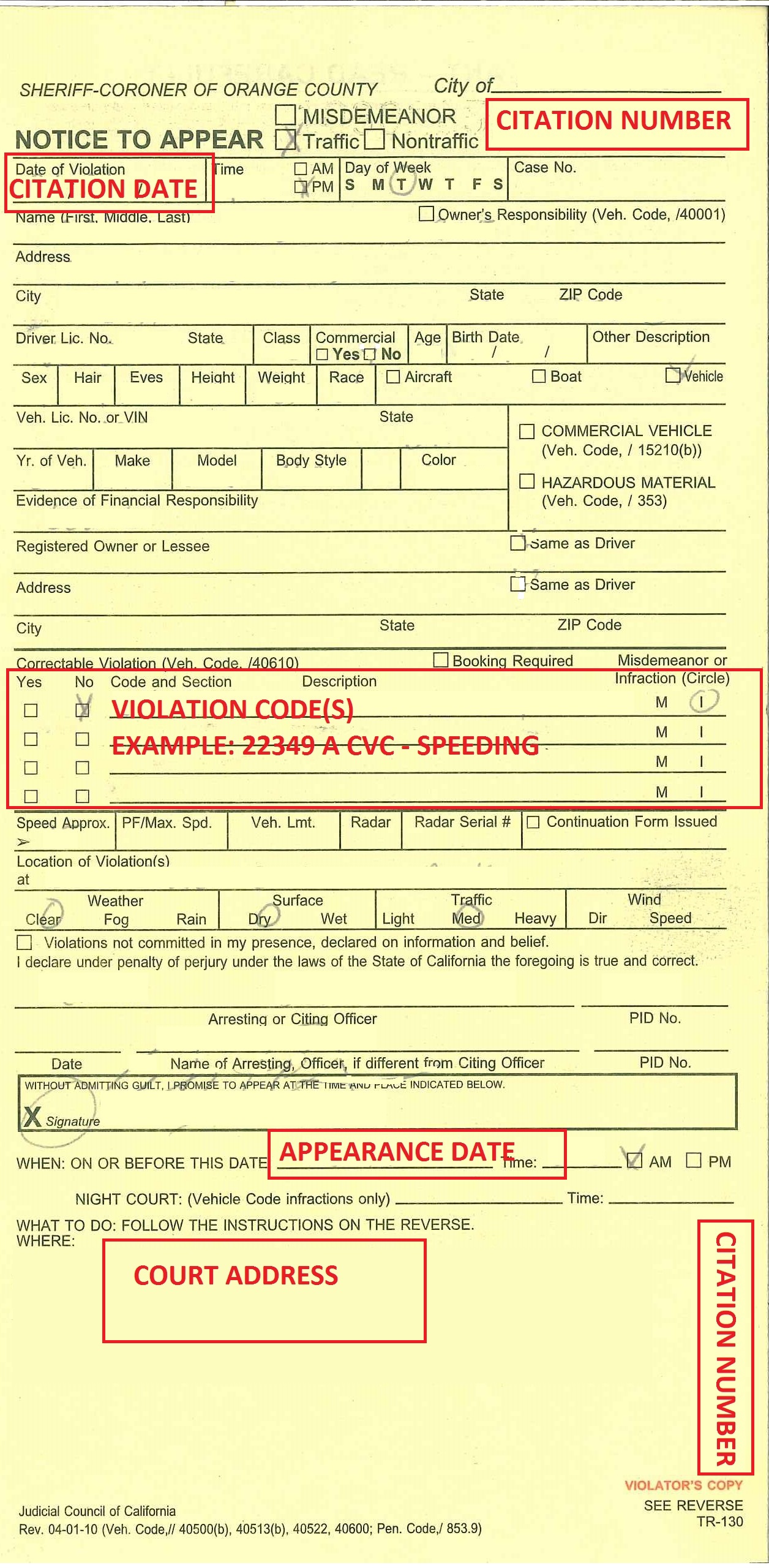
A typical California traffic ticket, also known as a Notice to Appear, is usually a multi-part form. The officer issuing the ticket will fill out various sections, and you will typically receive a carbon copy. Look for the following key sections:
- Driver Information: Your name, address (often your home address, even if out of state), driver’s license number (from your home state or country), and date of birth.
- Vehicle Information: Make, model, license plate number, and VIN of the vehicle you were driving (often a rental car).
- Violation Details: The specific California Vehicle Code (CVC) section you allegedly violated (e.g., CVC 22350 for basic speeding law), the date and time of the violation, and the location (street, city, county). This section will also contain a brief description of the offense.
- Officer Information: The name and badge number of the issuing officer, and the agency they represent.
- Court Information: This is crucial. It will list the name and address of the Superior Court of California in the county where the violation occurred, along with a “due date” or “appearance date.” This date indicates when you must respond to the ticket.
- The Citation Number: This is typically found near the top or bottom of the ticket, often in a prominent box or printed in a larger font. It might be labeled “Citation No.,” “Ticket No.,” “Case No.,” or similar. It’s usually an alphanumeric string. For instance, a ticket issued by the California Highway Patrol often has a distinct series of letters and numbers. Sometimes, local police departments in cities like Sacramento or Oakland might have a different numbering system, but the label “Citation No.” remains common. Always double-check both the front and back of your copy.
Understanding Different Ticket Types and Their Numbers
While the location of the citation number is generally consistent, it’s worth noting that California issues various types of tickets. Parking tickets, for example, often look different from moving violation tickets.
A moving violation ticket (the “Notice to Appear”) issued by a police officer or CHP will have the detailed court information and the prominently displayed citation number as described above. These usually carry points against a California Department of Motor Vehicles (DMV) record, which can affect your insurance even if you are an out-of-state driver.
Parking tickets (issued by cities or parking enforcement agencies) are typically simpler, often just a slip tucked under your wiper. These will have a “citation number” or “violation number” but are usually handled through the issuing city’s parking enforcement division, not the Superior Court of California. They generally do not involve DMV points but can lead to significant late fees or even a boot on your car if left unpaid, especially if it’s a rental car. For tourists, it’s critical to identify the type of ticket to understand the correct channel for resolution.
Your Post-Citation Action Plan as a Visitor
Once you’ve located the citation number and identified the type of ticket, it’s time to act. Ignoring a California traffic ticket, especially for visitors, can lead to serious repercussions, including hefty fines, a suspended driver’s license (even in your home state/country), or even a warrant for your arrest if you fail to appear in court as required.
Accessing Citation Information Online
The first step for many is to look up their citation online. Most California Superior Courts have websites where you can enter your citation number and driver’s license number to view your case details. This online portal will typically show the fine amount, the specific charges, instructions for paying, options for traffic school, and any upcoming court dates. For parking tickets, you’ll need to visit the website of the issuing city’s parking enforcement division. This digital access is a boon for tourists, allowing them to manage their citation from anywhere in the world. Always use the court or city website specified on your ticket to ensure you’re accessing the correct, authoritative information.
Deadlines, Options, and Avoiding Further Complications
Every traffic ticket has a “due date” or “appearance date” by which you must take action. This is usually listed on the ticket itself. It’s crucial to meet this deadline. Your options typically include:
- Paying the fine: The simplest and most common resolution. You can often pay online, by mail, or in person at the court.
- Attending traffic school: For eligible minor infractions, completing traffic school can keep the violation confidential from your driving record, preventing points from being assessed. This is a popular option to avoid insurance premium increases.
- Contesting the ticket (pleading not guilty): If you believe the ticket was issued in error, you have the right to challenge it in court. This typically requires an appearance, which can be challenging for out-of-state or international visitors. Some courts may allow a “trial by written declaration,” which permits you to submit your defense in writing without physically appearing.
Failing to respond by the deadline can lead to a “failure to appear,” which can result in increased fines, a hold on your driver’s license, and potentially a misdemeanor charge. For visitors, this can create difficulties with future travel to the U.S. or even lead to an arrest if you are stopped again in California.
Special Considerations for Out-of-State or International Drivers
For tourists, particular aspects require attention:
- Rental Cars: If you were driving a rental car, the citation will be issued to you, but the rental company might also be notified. They may charge you administrative fees for processing the ticket, even if you pay the fine directly. Ensure you inform the rental company and resolve the ticket promptly to avoid additional charges.
- Driver’s License: California DMV points from a traffic violation can be reported to your home state’s Department of Motor Vehicles via interstate compacts, potentially affecting your insurance rates or driving record there. For international drivers, the impact on your home country’s license varies greatly by jurisdiction. It’s best to resolve the ticket to prevent any potential international ramifications.
- Proof of Service: If you do not receive a “Notice of Fine” or “Courtesy Notice” by mail within a few weeks of your ticket, do not assume it has been dismissed. It is your responsibility to follow up using your citation number.
Tips for a Smooth Driving Experience in the Golden State
Preventing a traffic ticket is always better than dealing with one after the fact. By familiarizing yourself with California’s driving landscape, tourists can significantly reduce their risk of an unexpected citation.
Key California Driving Laws Every Tourist Should Know
- Speed Limits: Observe posted speed limits rigorously. California highways often have varying limits, and urban areas like San Francisco or Los Angeles have lower limits, especially near schools or residential zones.
- Cell Phone Use: It is illegal to use a handheld cell phone while driving. Hands-free devices are permitted, but even then, avoid distracted driving.
- Seatbelts: Seatbelts are mandatory for all occupants, regardless of age or seating position. Children under 8 or shorter than 4’9″ must be in a car seat or booster seat in the rear seat.
- Right Turn on Red: You can typically make a right turn on a red light after a complete stop, unless a sign explicitly prohibits it.
- HOV Lanes: High Occupancy Vehicle (HOV) lanes (carpool lanes) have strict occupancy requirements, usually two or more people. Solo drivers in HOV lanes will be ticketed.
- Parking Signs: Pay very close attention to parking signs in cities. Restrictions can change throughout the day, often due to street cleaning or peak hours.
- “Move Over” Law: When passing stationary emergency vehicles or tow trucks with flashing lights, you must either move to an adjacent lane if safe to do so, or slow down significantly.
Rental Car Specifics and Insurance
When renting a car in California, ensure you understand the insurance coverage offered by the rental company and your personal insurance policy. While this doesn’t prevent tickets, it can protect you in case of an accident. Keep all rental documents handy, as officers may ask for proof of registration and insurance. Always return the rental car on time and without any unresolved violations to avoid further fees from the rental agency.
Embracing Public Transportation in Major Cities
For tourists planning to explore cities like San Francisco, Los Angeles, or San Diego, consider utilizing their extensive public transportation systems. San Francisco’s BART and MUNI, Los Angeles’ Metro system, and San Diego’s MTS can offer a stress-free alternative to driving, particularly when visiting popular attractions like Hollywood or navigating near the Golden Gate Bridge. This approach can save you from the hassle of parking, traffic, and the potential for a citation.
Seeking Assistance and Understanding Your Rights
Even with careful planning, unexpected situations arise. Knowing where to turn for help as a tourist can make all the difference.
Traffic Courts and Legal Aid Resources
Each county in California has a Superior Court of California that handles traffic violations. The specific branch will be listed on your ticket. Their websites are often the best starting point for information. For complex cases or if you wish to contest a ticket remotely, it might be beneficial to consult with a California traffic attorney. Many law firms specialize in traffic law and can offer advice, represent you in court, or guide you through the trial by written declaration process, making it easier for out-of-state or international visitors.
The Impact on Your Home State/Country Driver’s License
While California courts handle the immediate penalties for traffic tickets, the long-term impact on your driver’s license often depends on agreements between states and countries. The Driver License Compact ensures that most U.S. states share information about driving violations. This means a speeding ticket in California could result in points on your record in New York or Texas, potentially leading to increased insurance premiums. For international visitors, the implications are less uniform but can still include difficulties if you return to drive in the U.S. in the future. Always prioritize resolving the ticket to mitigate these potential consequences, ensuring your fond memories of California aren’t overshadowed by lingering legal issues.
LifeOutOfTheBox is a participant in the Amazon Services LLC Associates Program, an affiliate advertising program designed to provide a means for sites to earn advertising fees by advertising and linking to Amazon.com. Amazon, the Amazon logo, AmazonSupply, and the AmazonSupply logo are trademarks of Amazon.com, Inc. or its affiliates. As an Amazon Associate we earn affiliate commissions from qualifying purchases.