
The question of “Who Discovered Texas?” is far more complex than a single name or date. It’s a story woven from centuries of exploration, indigenous heritage, and the shifting tides of colonial powers. Texas, a state renowned for its vast landscapes, rich history, and vibrant culture, wasn’t simply “found” by one individual. Instead, its discovery was a gradual process, shaped by the footprints of those who first walked its lands and the ambitious voyages of European explorers who sought to claim it.
The concept of “discovery” itself is inherently Eurocentric, often overlooking the millennia of human habitation by indigenous peoples. Before any European set foot in what we now call Texas, numerous Native American tribes thrived in its diverse ecosystems. These communities possessed deep knowledge of the land, its resources, and its intricate relationships. Their presence and stewardship are the true first chapters in the story of Texas.
Early Footprints: Indigenous Nations of Texas
Long before European sails appeared on the horizon, Texas was home to a mosaic of indigenous cultures, each with unique traditions, languages, and ways of life. These peoples were the original inhabitants, deeply connected to the land and its bounty. Their presence represents the earliest form of “discovery” – an intimate understanding and utilization of the Texas environment.
The vast plains were roamed by nomadic groups like the Comanche and Kiowa, renowned for their equestrian skills and their adaptation to the open grasslands. These tribes navigated immense territories, following buffalo herds and establishing intricate social structures. Further east, in the more forested regions, settled agricultural communities such as the Caddo flourished. The Caddo were sophisticated builders, known for their intricate pottery and mound construction, their societies organized into confederacies that exerted significant influence over trade routes.
Along the coast, the Karankawa and Coahuiltecan peoples adapted to the challenges and opportunities of the Gulf of Mexico. They were skilled fishermen and hunters, utilizing the abundant marine life and coastal resources. In the west, groups like the Puebloan peoples (though their primary settlements were outside present-day Texas, their influence and trading networks extended into the western parts of the state) contributed to the rich tapestry of indigenous life.
These indigenous nations were not passive observers; they were active participants in shaping the landscape and developing a profound understanding of its natural wealth. They knew the best hunting grounds, the most fertile soil for cultivation, the medicinal properties of plants, and the sacred sites woven into the fabric of their spiritual beliefs. Their discovery of Texas was a continuous, generational process of adaptation, innovation, and a deep spiritual connection to the land that sustained them for thousands of years. Their legacy is an indispensable part of understanding the true history of this vast territory.
European Explorations and Claims
The arrival of Europeans marked a dramatic shift in the history of Texas, introducing new technologies, diseases, and ambitions of conquest and colonization. While indigenous peoples had long navigated and understood the land, European exploration was driven by desires for wealth, power, and the expansion of empires.
The First Europeans: Cabeza de Vaca and the Expedition of 1528
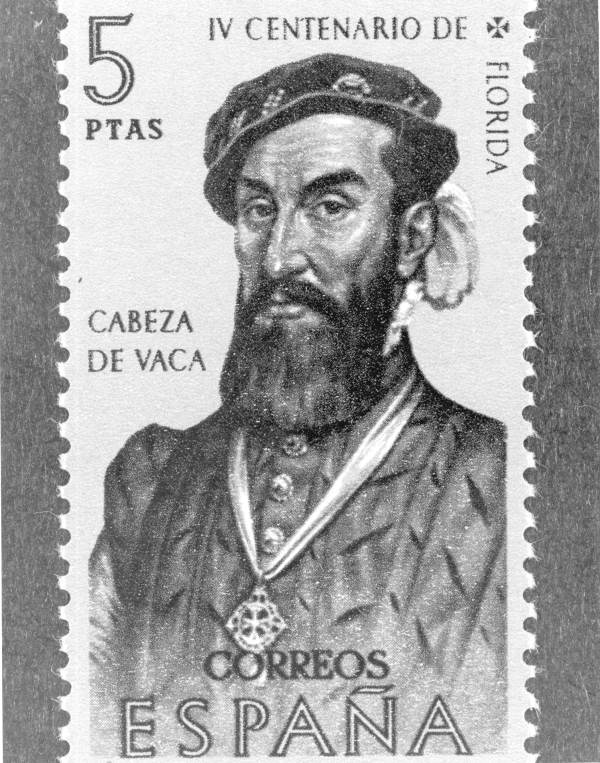
The first documented European to traverse significant portions of Texas was Álvar Núñez Cabeza de Vaca. He was part of the ill-fated Narváez expedition that landed near present-day Tampa, Florida, in 1528 with the goal of establishing colonies. The expedition met with disaster, shipwrecked, and scattered along the Gulf Coast. Cabeza de Vaca and a handful of survivors endured years of captivity and hardship among various Native American tribes, including those in what is now Texas.
For roughly eight years, from 1528 to 1536, Cabeza de Vaca lived among indigenous peoples, learning their languages, customs, and survival strategies. He traveled extensively, from the coast inland, acting as a merchant and a healer. His firsthand accounts, later published as “La Relación” (also known as “The Journey of Alvar Núñez Cabeza de Vaca”), provided the first European descriptions of the geography, flora, fauna, and peoples of this region. While he did not “discover” Texas in the sense of finding an empty land, his arduous journey and subsequent return to Mexico City brought crucial, albeit harrowing, knowledge of the territory to European attention. His experiences laid the groundwork for future Spanish interest in the region.
Spanish Dominion and the Quest for Resources
Following Cabeza de Vaca’s harrowing journey, Spain became increasingly interested in Texas, driven by a mixture of curiosity, strategic concerns, and the persistent allure of riches. The Spanish crown sought to establish a presence to counter potential incursions by other European powers, particularly France, and to seek out rumored mineral wealth.
In 1541, Francisco Vázquez de Coronado led a massive expedition from New Spain (modern-day Mexico) into what is now the southwestern United States, including parts of Texas. Coronado’s primary objective was the mythical Seven Cities of Cibola, rumored to be filled with gold. While his expedition found no such riches and ultimately ended in disappointment regarding gold, it explored vast territories, including the Texas Panhandle. Coronado’s journey, though not focused solely on Texas, contributed to the expanding European map of North America and reinforced Spanish claims.
The Spanish established their first permanent settlement in Texas in 1690: Mission San Francisco de los Tejas near present-day Weches. This mission, along with others established later, represented an attempt to convert indigenous populations to Christianity and solidify Spanish control. However, these early missions faced immense challenges, including disease, indigenous resistance, and logistical difficulties, and were often short-lived. Despite these setbacks, Spain maintained a nominal claim over Texas for centuries, viewing it as a buffer territory between its more established colonies and the ambitions of other European nations.
French Interlopers and Shifting Borders
The presence of France in North America, particularly their claims along the Mississippi River, created a strategic imperative for Spain to maintain its own presence in Texas. The French explorer René-Robert Cavelier, Sieur de La Salle, established a short-lived colony, Fort Saint Louis, on the Texas coast in 1685. While La Salle’s colony was a failure, ultimately succumbing to disease, internal strife, and indigenous attacks, its existence deeply concerned the Spanish.
La Salle’s unauthorized settlement in territory claimed by Spain spurred a more aggressive Spanish response. The Spanish launched their own expeditions to find and expel the French, inadvertently leading to further exploration of the Texas interior. These French incursions, however fleeting, highlighted the strategic importance of Texas and prompted Spain to increase its efforts to settle and fortify the region, leading to the establishment of more missions and presidios (military forts) throughout the 18th century. The struggle between Spain and France for influence in North America played a significant role in defining the boundaries and future of Texas.
From Spanish Claim to Mexican Statehood
The 19th century ushered in a new era for Texas, characterized by a transition from Spanish colonial rule to becoming part of an independent Mexico, and then ultimately, to its own republic and statehood within the United States.
Mexican Texas and the Empresario System
Following Mexico’s independence from Spain in 1821, Texas became part of the new nation. Initially, Mexico sought to populate and develop its northern frontier, including Texas. To achieve this, they adopted the empresario system, inviting foreign settlers, primarily from the United States, to come and establish colonies in exchange for land.
The most famous and successful empresario was Stephen F. Austin, often called the “Father of Texas.” Austin brought over 300 Anglo-American families, known as the “Old Three Hundred,” to settle along the Brazos River. These settlers were granted land under specific terms, including pledging allegiance to Mexico and becoming Catholic. Under Austin’s leadership, these colonies began to flourish, attracting a wave of new immigrants. However, cultural and political differences between the Anglo settlers and the Mexican government soon began to surface, leading to growing tensions over issues such as slavery, land rights, and governance.
The Texas Revolution and Independence
The escalating friction between the settlers and the Mexican government culminated in the Texas Revolution, which began in 1835. Key events that fueled the conflict included the Mexican government’s abolition of slavery in 1829 and its attempts to centralize power, which angered settlers who were accustomed to more autonomy.
The revolution saw iconic battles such as the Battle of Gonzales, where Texans fired upon Mexican troops demanding the return of a cannon, famously flying a flag with the words “Come and Take It.” The tragic Siege of the Alamo in San Antonio, where a small group of Texan defenders held out against a much larger Mexican army for 13 days, became a powerful symbol of Texan resistance and sacrifice. Later, at the Battle of San Jacinto on April 21, 1836, Texan forces led by Sam Houston decisively defeated the Mexican army under General Santa Anna, securing Texas’s independence.

The Republic of Texas and Statehood
On March 2, 1836, Texas declared its independence and became the Republic of Texas. For nearly a decade, Texas existed as an independent nation, with its own president, congress, and currency. The young republic faced numerous challenges, including financial instability, ongoing border disputes with Mexico, and maintaining relations with indigenous tribes.
Despite its independence, many Texans, particularly the Anglo settlers, desired annexation by the United States. After much political debate in both Texas and the U.S. regarding the issue of slavery and the potential for war with Mexico, Texas was finally annexed by the United States on December 29, 1845, becoming the 28th state. This act of annexation ultimately led to the Mexican-American War (1846-1848), which resulted in Mexico ceding a vast amount of territory to the United States, including present-day California, Nevada, Utah, Arizona, and parts of New Mexico, Colorado, and Wyoming.
Therefore, the “discovery” of Texas is a narrative of continuous human presence, European ambition, and the complex evolution of political control. It’s a story that honors the indigenous peoples who first knew and shaped this land, the explorers who charted its unknown territories, and the pioneers who fought for its independence and eventual union with the United States. Each played a vital role in bringing Texas into existence as we know it today.
LifeOutOfTheBox is a participant in the Amazon Services LLC Associates Program, an affiliate advertising program designed to provide a means for sites to earn advertising fees by advertising and linking to Amazon.com. Amazon, the Amazon logo, AmazonSupply, and the AmazonSupply logo are trademarks of Amazon.com, Inc. or its affiliates. As an Amazon Associate we earn affiliate commissions from qualifying purchases.