
California, a state synonymous with sunshine, innovation, and breathtaking landscapes, holds a fascinating origin story for its name. Far from a simple geographical designation, the name “California” evokes a rich history steeped in literature and legend, ultimately shaping the perception and allure of this iconic American destination. Understanding the etymology of California is not merely an academic exercise; it offers a unique lens through which to view the historical narratives that have long drawn explorers, settlers, and tourists to its shores.
The Literary Genesis: From Romance Novel to Real-World Exploration
The most widely accepted theory posits that the name “California” originates from a popular 16th-century Spanish romance novel titled Las sergas de Esplandián (The Adventures of Esplandián). Written by Garci Rodríguez de Montalvo, this chivalric tale, a sequel to the even more famous Amadís de Gaula, introduced readers to a mythical island paradise.

Las sergas de Esplandián and the Island of Amazons
In Montalvo’s novel, the island of California was described as an earthly paradise, exceptionally rich in gold and inhabited by a fierce race of Black Amazon warriors ruled by the powerful Queen Calafia. The narrative paints a vivid picture of this remote and exotic land, accessible only by sea and populated by creatures and wonders beyond ordinary imagination. The island was said to be located “on the right hand of the Indies… very close to the side of the Terrestrial Paradise.” This evocative description, filled with promises of immense wealth and untamed beauty, captured the imagination of European readers.
The Spread of the Myth
As Las sergas de Esplandián gained popularity, the name “California” and its mythical associations began to spread. The Age of Exploration was in full swing, and explorers, fueled by tales of riches and undiscovered lands, were eager to find new territories. It is believed that Spanish navigators and conquistadors, familiar with the popular literature of their time, encountered the landmass that would become the Baja California peninsula and the subsequent broader region.
The Naming of Baja California and the Extension of the Legend
The first European to explore the coast of what is now Baja California was the Spanish explorer Hernán Cortés in 1533. Subsequent expeditions, including those led by Francisco de Ulloa in 1539, further mapped the coast. These explorers, encountering a hot, arid, and seemingly isolated landmass, likely drew parallels between the reality they were encountering and the fantastical island described in Montalvo’s novel.
An Island of Gold and Myth
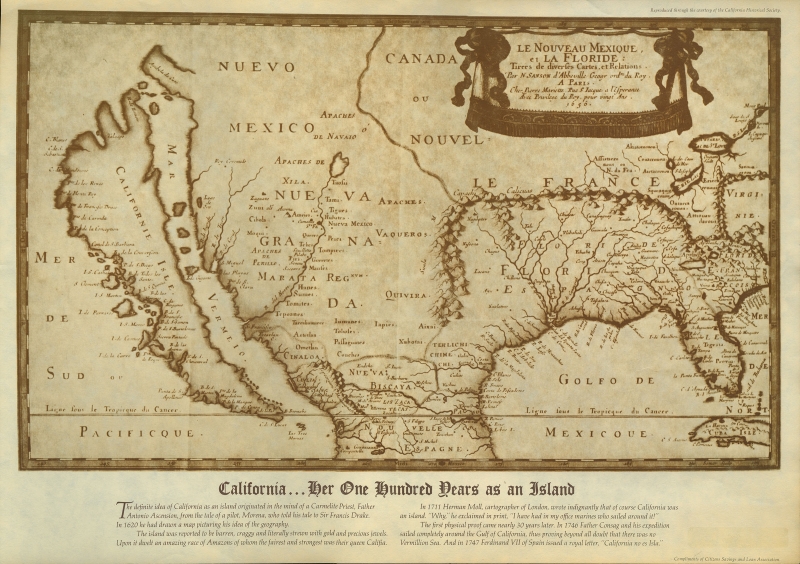
Initially, the early Spanish explorers believed that the land they had found was indeed an island. This perception, coupled with the region’s potential for mineral wealth—which, while not as abundant as in Montalvo’s fiction, did hold promise—likely solidified the adoption of the name “California.” The romanticized image of Queen Calafia’s island, with its abundant gold, resonated with the ambitions and expectations of the explorers. The name thus became intrinsically linked to the dream of discovering a new Eden, a land of untold riches and exotic wonders.
The Expansion Northward
As exploration continued and expanded northward, the name “California” was applied to a much larger territory, encompassing not only the peninsula but also the vast region that would eventually become the state of California in the United States. The geographical inaccuracies of early maps and the expansive nature of exploration meant that the name was applied loosely, covering a vast and largely unknown expanse of land. The legend of California, once confined to the pages of a novel, was now being inscribed onto the maps of the known world.
The Enduring Allure: From Mythical Island to Modern Destination
The name “California” has retained its powerful allure, transcending its literary origins to become a symbol of aspiration, opportunity, and a distinct way of life. The original myth, whether consciously or subconsciously, has contributed to the enduring perception of the region as a place of dreams and potential.
The “Golden State” Legacy
The historical association with gold, amplified by the discovery of gold in California in 1848, further cemented the connection to wealth and fortune. The California Gold Rush drew hundreds of thousands of people from around the world, all seeking their fortune, echoing the very allure of Queen Calafia’s mythical island. This period dramatically shaped the demographics, economy, and identity of the region, solidifying its reputation as a land of opportunity. The nickname “The Golden State” is a direct nod to this rich history, linking back to the initial literary inspiration and the subsequent historical events.
California Today: A Beacon of Opportunity and Innovation
In contemporary times, California continues to embody a spirit of innovation, dynamism, and diverse experiences. From the technological hub of Silicon Valley to the entertainment capital of the world in Los Angeles, and the natural beauty of Yosemite National Park and the Pacific Coast Highway, the state offers a tapestry of attractions. The initial literary fantasy has, in a way, been realized through the state’s significant contributions to various fields and its captivating natural wonders.
The name “California” serves as a constant reminder of the power of storytelling and how fiction can influence reality. It speaks to a history where imagination and exploration intertwined, leading to the discovery and naming of one of the most significant regions in the United States. The journey from a mythical island of Amazons to a vibrant, diverse, and influential state is a testament to the enduring legacy of its name.
LifeOutOfTheBox is a participant in the Amazon Services LLC Associates Program, an affiliate advertising program designed to provide a means for sites to earn advertising fees by advertising and linking to Amazon.com. Amazon, the Amazon logo, AmazonSupply, and the AmazonSupply logo are trademarks of Amazon.com, Inc. or its affiliates. As an Amazon Associate we earn affiliate commissions from qualifying purchases.