
Ensuring a stable and healthy lifestyle in a state as vibrant and diverse as California often involves careful financial planning and knowing where to turn for support. For many residents, maintaining food security is a fundamental component of a balanced lifestyle, allowing them to focus on work, education, and family without the constant burden of hunger. This is where CalFresh, California’s version of the federal Supplemental Nutrition Assistance Program (SNAP), plays a crucial role. Understanding who qualifies for CalFresh is essential for anyone seeking to enhance their household’s financial well-being and secure consistent access to nutritious food. This guide delves into the eligibility criteria, application process, and specific considerations for different household types, all aimed at helping you navigate the path to a more secure lifestyle in the Golden State.
Understanding CalFresh: California’s Food Assistance Program
For individuals and families striving for financial stability and adequate nutrition in California, CalFresh stands as a vital resource. It’s more than just a government program; it’s a lifestyle enhancer, designed to lift the burden of food insecurity and allow households to thrive.
What is CalFresh?
CalFresh provides monthly benefits on an Electronic Benefit Transfer (EBT) card, which functions much like a debit card. This card can be used to purchase eligible food items at most grocery stores, farmers’ markets, and even some online retailers. The program is entirely federally funded, with state and county agencies overseeing its administration. Its primary goal is to ensure that low-income individuals and families have access to healthy food, thereby improving overall health, well-being, and reducing instances of hunger across the state. The benefits are intended to supplement a household’s food budget, not to cover all food expenses, but for many, it makes a significant difference in their daily lifestyle.
CalFresh and Your Lifestyle
Access to CalFresh benefits can profoundly impact a household’s lifestyle. When the strain of affording food is reduced, families can redirect their limited financial resources towards other critical needs, such as housing, utilities, transportation, and educational expenses. This reallocation of funds can alleviate significant stress, fostering a more stable and less precarious living situation. For parents, it means less worry about feeding their children; for students, it means better focus on their studies; and for all, it contributes to better physical and mental health. Beyond immediate financial relief, CalFresh promotes healthier eating habits by making nutritious foods more accessible, which is a cornerstone of a high-quality lifestyle regardless of income level. It’s about empowering Californians to build a foundation of food security, enabling them to pursue their personal and professional aspirations with greater confidence.
Core Eligibility Requirements for CalFresh
Navigating the eligibility requirements for CalFresh can seem complex, but understanding the core criteria is the first step toward determining if this program aligns with your household’s lifestyle needs. The main factors considered are residency, citizenship status, income, and, in some cases, assets.
Residency and Citizenship Status
To qualify for CalFresh, applicants must be residents of California. This typically means living in the state and intending to remain there. In terms of citizenship, eligible individuals generally include U.S. citizens, U.S. nationals, and certain legal non-citizens. The rules for non-citizens can be nuanced; for instance, many lawfully admitted permanent residents (green card holders) must have lived in the U.S. for at least five years or meet specific exemption criteria (e.g., receiving disability benefits, being a refugee, or a child under 18). While not all non-citizens are eligible, children who are U.S. citizens may qualify for benefits even if their parents do not, creating “mixed-status households.” It’s important to note that applying for CalFresh does not classify an individual as a “public charge,” a concern for some immigrant families. This distinction helps ensure that individuals can access vital food assistance without fear of jeopardizing their immigration status.
Income Limits: A Key Lifestyle Factor
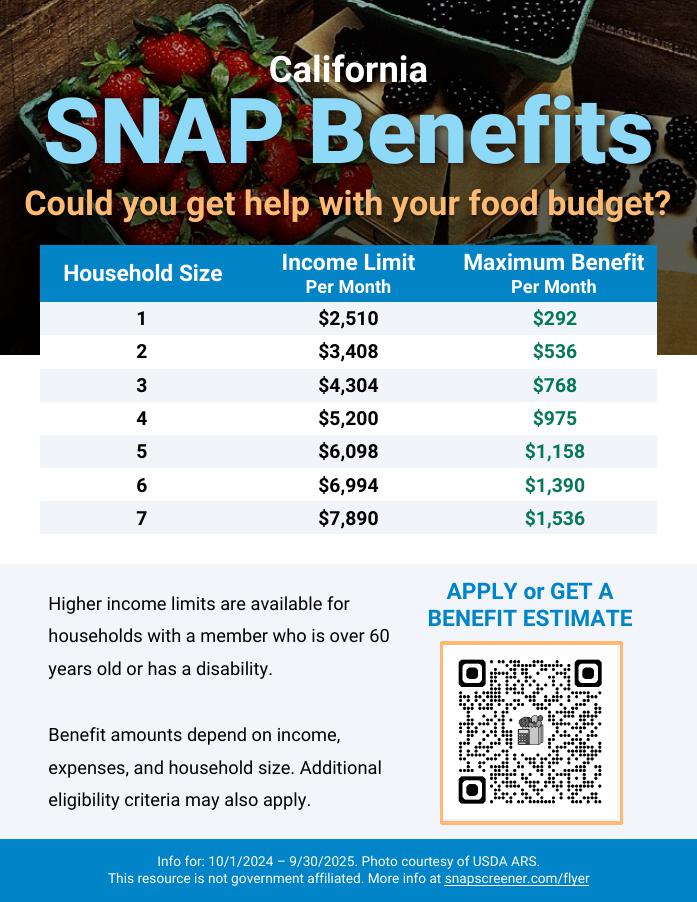
Income is often the most significant determinant of CalFresh eligibility. The program uses a comparison against the Federal Poverty Level (FPL) to set its income thresholds, which vary based on household size. Generally, a household’s gross monthly income (before deductions) must be at or below 200% of the FPL for most applicants. However, for households containing an elderly (age 60 or older) or disabled member, the gross income limit is typically 200% of the FPL, and the net income (after deductions) must be at or below 100% of the FPL.
What counts as income? It includes wages, salaries, self-employment earnings, social security benefits, unemployment compensation, disability payments, and child support, among others. Certain deductions are allowed to calculate net income, such as a standard deduction, earned income deduction, child care costs, and significant medical expenses for elderly or disabled members. These deductions are critical because they effectively lower a household’s countable income, potentially bringing them within eligibility limits. Given California’s high cost of living, these income limits are specifically tailored to help those struggling to make ends meet, allowing them to maintain a basic quality of life despite economic challenges.
Asset Limits (or Lack Thereof for Most)
One of the most encouraging aspects of CalFresh in recent years is the elimination of asset limits for most households. Previously, households could be disqualified if they had too much money in bank accounts or other readily available assets. This change has significantly broadened access to benefits, acknowledging that even individuals with some savings might still face food insecurity due to high living costs or unexpected expenses.
However, a very limited asset test may still apply to certain households. For example, some elderly or disabled households that do not meet the 200% FPL gross income test might still be subject to an asset limit. For these specific cases, the countable assets (excluding homes, vehicles, and most retirement accounts) must typically be below certain thresholds, usually around $3,750 for households with an elderly or disabled member and $2,500 for others. For the vast majority of CalFresh applicants, however, worrying about asset limits is no longer a barrier, making the program more accessible and better aligned with the needs of a diverse range of lifestyles.
Special Circumstances and CalFresh Eligibility
While core eligibility criteria apply broadly, CalFresh also accounts for various special circumstances that can impact an individual’s or household’s qualification. These provisions are designed to ensure that specific groups, often facing unique challenges, can still access the vital food assistance they need to maintain a stable lifestyle.
Students: Balancing Education and Basic Needs

College students often live on tight budgets, making food security a significant concern. While many full-time college students (aged 18-49) are generally not eligible for CalFresh, there are crucial exemptions. A student can qualify if they:
- Work at least 20 hours a week for pay.
- Participate in a state or federal work-study program.
- Are physically or mentally unfit for employment.
- Care for a dependent child under 6, or a dependent child aged 6-12 if adequate child care is unavailable.
- Receive Temporary Assistance for Needy Families (TANF) benefits.
- Are enrolled in a specific program that increases employability (e.g., some vocational programs or EOPS).
- Are a single parent enrolled full-time with a child under 12.
These exemptions acknowledge the demanding lifestyle of a student, aiming to support their educational journey by alleviating food-related stress. For many, CalFresh can be the difference between dropping out due to financial strain and successfully completing their education, ultimately leading to improved long-term lifestyle prospects.
Immigrants and Mixed-Status Households
California is home to a large and diverse immigrant population, and CalFresh has specific provisions for non-citizens. As mentioned, eligible non-citizens include many lawful permanent residents (green card holders) who have been in the U.S. for five years, refugees, asylees, and victims of trafficking. Undocumented immigrants are generally not eligible.
A critical aspect is “mixed-status households,” where some members are eligible (e.g., U.S. citizen children) and others are not (e.g., undocumented parents). These households can still apply for CalFresh benefits on behalf of their eligible members. When applying, the income and resources of all household members, including those not applying for benefits, are typically counted to determine the household’s overall eligibility and benefit amount. However, this process does not put the immigration status of ineligible members at risk, as CalFresh is not considered a “public charge” program. This policy ensures that eligible family members, especially children, can receive the nutritional support necessary for a healthy lifestyle, regardless of their parents’ immigration status.
Elderly and Disabled Individuals: Enhanced Support for Specific Lifestyles
Elderly individuals (age 60 or older) and those with disabilities often face unique financial challenges and higher costs, such as medical expenses. CalFresh provides enhanced support for these populations, recognizing their distinct lifestyle needs.
- Medical Expense Deductions: Elderly or disabled individuals can deduct out-of-pocket medical expenses exceeding $35 per month, which can significantly lower their countable net income and increase their benefit amount.
- Shelter Deductions: These households may qualify for higher shelter cost deductions, reflecting the reality of housing expenses.
- No Asset Limit: For many elderly or disabled households that meet specific income thresholds, the asset test is waived entirely, similar to general households.
These provisions are designed to help elderly and disabled Californians maintain their independence and access nutritious food without sacrificing other essential living costs. For these vulnerable populations, CalFresh is not just a food program; it’s a crucial tool for sustaining a dignified and healthy lifestyle.
How to Apply and Maintain Your CalFresh Benefits
Once you’ve determined that your household might qualify for CalFresh, understanding the application process and how to maintain your benefits is crucial for ensuring continuous support for your lifestyle. The process is designed to be accessible, with multiple ways to apply.
The Application Process: Navigating the System
Applying for CalFresh can be done through several convenient channels:
- Online: The easiest and most common method is via BenefitsCal.com, California’s unified platform for several assistance programs. You can complete the application, upload documents, and track your status online.
- In-Person: You can visit your local county social services office to apply with the assistance of a caseworker.
- By Mail or Fax: Download an application form from the BenefitsCal.com website or pick one up at your county office, complete it, and mail or fax it in.
Regardless of the method, you will need to provide certain documentation to verify your eligibility. This typically includes:
- Proof of Identity: Driver’s license, state ID, or other valid identification.
- Proof of Residency: Utility bill, rental agreement, or mail showing your California address.
- Proof of Income: Pay stubs, employer statements, award letters for benefits (e.g., Social Security, unemployment).
- Proof of Expenses: Rent or mortgage statements, utility bills, child care receipts, and medical bills (for elderly/disabled applicants).
- Household Information: Names and birth dates of all household members.
After submitting your application, you will typically be scheduled for an interview with a county caseworker. This interview, which can often be conducted over the phone, is an opportunity to clarify information, discuss your household’s specific situation, and ask any questions you might have. It’s an important step in assessing your eligibility and ensuring the benefits align with your lifestyle needs.
Maintaining Eligibility and Reporting Changes
Receiving CalFresh benefits is not a one-time event; it requires ongoing engagement to ensure continuous support. Households are generally certified for a period ranging from 6 to 24 months, after which they must undergo a “recertification” process. This involves reapplying and potentially another interview to confirm continued eligibility.
Furthermore, beneficiaries have a responsibility to report certain changes in their household’s circumstances. Significant changes that could affect eligibility or benefit amounts include:
- Income Changes: A substantial increase or decrease in household income.
- Household Composition: Someone moving in or out of the household (e.g., a new baby, a child moving out).
- Residency: Moving out of California.
- Work Status: Changes in employment for able-bodied adults without dependents (ABAWDs), if applicable.
The frequency and type of reporting required depend on the specific reporting rules for your household (e.g., Simplified Reporting, Semi-Annual Reporting). Staying informed about these requirements and promptly reporting any changes is crucial. Failure to report changes in a timely manner could result in overpayments, requiring you to repay benefits, or even termination of your benefits. By actively managing your CalFresh account and communicating with your county office, you can ensure that this essential support remains a consistent part of your stable lifestyle in California.

Conclusion
Access to nutritious food is a fundamental pillar of a healthy and stable lifestyle, and in California, CalFresh serves as an invaluable resource for countless individuals and families. By understanding the detailed eligibility requirements, including income limits, citizenship status, and special considerations for students, immigrants, and the elderly or disabled, Californians can determine if this program is the right fit for their household. The process, while requiring documentation and an interview, is designed to be accessible, with online options making it easier than ever to apply.
CalFresh is more than just a safety net; it’s an empowering tool that contributes to financial stability, improved health, and greater peace of mind. For those navigating the complexities of modern living in California, particularly amidst economic fluctuations, securing reliable access to food allows for a greater focus on personal growth, education, and community engagement. If you believe your household may qualify, taking the step to apply for CalFresh is a proactive and beneficial choice towards fostering a more secure and fulfilling lifestyle.
LifeOutOfTheBox is a participant in the Amazon Services LLC Associates Program, an affiliate advertising program designed to provide a means for sites to earn advertising fees by advertising and linking to Amazon.com. Amazon, the Amazon logo, AmazonSupply, and the AmazonSupply logo are trademarks of Amazon.com, Inc. or its affiliates. As an Amazon Associate we earn affiliate commissions from qualifying purchases.