
The Supplemental Nutrition Assistance Program (SNAP), commonly known as food stamps, plays a vital role in ensuring food security for millions of individuals and families across the United States, including in the diverse and dynamic state of California. In California, the program is administered by the California Department of Social Services (CDSS) and operates under specific eligibility requirements designed to assist those most in need. Understanding these qualifications is crucial for residents seeking to access this essential support. Eligibility is primarily determined by income, household size, assets, and specific household circumstances. This comprehensive guide will delve into the nuances of who qualifies for food stamps in California, providing clarity for applicants and highlighting the program’s significant impact on individual and community well-being.
Understanding Eligibility Criteria
The foundation of California’s food stamp program, CalFresh, rests on a set of detailed eligibility criteria. These criteria are meticulously designed to direct benefits to individuals and families facing genuine food insecurity. The primary factors influencing eligibility are household income, household size, and the value of countable assets. It’s important to note that these thresholds can fluctuate, often tied to the federal poverty level and adjusted annually. Therefore, applicants should always refer to the latest guidelines provided by the California Department of Social Services or their local county social services office for the most current information.
Income Requirements
Income is a cornerstone of eligibility for CalFresh. The program employs two types of income tests: gross income and net income.
- Gross Income Test: This test considers the total income of all household members before any deductions are made. For most households, the gross monthly income must be at or below 130% of the federal poverty level for their household size. This means that a family’s total earnings from all sources must fall within a specific range to be considered for benefits.
- Net Income Test: If a household meets the gross income test, they then undergo a net income test. This test calculates the household’s income after certain deductions are applied. These deductions can include a standard deduction, a dependent care deduction, medical expenses for elderly or disabled household members, and a deduction for shelter costs (rent or mortgage). The net monthly income must be at or below 100% of the federal poverty level for their household size. This two-tiered approach ensures that even households with incomes above the gross limit may still qualify if their essential expenses significantly reduce their available income for food.
Household Size
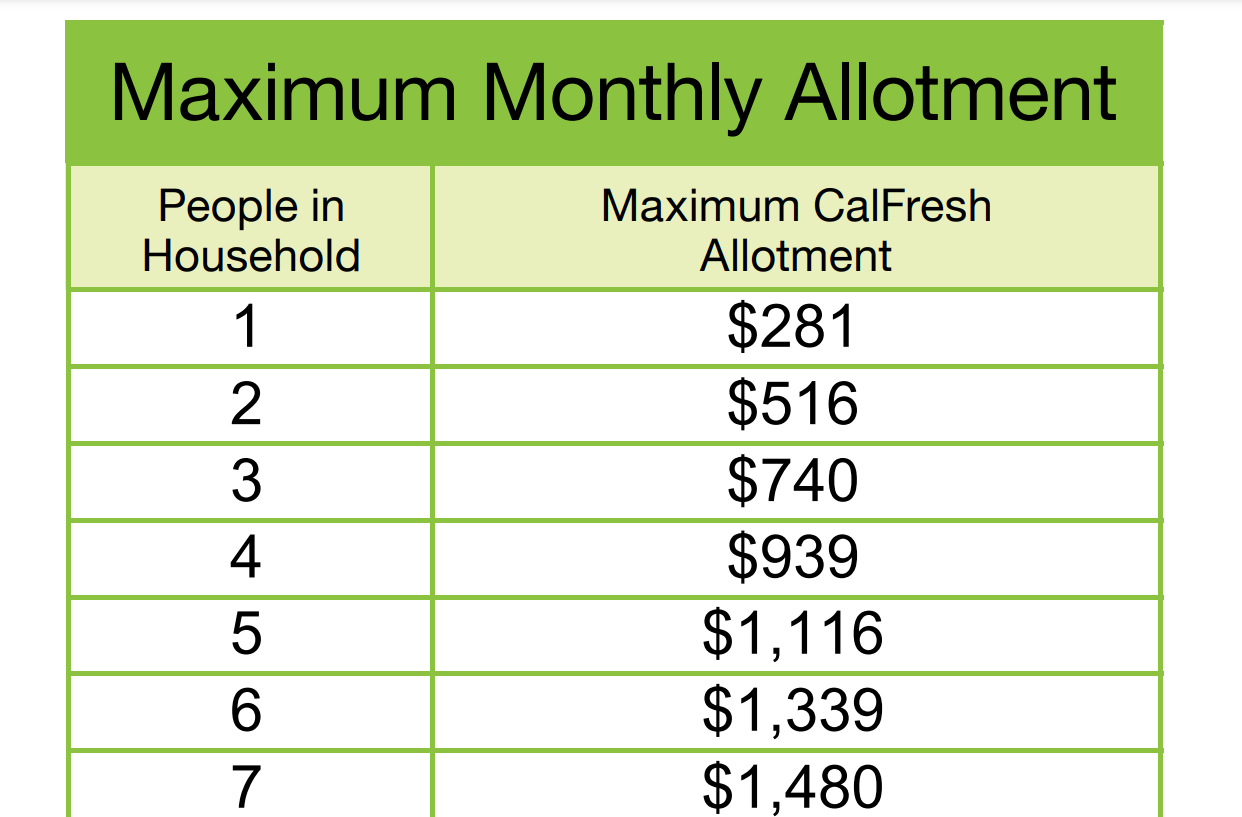
The size of a household is a direct determinant of income eligibility thresholds. Larger households generally have higher income limits. This is a logical approach, as more individuals within a household naturally incur greater expenses for food, housing, and other necessities. For instance, a single individual will have a lower income limit than a family of four. The California Department of Social Services provides charts that clearly outline these income limits based on the number of people in the household. These charts are essential resources for potential applicants to gauge their initial eligibility.
Asset Limits
In addition to income, CalFresh also has limits on the value of assets a household can own. Assets are resources that can be converted to cash. For most applicants, countable assets are limited to a specific amount, typically $2,750. However, this limit is increased to $4,250 for households that include at least one member who is elderly (60 years or older) or disabled.
Certain assets are typically excluded from this count. These often include:
- The home in which the household resides.
- One vehicle per adult household member.
- Retirement accounts, such as pensions and 401(k)s.
- The value of life insurance policies.
- Personal possessions like furniture and clothing.
The purpose of the asset test is to ensure that benefits are provided to those who genuinely need assistance rather than those who possess significant financial reserves.
Special Circumstances and Exemptions
While the general income, household size, and asset rules form the basis of CalFresh eligibility, there are several special circumstances and exemptions that can affect an applicant’s qualification. These provisions are designed to accommodate the diverse needs and situations of California’s population.

Elderly and Disabled Households
Households that include a member who is elderly (60 years of age or older) or has a disability often have more favorable eligibility rules. These households may be exempt from certain requirements, such as work registration or specific asset limitations. For example, as mentioned earlier, the asset limit is higher for households with an elderly or disabled member. Furthermore, medical expenses incurred by elderly or disabled individuals can be deducted when calculating net income, potentially making more households eligible. This recognition of the unique challenges faced by these vulnerable groups underscores the program’s commitment to providing essential support where it is most needed.
Students
Students, particularly those enrolled in higher education, face specific rules regarding CalFresh eligibility. Generally, students aged 18 to 49 who are enrolled at least half-time in an institution of higher education are subject to stricter work requirements and may not be eligible for benefits unless they meet specific exemptions. These exemptions can include:
- Being enrolled in a program that provides work-study.
- Receiving CalWORKs or TANF benefits.
- Being unable to work due to a physical or mental limitation.
- Being a single parent responsible for a dependent child.
- Participating in a job training program.
- Being unable to work due to caring for an incapacitated person.
These rules are in place to ensure that the program supports individuals in genuine need of food assistance while encouraging self-sufficiency, especially for those pursuing educational opportunities that are intended to lead to long-term economic stability.
Work Requirements
For many non-exempt adult recipients, CalFresh includes work requirements. This means that able-bodied adults without dependents may be required to participate in work activities, such as employment, job search, or participation in a work training program, to remain eligible for benefits. There are limits on how long an individual can receive benefits without meeting these work requirements. However, there are also numerous exemptions to these requirements, including:
- Individuals who are medically certified as physically or mentally unfit for employment.
- Individuals caring for a dependent child or incapacitated person.
- Individuals participating in a drug or alcohol treatment program.
- Students who meet specific criteria.
- Pregnant women.
The aim of these work requirements is to promote self-sufficiency and employment among recipients who are able to work, while ensuring that those who cannot due to genuine barriers continue to receive necessary food assistance.
Applying for CalFresh in California
The application process for CalFresh in California is designed to be accessible, though it requires careful attention to detail. Applicants can typically apply online, in person at their local county social services office, or by mail.
The Application Process
- Gather Documentation: Applicants will need to gather essential documents to support their application. This typically includes proof of identity, proof of residency in California, proof of income (such as pay stubs, tax returns, or letters from employers), and documentation of household expenses (like rent receipts or utility bills). For those claiming exemptions based on disability or age, relevant medical documentation or proof of age will be necessary.
- Submit the Application: Applications can be submitted through the California Department of Social Services’ online portal, at a local county office, or via mail. Online applications are often the fastest method.
- Interview: After submitting the application, most applicants will be required to participate in an interview with a county eligibility worker. This interview is an opportunity for the worker to clarify information on the application, explain the program rules, and answer any questions the applicant may have.
- Decision and Benefits: Once the interview is completed and all necessary documentation has been verified, the county will make a decision on the application. If approved, applicants will receive a CalFresh EBT card (Electronic Benefit Transfer), similar to a debit card, which is used to purchase eligible food items at authorized retailers. The amount of benefits received is determined by the household’s net income, size, and allowable deductions.

Recertification and Ongoing Eligibility
Receiving CalFresh benefits is not a one-time approval. Recipients are required to recertify their eligibility periodically, typically every 6 or 12 months, depending on their circumstances. This process involves updating household information, income, and expenses to ensure continued eligibility. Failure to recertify in a timely manner can result in the termination of benefits. It is crucial for recipients to stay informed about their recertification deadlines and to submit all required documentation promptly.
In conclusion, understanding the eligibility criteria for food stamps in California is a key step for individuals and families seeking to alleviate food insecurity. The CalFresh program, administered by the California Department of Social Services, provides a critical safety net, guided by comprehensive rules regarding income, household size, and assets. By carefully reviewing these requirements and preparing the necessary documentation, eligible residents can successfully access this essential support, contributing to healthier lives and stronger communities throughout the Golden State.
LifeOutOfTheBox is a participant in the Amazon Services LLC Associates Program, an affiliate advertising program designed to provide a means for sites to earn advertising fees by advertising and linking to Amazon.com. Amazon, the Amazon logo, AmazonSupply, and the AmazonSupply logo are trademarks of Amazon.com, Inc. or its affiliates. As an Amazon Associate we earn affiliate commissions from qualifying purchases.