
A Republic Forged in Revolution
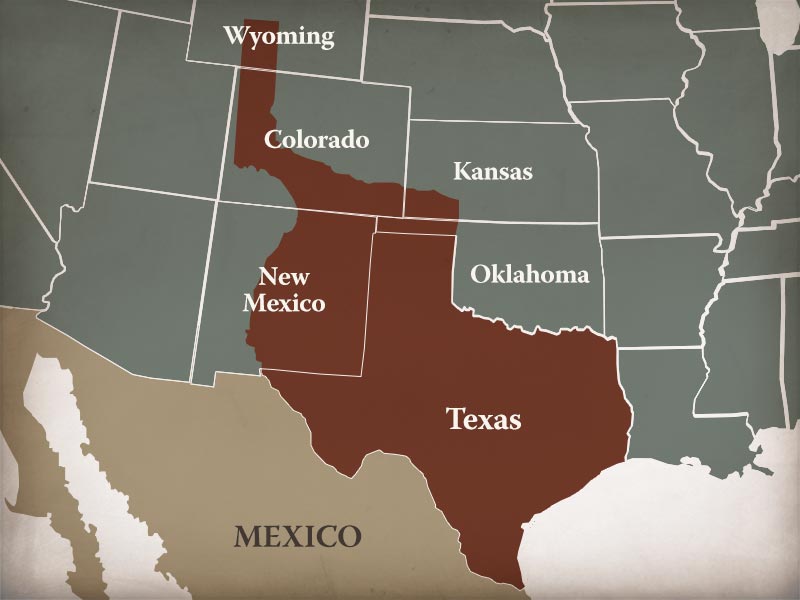
The story of how Texas came to be a part of the United States is a saga of independence, ambition, and strategic maneuvering. For over a decade, Texas existed as its own sovereign nation, the Republic of Texas. This period, from 1836 to 1845, was marked by a constant struggle for recognition and security, leading ultimately to its annexation by its powerful northern neighbor. Understanding the motivations behind this union requires delving into the immediate aftermath of the Texas Revolution and the challenges faced by the nascent republic.
The Aftermath of Independence
The victory at the Battle of San Jacinto in 1836 secured Texas independence from Mexico. However, achieving independence was one thing; establishing a stable and prosperous nation was another. The new Republic of Texas was an entity of vast territory but meager resources. Its population was small and dispersed, and its economy was largely agrarian, struggling to recover from years of conflict.
The political landscape was also tumultuous. The young republic grappled with internal divisions, differing visions for its future, and the ever-present threat of renewed conflict with Mexico, which refused to recognize its independence. This precarious situation fueled a desire among many Texans for a stronger, more stable alliance.
The Dream of Annexation
From the very beginning of the Republic, the idea of joining the United States was a dominant theme in Texan politics. Many Texans were immigrants from the United States and felt a strong cultural and political affinity with their former homeland. They envisioned a future where Texas would benefit from the economic prosperity, political stability, and military protection offered by the burgeoning American nation.
However, annexation was not a straightforward proposition. The primary obstacle was the issue of slavery. Texas was a slaveholding state, and its admission into the United States would have upset the delicate balance of power between free and slave states in the U.S. Senate. This issue ignited fierce debate in the United States, delaying any serious consideration of annexation for nearly a decade.
The Path to Statehood: Diplomacy and Defiance
The Republic of Texas pursued annexation through diplomatic channels, but faced significant resistance from various factions within the United States. The presidency of Andrew Jackson, though sympathetic, was cautious due to the slavery question. His successor, Martin Van Buren, also delayed, fearing the political repercussions of the slavery debate.
The Presidency of John Tyler and the Texas Treaty
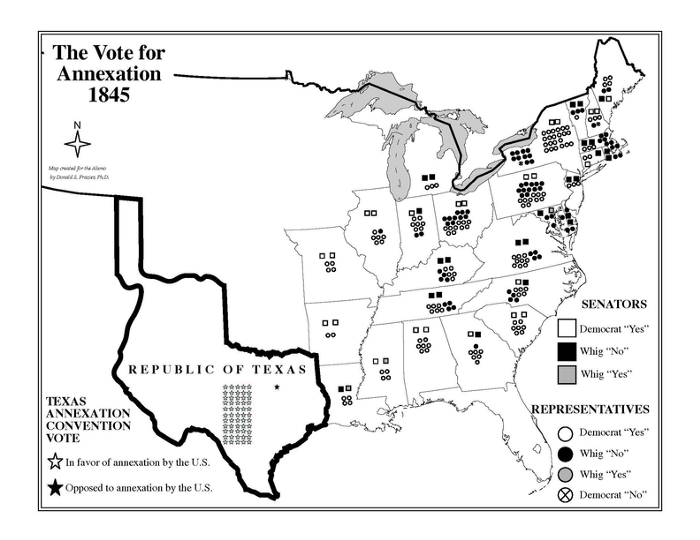
It wasn’t until the presidency of John Tyler that annexation gained significant momentum. Tyler, a fervent advocate for expansion, believed that Texas was crucial for American security and prosperity. He negotiated a treaty of annexation in 1844, which was promptly sent to the U.S. Senate for ratification.
The treaty faced a fierce battle in the Senate. Opponents, particularly from the North, vehemently argued against the expansion of slavery and the potential for war with Mexico. Proponents, on the other hand, emphasized the strategic importance of Texas and the economic benefits of its resources. Ultimately, the treaty failed to achieve the necessary two-thirds majority for ratification.
A Shift in American Politics
The failure of the 1844 treaty did not extinguish the dream of annexation. The issue became a central plank in the 1844 U.S. presidential election. James K. Polk, a staunch expansionist, won the election, largely on a platform that included the annexation of Texas and the acquisition of Oregon Country. His victory signaled a renewed mandate for annexation in the United States.
With a pro-annexation president in office, the path forward became clearer. Rather than pursuing another treaty, which required a two-thirds majority, the annexation was achieved through a joint resolution of both houses of Congress. This method required only a simple majority and bypassed some of the procedural hurdles that had plagued earlier efforts.
The Annexation and its Immediate Aftermath
In March 1845, the U.S. Congress passed a joint resolution offering annexation to Texas. The offer was put to a vote by the citizens of Texas in July 1845, and it passed overwhelmingly. The Republic of Texas officially ceased to exist on December 29, 1845, becoming the 28th state in the United States.
The Mexican-American War
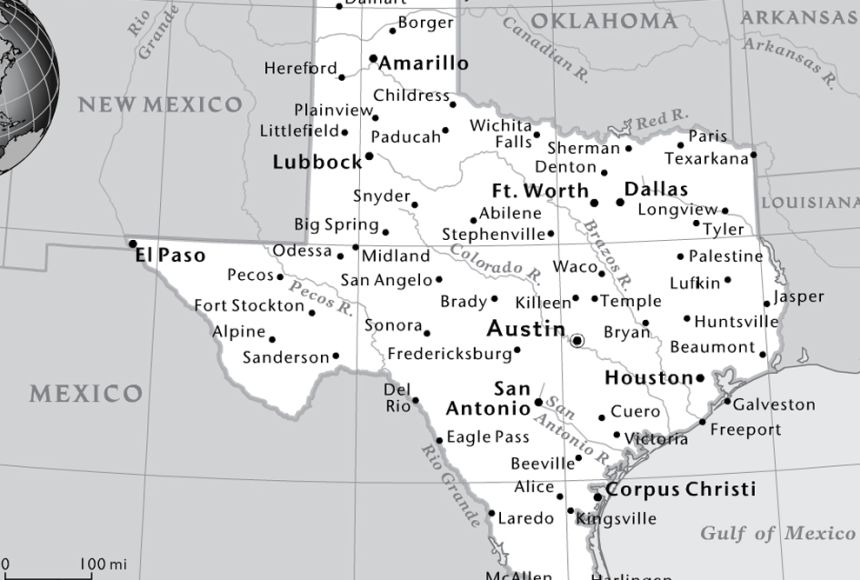
The annexation of Texas was a direct catalyst for the Mexican-American War (1846-1848). Mexico had never truly accepted the loss of its territory and viewed the annexation as an act of aggression. Disputes over the southern boundary of Texas – with Mexico claiming the Nueces River and the United States asserting the Rio Grande – provided the spark for the conflict.
The war, though controversial, resulted in a decisive victory for the United States and the signing of the Treaty of Guadalupe Hidalgo. This treaty not only ended the war but also ceded vast territories to the United States, including present-day California, Nevada, Utah, and parts of Arizona, New Mexico, Colorado, and Wyoming.
The Legacy of Annexation
The annexation of Texas remains a pivotal moment in American history. It fulfilled the ambitions of many Texans who sought security and opportunity within the larger union. For the United States, it represented a significant expansion of territory and a step towards its manifest destiny.
However, the annexation also came at a great cost. It exacerbated sectional tensions over slavery, directly contributing to the outbreak of the American Civil War less than two decades later. The legacy of this complex historical event continues to shape the identity and culture of Texas and its place within the broader American narrative.
LifeOutOfTheBox is a participant in the Amazon Services LLC Associates Program, an affiliate advertising program designed to provide a means for sites to earn advertising fees by advertising and linking to Amazon.com. Amazon, the Amazon logo, AmazonSupply, and the AmazonSupply logo are trademarks of Amazon.com, Inc. or its affiliates. As an Amazon Associate we earn affiliate commissions from qualifying purchases.