
The name Bruce Lee evokes images of unparalleled martial arts prowess, philosophical depth, and a charismatic screen presence that transcended cultural barriers. Yet, for many, the iconic figure’s final resting place in Seattle, Washington, remains a point of curiosity. It’s a question that draws countless admirers and historians alike to a specific plot in Lake View Cemetery, transforming a solemn burial ground into a global landmark. The answer to “Why Bruce Lee is buried in Seattle?” is deeply woven into the fabric of his formative years, his personal relationships, and the very philosophy he championed, making the Emerald City an indispensable chapter in his legendary story.
A Life Forged in Two Worlds: Bruce Lee’s Early Years and Connection to Seattle
To understand why Bruce Lee found his ultimate peace in Seattle, one must trace the pivotal moments that shaped his early adulthood. Born Lee Jun-fan in San Francisco in 1940, while his father, a Cantonese opera star, was on tour, Bruce Lee spent his childhood and adolescence in Hong Kong. It was there he was introduced to the martial art of Wing Chun under the tutelage of the legendary Ip Man. However, a combination of street fights, academic struggles, and his parents’ desire for him to embrace Western culture led to a transformative decision: his return to the United States at the age of 18. And it was Seattle that became his primary destination, a crucible where his identity as a martial artist, a scholar, and a man truly began to crystallize.
The Genesis of a Legend: Bruce Lee’s Childhood and Youth
Bruce Lee’s early years in Hong Kong were marked by a blend of privilege and rebellion. His family was affluent, yet Bruce was a rambunctious youth, often involved in street brawls, which ultimately spurred his formal training in Wing Chun. This period was crucial for his physical development and understanding of combat, but it was also a time of significant personal turmoil and academic indifference. The decision to send him back to the United States was a strategic move by his parents to provide him with a fresh start, away from the influences that were leading him down a potentially destructive path in Hong Kong. This transition marked a crucial turning point, setting the stage for his intellectual and martial awakening in the Pacific Northwest.
Seattle’s Enduring Influence: Education, Martial Arts, and Love
Upon arriving in Seattle in 1959, Bruce Lee initially worked at a restaurant before enrolling at the Edison Technical School to complete his high school diploma. His academic pursuits led him to the University of Washington in 1961, where he majored in drama and philosophy. This intellectual environment profoundly shaped his perspective, allowing him to connect the physical discipline of martial arts with deeper philosophical concepts.
More than just a place of study, Seattle became the birthplace of his first formal martial arts school, the Jun Fan Gung Fu Institute, initially operating out of the basement of a relative’s restaurant. This was revolutionary, as Bruce openly taught non-Chinese students, a radical departure from traditional martial arts practices at the time. It was also at the University of Washington where he met Linda Emery, who would later become his wife, Linda Lee Cadwell. Their children, Brandon Lee and Shannon Lee, were both born during his time in the United States. Seattle was not just a temporary stop; it was where he matured, honed his craft, found love, started a family, and began to articulate the unique martial arts philosophy that would eventually evolve into Jeet Kune Do. It was his home, a place of profound personal and professional growth.
The Legacy of a Master: Establishing a Home and Dojo in the Pacific Northwest
Bruce Lee’s time in Seattle was characterized by intense dedication to his martial arts vision. Far from merely practicing traditional Kung Fu, he was actively deconstructing and reconstructing it, seeking efficiency and practicality above all else. This period laid the foundational groundwork for his revolutionary approach to martial arts, one that broke free from rigid styles and embraced adaptability—a philosophy encapsulated by his famous “be like water” adage. The environment of Seattle, with its openness and forward-thinking spirit, provided fertile ground for such innovation.
Pioneering Jeet Kune Do: The Seattle Chapter
The conceptualization of Jeet Kune Do (JKD), or “The Way of the Intercepting Fist,” began taking shape during Bruce Lee’s years in Seattle. Frustrated by the limitations and formalized rituals of traditional martial arts, Bruce embarked on a journey to create a system that was fluid, adaptable, and focused on individual expression and effectiveness. His Jun Fan Gung Fu Institute in Seattle was more than just a place to teach physical techniques; it was a laboratory for his philosophical martial arts experiments. He encouraged his students, who came from diverse backgrounds, to question, adapt, and discard what was useless, fostering a truly personalized approach to self-defense. This period was crucial for the practical application and refinement of JKD’s core tenets, establishing Seattle as the birthplace of this seminal martial arts philosophy.
Family Roots and Personal Ties in the Emerald City
Beyond his martial arts innovations, Seattle represented Bruce Lee’s strongest personal anchor. It was the place where he built a home with Linda Lee Cadwell and welcomed their first child, Brandon Lee. The community he fostered there, including his early students and friends, formed a supportive network. Despite his eventual move to California to pursue opportunities in Hollywood and later to Hong Kong for his groundbreaking film career (including classics like “Fist of Fury” and “Enter the Dragon”), Seattle remained deeply embedded in his personal history. His wife, Linda, and her family were from the area, providing a crucial and constant connection. This enduring personal bond to the city, established during his most formative years, ultimately influenced the family’s decision regarding his final resting place.
The Final Resting Place: Lake View Cemetery and Its Significance
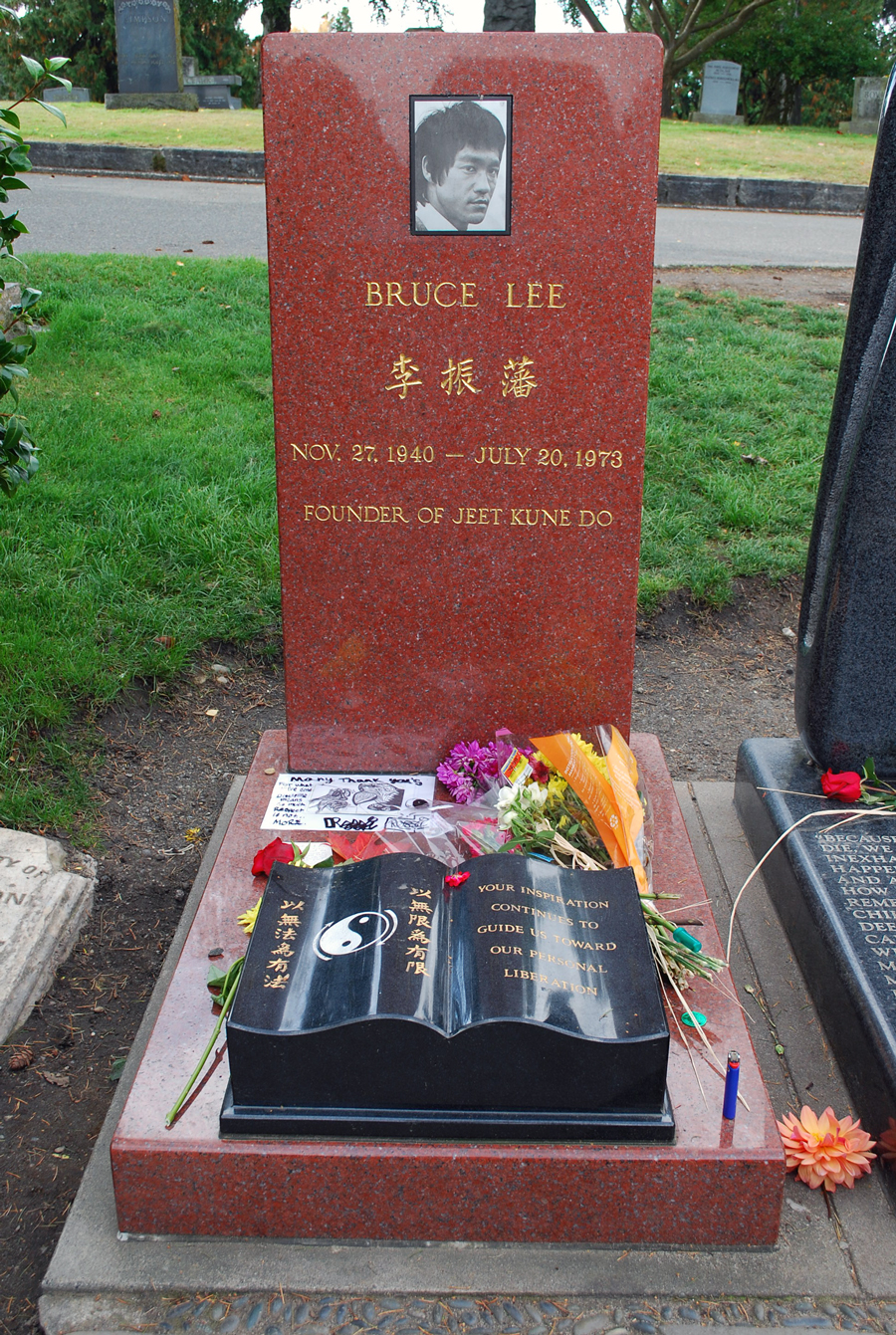
Bruce Lee’s sudden and tragic death in Hong Kong in 1973, at the age of 32, sent shockwaves across the globe. The decision of where to bury such an internationally renowned figure was undoubtedly complex, but for Linda Lee Cadwell, the choice was clear and deeply personal. She opted for Lake View Cemetery in Seattle, a tranquil and historic burial ground, for reasons that underscored the city’s profound importance in their shared life.
A Tranquil Sanctuary: The Choice of Lake View Cemetery
Lake View Cemetery is not merely a graveyard; it is a historic landmark itself, known for its serene beauty and notable residents, including prominent Seattle pioneers and figures. For Linda Lee Cadwell, burying Bruce in Seattle was about returning him to a place he considered home, a place of peace and stability amidst his whirlwind global career. It was where they had built their first life together, raised their child, and where Bruce had cultivated his unique vision. The cemetery’s peaceful setting, overlooking Lake Washington and offering views of the city skyline, provided a fittingly reflective and dignified environment for his eternal rest. This choice transformed a personal decision into a public landmark, drawing visitors from every corner of the world.
The Symbolism of a Shared Grave: Bruce and Brandon Lee
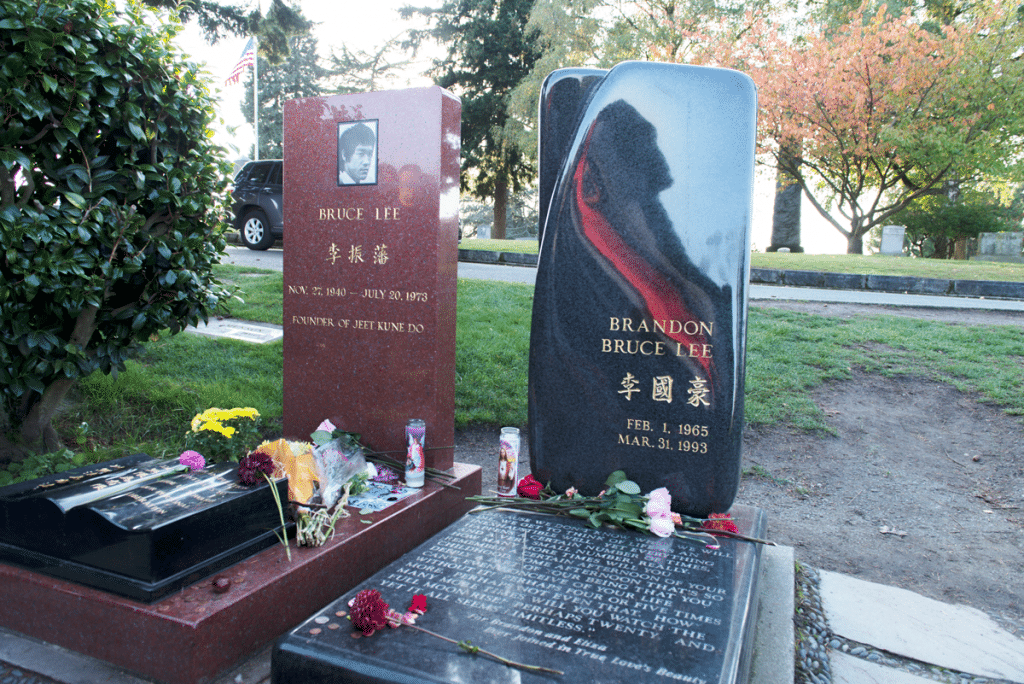
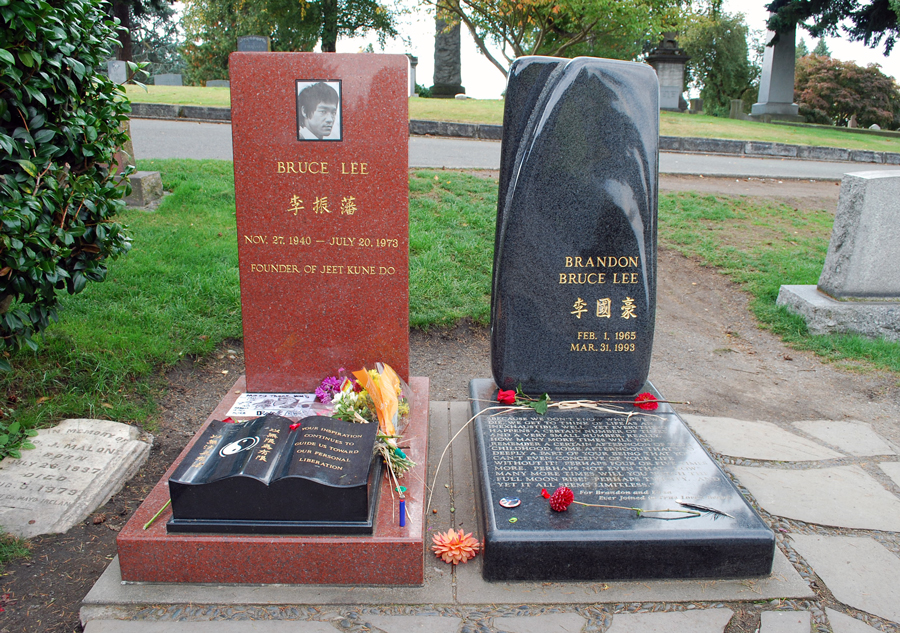
The significance of Bruce Lee’s burial site deepened tragically two decades later when his son, Brandon Lee, also an aspiring actor and martial artist, died in a filming accident in 1993 at the age of 28. Brandon was laid to rest beside his father in Lake View Cemetery. This shared grave cemented the site’s status as an even more poignant and powerful landmark. The proximity of father and son, both taken too soon and both icons in their own right, created a profound symbol of legacy, loss, and the enduring spirit of the Lee family. Their graves are modest, yet powerful, marked by simple plaques that have become focal points for reflection, admiration, and a quiet understanding of their intertwined destinies.
More Than a Burial Site: A Pilgrimage for Admirers and a Landmark for the City
Today, the grave of Bruce Lee (and Brandon Lee) in Lake View Cemetery is far more than just a burial plot. It has evolved into a global pilgrimage site, a cultural landmark that transcends the solemnity of its purpose. Visitors from all walks of life and all corners of the world flock to this quiet corner of Seattle to pay their respects, to reflect, and to feel a tangible connection to the legend whose influence continues to resonate decades after his passing. This continuous influx of admirers highlights the enduring global impact of Bruce Lee and the unique place Seattle holds in his narrative.
A Global Beacon: Fans from Around the World
The gravestones of Bruce and Brandon Lee are consistently adorned with flowers, handwritten notes, and tokens of appreciation—everything from coins and small statues to martial arts belts. These offerings are testaments to the deep personal connection fans feel to the Lees, often leaving messages expressing gratitude for their inspiration, their films like “The Way of the Dragon,” and their philosophies. On any given day, one can hear a multitude of languages spoken by visitors who have traveled thousands of miles. This constant stream of international visitors underscores the site’s status as a unique cultural landmark, a testament to the universal appeal of Bruce Lee’s spirit and achievements, solidifying Seattle’s unexpected but undeniable place in martial arts history.
The Enduring Impact on Seattle’s Cultural Landscape
While not a sprawling monument or a designated tourist attraction with guided tours, Bruce Lee’s grave has carved a significant niche within Seattle’s cultural landscape. It quietly contributes to the city’s identity, adding a layer of global recognition and historical significance that complements its reputation for technology, coffee, and music. The presence of the Lee family’s final resting place enriches the historical narrative of Seattle, reminding residents and visitors alike of the diverse lives and influences that have shaped the city. It serves as a subtle yet powerful reminder of the deep roots a global icon planted in the Emerald City, forever intertwining his legend with the place that fostered his early growth.
Bruce Lee’s Enduring Philosophy and His Seattle Echo
The decision to inter Bruce Lee in Seattle was not just about geographical convenience or family ties; it was a testament to the profound personal and philosophical development he underwent in the city. His time in Seattle was foundational, shaping the core tenets of his philosophy that continue to inspire millions. His grave, therefore, is more than just a place of remembrance; it’s a physical echo of his most deeply held beliefs about life, adaptability, and self-discovery.
Be Like Water: A Philosophy Rooted in His Life Experiences
The famous “be like water” philosophy, which encourages fluidity, adaptability, and the ability to embrace all circumstances, was significantly cultivated during Bruce Lee’s intellectual and martial arts journey in Seattle. It was here that he wrestled with traditional forms, experimented with new ideas, and sought a martial art that was truly personal and unconstrained. His academic studies in philosophy at the University of Washington provided the intellectual framework to articulate these concepts, connecting physical prowess with mental and spiritual liberation. His grave in Seattle symbolically closes the circle on this journey, marking the place where his profound insights began to coalesce and where he formed his most fundamental ties.
A Landmark of Inspiration: Seattle’s Connection to a Global Icon
Ultimately, Bruce Lee is buried in Seattle because it was home. It was the crucible where a young, ambitious man from Hong Kong transformed into a visionary martial artist, a profound philosopher, and a loving family man. The city provided the environment for his intellectual growth, the space for his martial arts innovations like Jeet Kune Do, and the setting for his most cherished personal relationships. His grave at Lake View Cemetery is therefore not just a historical marker; it is a living landmark of inspiration. It stands as a testament to the deep roots Bruce Lee planted in the Pacific Northwest, forever linking his extraordinary legacy with the serene, yet vibrant, spirit of Seattle. For countless individuals, a visit to his grave is a moment to connect with the timeless wisdom of a man who truly learned to “be like water,” even in his final rest.
LifeOutOfTheBox is a participant in the Amazon Services LLC Associates Program, an affiliate advertising program designed to provide a means for sites to earn advertising fees by advertising and linking to Amazon.com. Amazon, the Amazon logo, AmazonSupply, and the AmazonSupply logo are trademarks of Amazon.com, Inc. or its affiliates. As an Amazon Associate we earn affiliate commissions from qualifying purchases.