
The archipelago of Hawaii is often described as a paradise, a collection of emerald jewels scattered across the vast Pacific Ocean. For many travelers and residents, one of the most defining and comforting characteristics of this volcanic chain is the absence of snakes. While most tropical regions around the globe, from the Amazon Rainforest to the jungles of Southeast Asia, are home to a diverse array of serpents, Hawaii remains a unique anomaly. This absence is not a coincidence of nature or a mere stroke of luck; it is the result of extreme geographical isolation, geological history, and some of the strictest biosecurity laws in the United States.
The Geological Isolation of the Hawaiian Islands
To understand why snakes never naturally reached the shores of Oahu or Maui, one must first look at the geological birth of the islands. Unlike many islands that were once connected to a continental landmass—such as those in the Caribbean or the British Isles—the Hawaiian archipelago was never part of a continent.
Volcanic Origins and the Central Pacific Hot Spot
The islands were formed by a “hot spot” in the Earth’s mantle. As the Pacific Plate moved slowly over this stationary plume of magma, volcanic eruptions broke through the ocean floor, eventually rising above the surface to create landmarks like Mauna Loa and Haleakala. Because these islands rose directly from the deep seafloor, thousands of miles from the nearest continent, there were no land bridges to facilitate the migration of terrestrial animals.
The Barrier of the Open Ocean
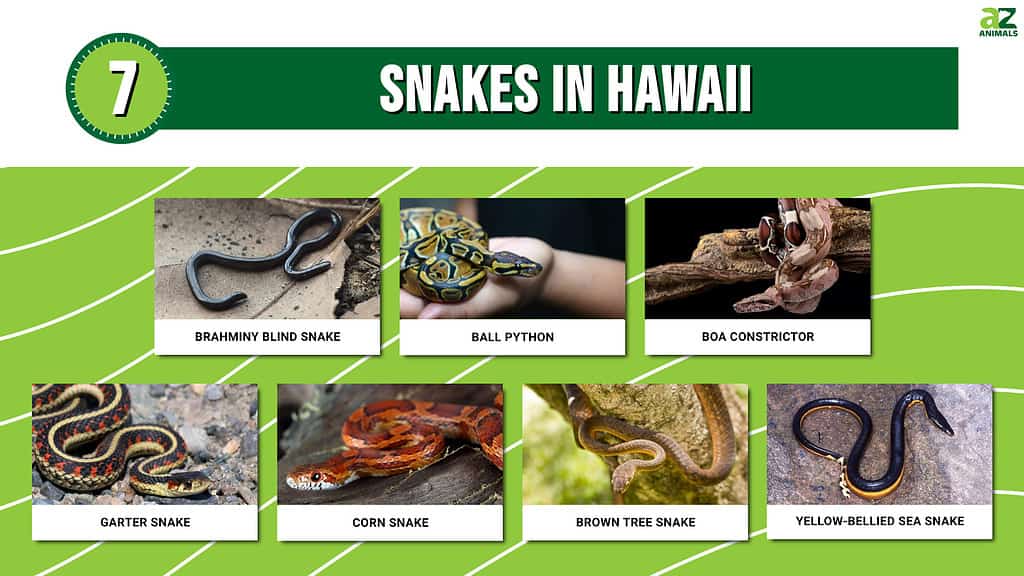
Hawaii is the most isolated population center on Earth, situated approximately 2,400 miles from California and over 3,800 miles from Japan. For a land-dwelling reptile like a snake, crossing thousands of miles of saltwater is an impossible feat. While some species, such as the Yellow-bellied Sea Snake, are occasionally spotted in the waters surrounding the islands, they are marine animals and rarely, if ever, venture onto land. Terrestrial snakes simply lack the physiology to survive long-distance ocean crossings, leaving the native ecosystem to evolve in total isolation from these predators.
The Evolution of a Snake-Free Ecosystem
The biological history of Hawaii is often categorized by the “three Ws”: wind, wings, and waves. Every native species currently residing in the islands, from the Nene (the Hawaiian goose) to the Hawaiian Monk Seal, arrived via one of these three methods.
Why Snakes Couldn’t Make the Journey
Birds could fly to the islands, seeds could be carried by the wind or on feathers, and some insects or small lizards might have drifted on mats of vegetation (waves). However, snakes are generally too large and have metabolic requirements that prevent them from surviving weeks or months on a floating log in the Pacific Ocean. Consequently, the ecological niches that are usually occupied by snakes in other parts of the world were filled by other creatures in Hawaii, primarily birds and insects.
The Vulnerability of Native Fauna
Because the native wildlife of Kauai and Lanai evolved without the presence of ground-based predators like snakes, they never developed defense mechanisms against them. Many Hawaiian birds, such as the Iwi, are ground-nesters or have evolved behaviors that make them incredibly easy prey. This evolutionary “naivety” is the primary reason why the introduction of snakes would be an ecological catastrophe for the state’s natural landmarks and protected wilderness areas.
Biosecurity and the Legal Battle Against Invasive Species
In the modern era, the primary threat to Hawaii’s snake-free status is human activity. With millions of visitors arriving at Honolulu International Airport and Kahului Airport every year, the risk of accidental or intentional introduction is a constant concern for the Hawaii Department of Agriculture.
Strict Legislation and Penalties
It is a class C felony to possess, transport, or unleash a snake in the state of Hawaii. Lawmakers have established these stringent rules to protect the delicate balance of the local environment. Individuals caught with snakes can face fines of up to $200,000 and several years in prison. To encourage the removal of illegally kept pets, the state offers an Amnesty Program, allowing people to surrender prohibited animals to the Hawaii State Department of Land and Natural Resources with no questions asked and no penalties.
The Role of Inspection and Detection Dogs
At major ports of entry, including Honolulu and Hilo, specialized teams of inspectors and detector dogs are employed to screen incoming cargo. These “Beagle Brigades” are trained to sniff out organic matter, including reptiles that might be hiding in shipping containers or aircraft wheel wells. This rigorous screening process is the frontline defense in maintaining the integrity of the islands’ natural history.
Lessons from Guam: The Brown Tree Snake Threat
The urgency behind Hawaii’s anti-snake policy is fueled by a cautionary tale from the island of Guam. Following World War II, the Brown Tree Snake was accidentally introduced to Guam, likely via military cargo ships from the Solomon Islands.
The Ecological Collapse of Guam
The results were devastating. With no natural predators and an abundance of prey, the Brown Tree Snake population exploded. The snakes decimated the island’s native bird populations, leading to the extinction of several species and causing a ripple effect throughout the ecosystem. Today, the forests of Guam are eerily silent, devoid of the birdsong that once defined them.
Protecting the Hawaiian Bird Sanctuary
Hawaii has more endangered species per square mile than any other place in the United States. Iconic natural landmarks like Haleakala National Park and the Alakai Wilderness Preserve serve as the last strongholds for rare avian species. If the Brown Tree Snake were to establish a population on the Big Island, it would likely mean the end for the Palila and the Akepa. The economic impact would also be severe, as snakes are known to crawl into electrical transformers, causing frequent and costly power outages—a phenomenon that is common in Guam.
The Only Exception: The Brahminy Blind Snake
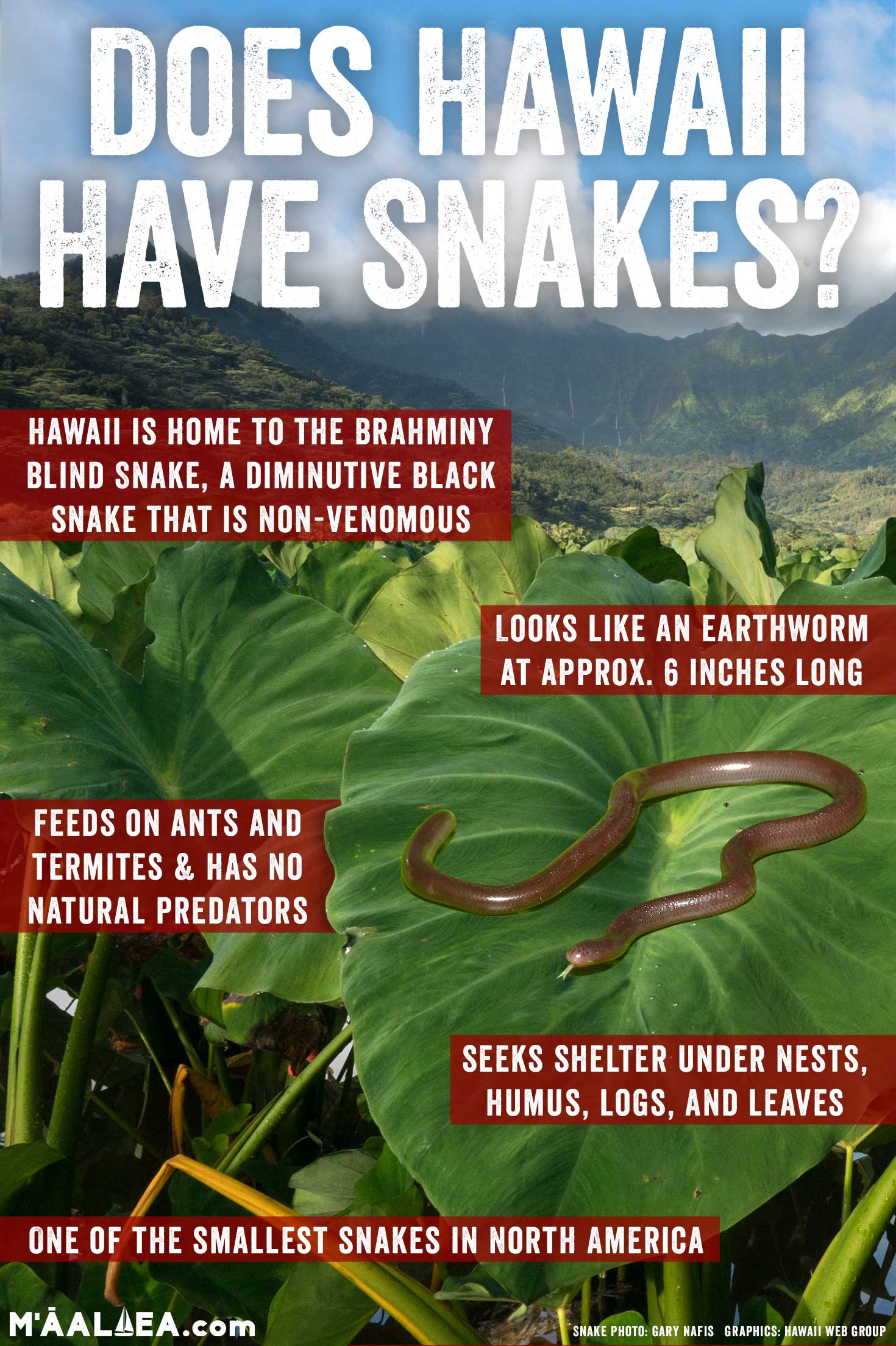
While the general rule is that there are no snakes in Hawaii, there is one tiny, often overlooked exception. The Brahminy Blind Snake is the only species of snake currently established in the islands.
An Unassuming Immigrant
Often mistaken for an earthworm due to its small size and translucent, brownish-purple appearance, the Brahminy Blind Snake is non-venomous and poses no threat to humans. It is believed to have arrived in Hawaii from Southeast Asia or India in the soil of imported potted plants during the late 19th or early 20th century.
Biology and Habitat
This unique reptile is parthenogenetic, meaning all individuals are female and can reproduce without a mate. This trait allowed the species to spread quickly across Oahu and Molokai. Despite being a snake, it lives underground and feeds primarily on the eggs and larvae of ants and termites. Because it does not prey on birds or larger animals, it has not caused the ecological devastation that larger predatory snakes would. It has essentially become a naturalized, albeit invisible, part of the Hawaiian landscape, often found in the gardens of Waikiki or the moist soils of Manoa Valley.
Maintaining the Legacy of a Snake-Free Paradise
The fact that Hawaii remains largely snake-free is a testament to the power of geography and the diligence of human intervention. From the towering cliffs of the Na Pali Coast to the volcanic craters of Hawaii Volcanoes National Park, the islands’ natural wonders depend on the continued exclusion of these invasive predators.
The Responsibility of Visitors and Residents
Every person who travels to the islands plays a role in this conservation effort. By adhering to the Hawaii Department of Agriculture declaration forms and supporting local biosecurity measures, tourists help preserve the unique biodiversity that makes Hawaii a world-renowned destination.
A Future Without Snakes
As global trade and travel continue to increase, the pressure on Hawaii’s borders will only grow. However, through the use of advanced technology, public education, and a deep respect for the land—known in the local culture as malama aina—the islands can remain a sanctuary for native species. The absence of snakes is more than just a convenience for hikers; it is a fundamental pillar of the ecological health and historical identity of Hawaii. Whether exploring the lush rainforests of Kauai or the sun-drenched beaches of Kona, one can walk with the peace of mind that this specific corner of the North Pacific remains one of the few places on Earth where the serpent has no place.
LifeOutOfTheBox is a participant in the Amazon Services LLC Associates Program, an affiliate advertising program designed to provide a means for sites to earn advertising fees by advertising and linking to Amazon.com. Amazon, the Amazon logo, AmazonSupply, and the AmazonSupply logo are trademarks of Amazon.com, Inc. or its affiliates. As an Amazon Associate we earn affiliate commissions from qualifying purchases.