
The question of whether the San Andreas Fault will one day “destroy” California is a sensational query that has permeated popular culture and fueled anxieties for decades. This iconic geological feature, a visible scar across the Golden State’s landscape, represents not just a potential threat but also a profound natural landmark, a testament to the immense forces that continuously reshape our planet. Far from a simple harbinger of doom, the San Andreas Fault is a complex, active boundary that offers a unique window into the Earth’s dynamic processes. While the notion of complete destruction is an oversimplification, understanding this legendary fault—its nature, history, and ongoing activity—is crucial for anyone seeking to appreciate the unique character of California and its resilience in the face of natural phenomena.

Understanding the San Andreas Fault: A Geological Marvel and Menace
The San Andreas Fault is perhaps the most famous fault line in the world, a colossal fracture in the Earth’s crust that stretches approximately 800 miles (1,300 kilometers) through California. It serves as the primary tectonic boundary between two immense geological plates: the Pacific Plate and the North American Plate. These plates are not static; they are constantly grinding past each other in a horizontal motion, known as a right-lateral strike-slip fault. It is this relentless, slow-motion ballet of continental masses that gives California its stunning geological diversity, from towering mountain ranges to deep valleys, but also its inherent seismic volatility.
The Dynamics of Plate Tectonics
At its core, the existence of the San Andreas Fault is a direct consequence of plate tectonics, the scientific theory explaining the large-scale motion of Earth’s lithosphere. The Pacific Plate, which carries much of the Pacific Ocean floor and parts of Southern California, is moving northwest relative to the North American Plate, which hosts the rest of the continent. This movement is not smooth; friction causes stress to build up along the fault line. When this stress overcomes the frictional forces, the plates suddenly slip, releasing enormous amounts of energy in the form of an earthquake. Sections of the fault behave differently; some areas “creep” slowly, releasing stress gradually, while others remain locked for long periods, accumulating stress for potentially larger, more destructive events. This complex interplay of movement and friction is what makes the San Andreas Fault a constant subject of scientific study and public fascination.
A History of Tremors: Landmark Earthquakes
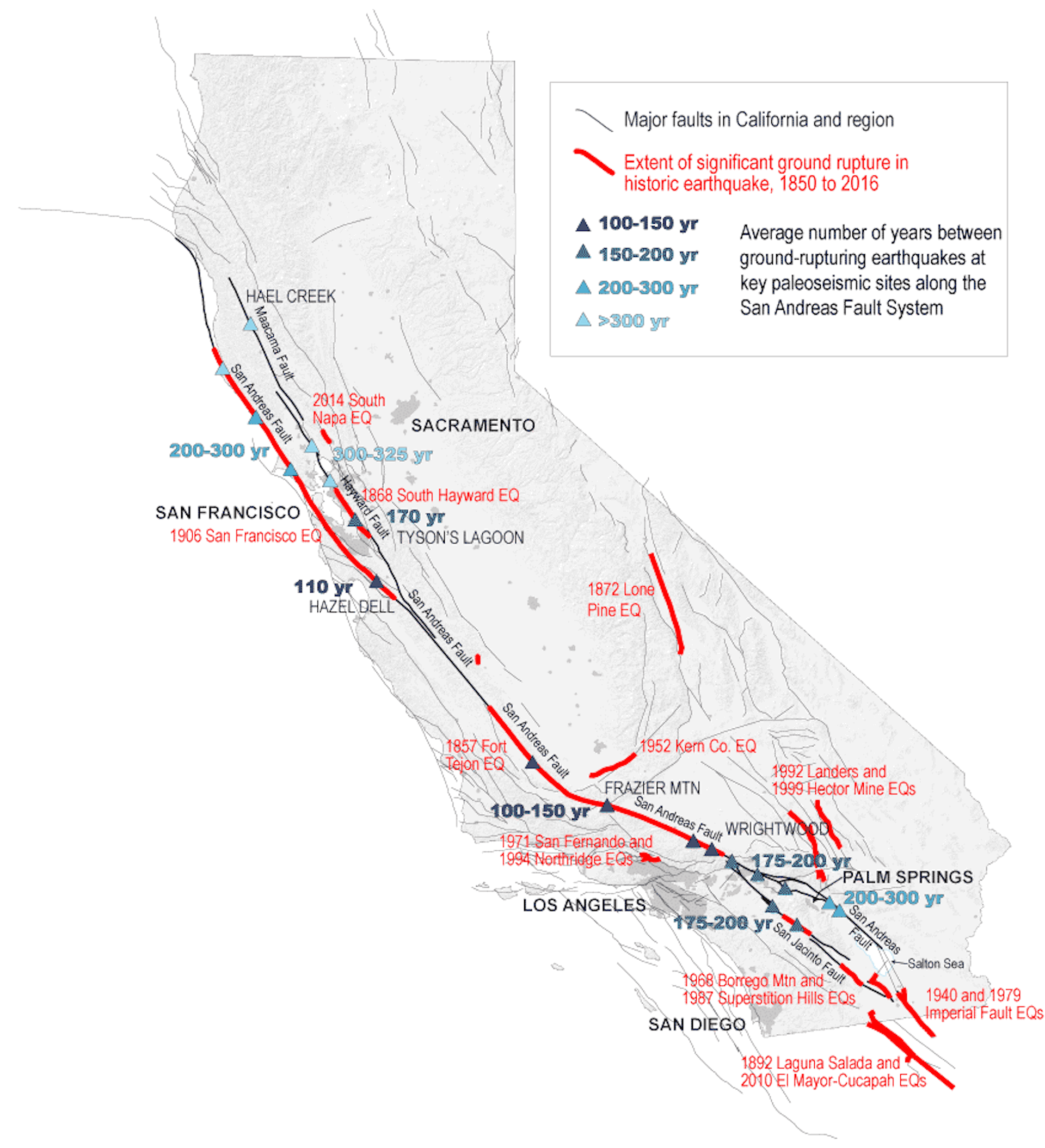
The history of California is inextricably linked to the seismic activity of the San Andreas Fault and its numerous subsidiary faults. While countless smaller quakes occur regularly, several major events have left indelible marks on the landscape and the collective memory. One of the most significant was the 1906 San Francisco earthquake, an estimated magnitude 7.9 event that devastated San Francisco and surrounding areas, primarily due to fire. This catastrophic event highlighted the destructive power of the fault and spurred early efforts in seismological research and urban planning. Another notable quake was the 1989 Loma Prieta earthquake, a magnitude 6.9 tremor that struck during the World Series, causing significant damage in the San Francisco Bay Area and tragically collapsing a section of the Bay Bridge. These events, while tragic, have served as stark reminders of the fault’s power and have continuously reshaped understanding, preparedness, and the very architecture of communities living along its path.
California’s Dance with Destiny: Cities on the Edge
The trajectory of the San Andreas Fault ensures that many of California’s most populous and economically vital regions lie in close proximity to or directly atop its branches. From the bustling metropolis of Los Angeles in the south to the cultural hub of San Francisco in the north, millions of residents and vast infrastructures are situated in a geologically active zone. This coexistence with a powerful natural force necessitates a unique approach to urban development, engineering, and daily life, shaping the character of these famous places.
Proximity to Major Urban Centers
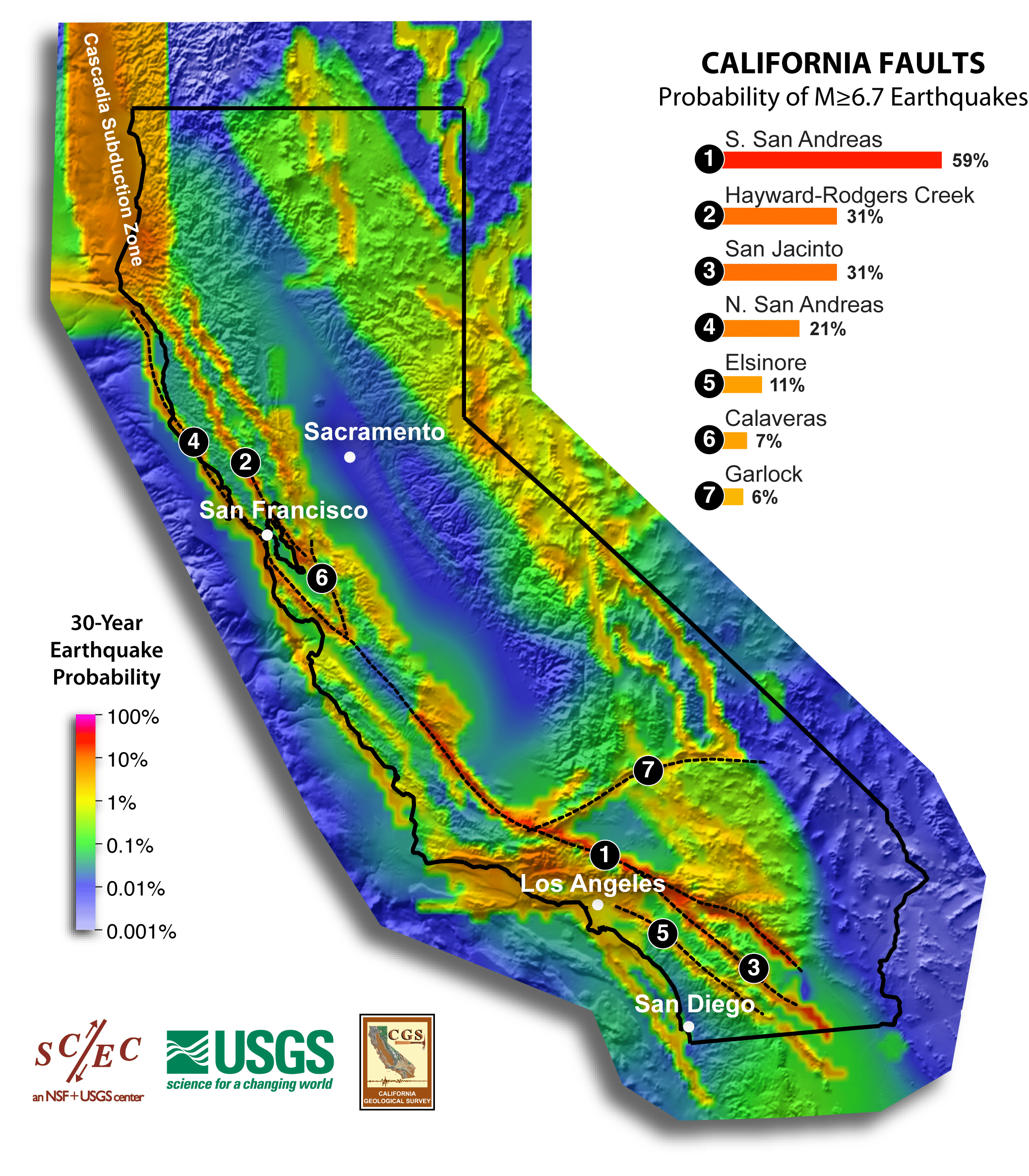
In Southern California, the San Andreas Fault runs notoriously close to highly populated areas. The section known as the “Southern San Andreas” is considered particularly dangerous, with estimates suggesting it is overdue for a major earthquake. Cities like Palm Springs and San Bernardino are literally built near or over visible traces of the fault. Further north, while the main fault line bypasses downtown Los Angeles, the city is crisscrossed by a network of other active faults, such as the Puente Hills Thrust Fault and the Hollywood Fault, which can generate significant tremors. In Northern California, the fault famously runs offshore near San Francisco, yet its influence extends throughout the San Francisco Bay Area, affecting cities like Oakland and San Jose via related fault systems like the Hayward Fault. The sheer concentration of people and property in these zones means that any significant seismic event has the potential for widespread disruption, making understanding and preparedness paramount.
Infrastructure Concerns: Bridges, Buildings, and Lifelines
The scale of modern urban infrastructure presents significant challenges in an earthquake-prone region. Tall buildings, complex highway interchanges, vital pipelines, and communication networks must all be designed and continually retrofitted to withstand seismic forces. Engineers in California are pioneers in earthquake-resistant design, incorporating technologies like base isolation, shock absorbers, and ductile materials into structures. Iconic landmarks such as the Golden Gate Bridge have undergone extensive seismic retrofitting to enhance their resilience. However, the sheer extent of aging infrastructure, coupled with the constant threat of unknown fault behavior, means that vulnerabilities persist. Utilities—electricity, water, gas, and internet—are particularly susceptible to disruption, potentially crippling essential services in the aftermath of a major quake. Protecting these lifelines is a continuous effort, involving strategic routing, flexible connections, and redundant systems, ensuring that a natural disaster doesn’t lead to a complete breakdown of modern societal functions.
Beyond the Big One: Mitigation, Preparedness, and Resilience
The concept of “The Big One”—a massive, devastating earthquake along the San Andreas Fault—is a pervasive specter in the California psyche. While scientists cannot predict precisely when or where such an event will occur, they can quantify probabilities and provide guidance for mitigation and preparedness. The state’s proactive stance on earthquake safety underscores a commitment to fostering resilience, moving beyond fear to practical solutions.
Scientific Monitoring and Early Warning Systems
One of the most crucial aspects of living with the San Andreas Fault is continuous scientific monitoring. Organizations like the U.S. Geological Survey (USGS)) and university researchers employ a vast network of seismometers, GPS sensors, and other instruments to track ground movement, plate shifts, and seismic activity across California. This data is vital for understanding fault behavior, assessing earthquake probabilities, and refining building codes. More recently, California has implemented ShakeAlert, an earthquake early warning system that detects the initial, non-destructive P-waves of an earthquake and rapidly sends alerts to phones and computers before the more damaging S-waves arrive. While it only provides seconds to tens of seconds of warning, this precious time can allow people to drop, cover, and hold on, and for automated systems to shut down critical infrastructure, mitigating potential damage and saving lives.
Building Codes and Community Resilience
California’s building codes are among the most stringent in the world, a direct result of lessons learned from past earthquakes. New constructions are mandated to meet rigorous seismic safety standards, and older buildings, particularly unreinforced masonry structures, are often subject to mandatory retrofitting programs. These codes are continually updated as scientific understanding and engineering capabilities advance. Beyond structural integrity, community resilience is a multi-faceted approach involving public education campaigns, emergency preparedness drills, and the stockpiling of resources. Local governments, emergency services, and community groups work together to ensure that residents understand how to respond during and after an earthquake, fostering a culture of preparedness that empowers individuals and strengthens the collective ability to recover. This proactive approach ensures that while the San Andreas Fault remains an undeniable natural force, its potential for widespread destruction is met with robust human ingenuity and collective readiness.
Living with the Land: Appreciating California’s Dynamic Landscape
Ultimately, the question of whether the San Andreas Fault will “destroy” California misses a crucial point: the fault is not merely a threat, but an integral part of the state’s very identity and natural splendor. The same tectonic forces that generate earthquakes are also responsible for sculpting California’s breathtaking landscapes, from the majestic Sierra Nevada mountains to the picturesque coastline and fertile valleys. Living with this geological dynamism means embracing both its challenges and its profound beauty.
Geological Wonders and Unique Ecosystems
The San Andreas Fault itself creates dramatic features visible across the landscape, acting as a natural landmark in its own right. Visitors can explore fault-related landforms like sag ponds, offset streams, and linear valleys, particularly evident in places like the Carrizo Plain National Monument or Palmdale. These features are not just geological curiosities; they shape unique ecosystems. The varying soil compositions and water tables created by fault activity contribute to distinct habitats, supporting diverse flora and fauna. The hot springs found in various parts of California are also direct manifestations of the geothermal activity spurred by tectonic movement, offering both natural beauty and recreational opportunities. Understanding the fault allows one to see the landscape not as static, but as a living, breathing entity, constantly being shaped and reformed.
Resilience as a Way of Life
For Californians, living with the San Andreas Fault is less about impending doom and more about a deeply ingrained sense of resilience and respect for nature’s power. It fosters a pragmatic approach to life, where preparedness is a routine rather than an anomaly. The innovative engineering, the robust emergency services, and the informed populace are all testaments to the state’s ability to adapt and thrive in a seismically active environment. While the “Big One” remains a possibility, it is faced not with passive resignation, but with active engagement and continuous improvement. California embodies the spirit of a place that understands its foundation is literally shifting, yet it continues to build, innovate, and flourish, inviting the world to witness a remarkable example of coexistence with one of Earth’s most powerful natural landmarks.
In conclusion, the San Andreas Fault will not “destroy” California in a cataclysmic, terminal sense. Instead, it is an enduring, defining characteristic of the state—a powerful natural landmark that continuously shapes its geology, its infrastructure, and the resilient spirit of its people. By understanding and respecting this monumental geological feature, California continues to thrive, not in spite of the fault, but as a testament to humanity’s ability to adapt and find wonder in the dynamic forces of our planet.
LifeOutOfTheBox is a participant in the Amazon Services LLC Associates Program, an affiliate advertising program designed to provide a means for sites to earn advertising fees by advertising and linking to Amazon.com. Amazon, the Amazon logo, AmazonSupply, and the AmazonSupply logo are trademarks of Amazon.com, Inc. or its affiliates. As an Amazon Associate we earn affiliate commissions from qualifying purchases.