
California is renowned for its diverse landscapes, innovative culture, and, notably, some of the most stringent gun laws in the United States. For individuals considering firearm ownership within the Golden State, understanding these complex regulations is not just advisable, but absolutely essential. The process is multi-faceted, designed to ensure public safety through rigorous background checks, mandatory waiting periods, and specific firearm classifications. This comprehensive guide aims to demystify the steps involved, offering a professional and insightful look into acquiring a firearm legally in California.
Understanding California’s Unique Gun Laws
Before embarking on the purchase process, it’s critical to grasp the foundational principles that govern firearm transactions in California. The state’s laws are meticulously designed, often exceeding federal requirements, to regulate who can own firearms, what types can be owned, and how they must be bought, stored, and used. This regulatory environment shapes the entire experience for prospective gun owners.
Residency Requirements and Eligibility
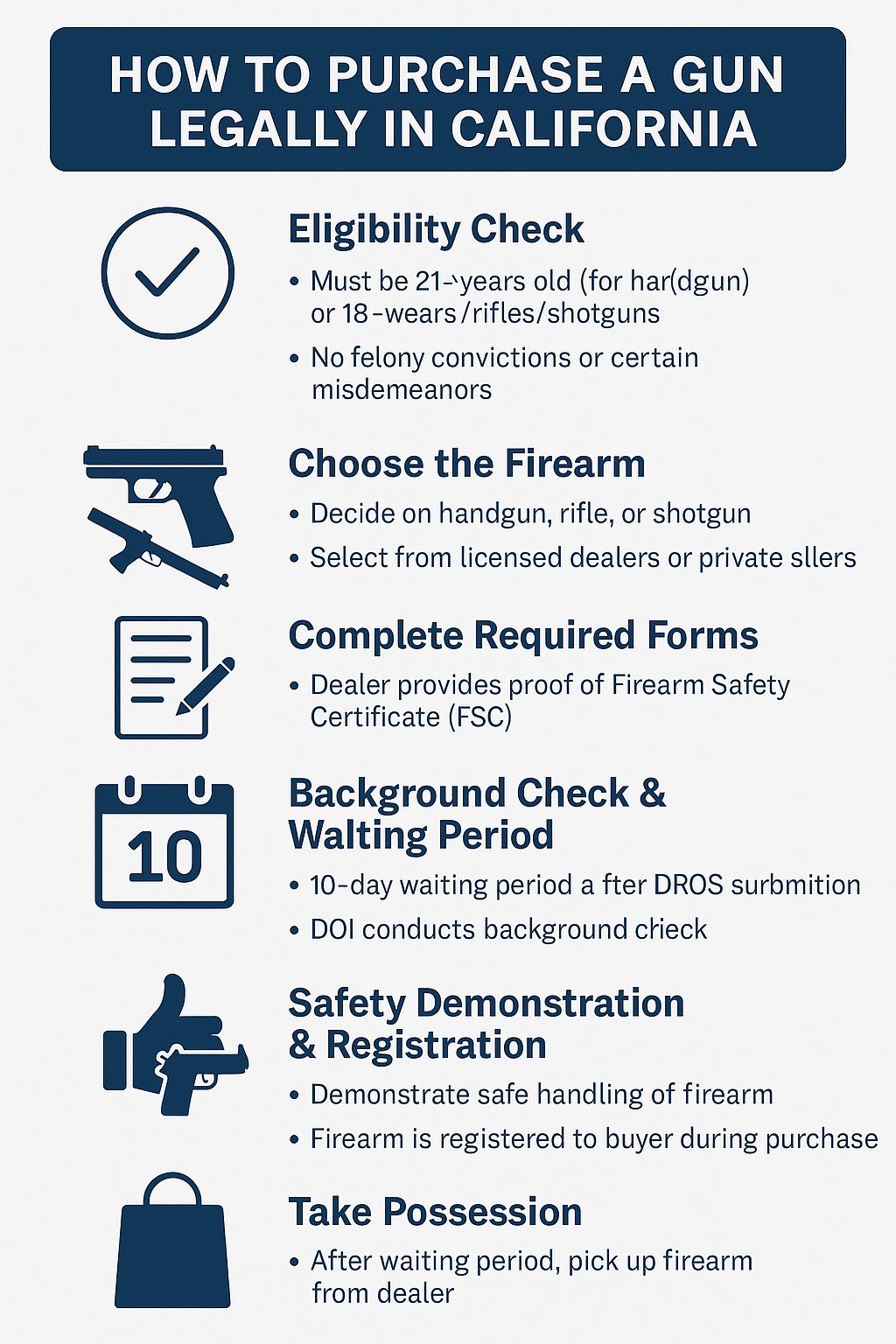
To legally purchase a firearm in California, individuals must meet specific residency and eligibility criteria. Generally, purchasers must be at least 21 years old (with limited exceptions for long guns for 18-20-year-olds in certain circumstances, though a new law has largely raised the age to 21 for all firearms), a California resident, and not fall into any prohibited categories. Prohibiting factors include, but are not limited to, felony convictions, certain misdemeanor convictions (especially those involving domestic violence), active restraining orders, and specific mental health adjudications. Proof of residency is typically established through a valid California driver’s license or identification card, often supplemented by utility bills or vehicle registration for handguns.
Firearm Safety Certificate (FSC)
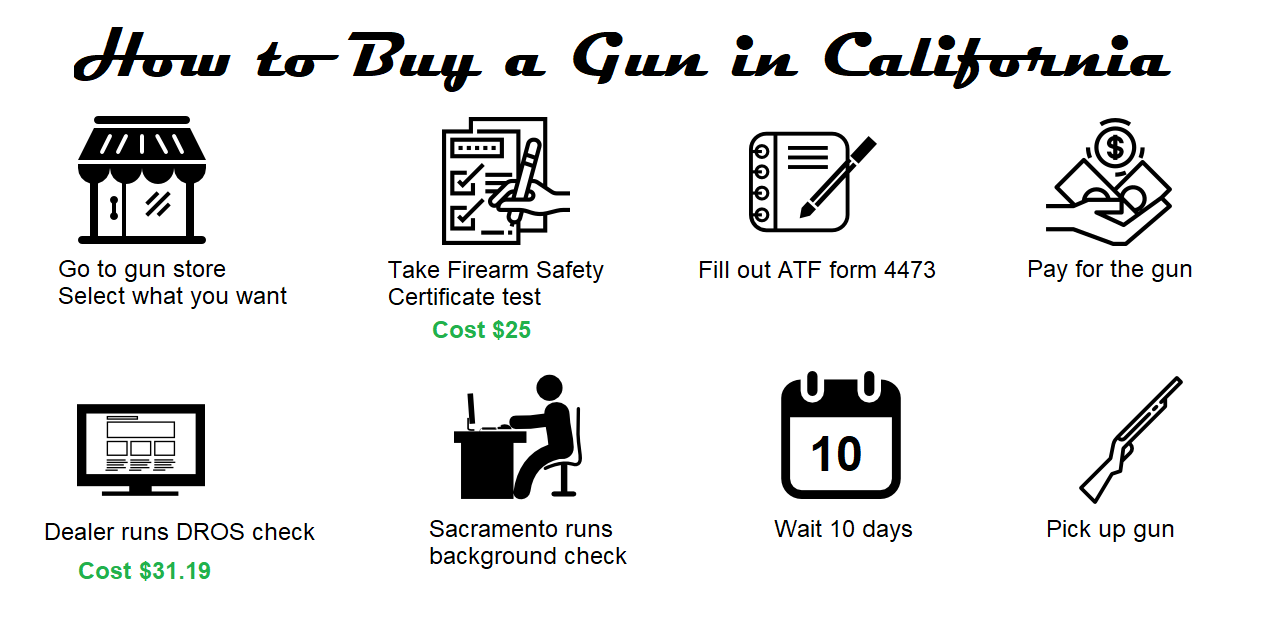
A cornerstone of California’s gun laws is the Firearm Safety Certificate (FSC). With very few exceptions, every individual wishing to purchase or acquire a firearm must first obtain an FSC. This certificate demonstrates that the individual has passed a written test on firearm safety laws and basic handling skills. The test is administered by certified instructors at most firearm dealerships, and the certificate is valid for five years. Obtaining an FSC typically involves studying a safety handbook (available online), taking a 30-question multiple-choice test, and scoring at least 75%. This step ensures a baseline understanding of safe firearm practices, which is crucial for responsible ownership within the state.
The Purchase Process: Step-by-Step
Once eligibility is confirmed and the FSC is in hand, the actual purchasing process begins. It is a structured sequence of actions, all designed to ensure compliance with both state and federal regulations. Deviations from these steps can lead to significant legal issues, highlighting the importance of attention to detail.
Finding a Licensed Dealer (FFL)
All firearm purchases in California must go through a Federal Firearm Licensee (FFL). These are licensed dealers who are authorized by both federal and state authorities to facilitate firearm sales. FFLs are typically gun shops, sporting goods stores, or even pawn shops with the appropriate licensing. It’s advisable to research reputable dealers, as they can provide invaluable guidance through the intricate legal landscape. Online firearm purchases are permissible, but the firearm must still be shipped to a California FFL for transfer, where all state-mandated background checks and waiting periods will apply.
The DROS Process and Waiting Period
Upon selecting a firearm at an FFL, the next critical step is initiating the Dealer Record of Sale (DROS) process. This involves completing a detailed form (Form 4473, a federal requirement, and the DROS form, a state requirement) with personal information, presenting your FSC and valid California identification. The dealer then submits this information to the California Department of Justice (DOJ) for a comprehensive background check.
Once the DROS is submitted, a mandatory 10-day waiting period begins. This waiting period is strictly enforced for all firearm purchases, regardless of whether you’ve purchased a gun before. Its purpose is to provide a cooling-off period and allow ample time for the DOJ to complete its background investigation. The 10 days are counted from the exact minute the DROS is initiated.
Background Checks and Legal Compliance
During the 10-day waiting period, the California DOJ conducts a thorough background check against various state and federal databases. This check verifies that the purchaser is not legally prohibited from owning firearms. If the background check clears, the dealer will notify the purchaser that the firearm is ready for pickup on or after the 10th day. At the time of pickup, the purchaser will typically be required to demonstrate safe handling of the firearm and, for handguns, often complete a safe handling demonstration using a DOJ-approved safe handgun roster. It’s also during this pickup that proof of safe storage (like a gun safe or lock box) or the purchase of a California-approved gun lock is often required.
Types of Firearms and Restrictions
California’s regulations are not limited to the purchasing process; they also dictate what types of firearms can be legally bought and owned. These restrictions are among the most comprehensive in the nation and are subject to frequent updates and legal challenges. Prospective owners must be acutely aware of these limitations to ensure compliance.
Handguns and the Roster of Approved Firearms
One of the most distinctive aspects of California law is the Roster of Approved Firearms. Unless specifically exempted (e.g., private party transfers between California residents, certain law enforcement sales), all handguns sold or transferred by an FFL must be listed on the California DOJ’s Roster of Approved Firearms. To be added to this roster, handguns must pass specific safety tests, including features like a loaded chamber indicator, magazine disconnect mechanism, and, for newer models, microstamping technology. This roster severely limits the variety of new handguns available for sale in the state, often excluding many popular models found elsewhere in the United States.
Long Guns and Ammunition Sales
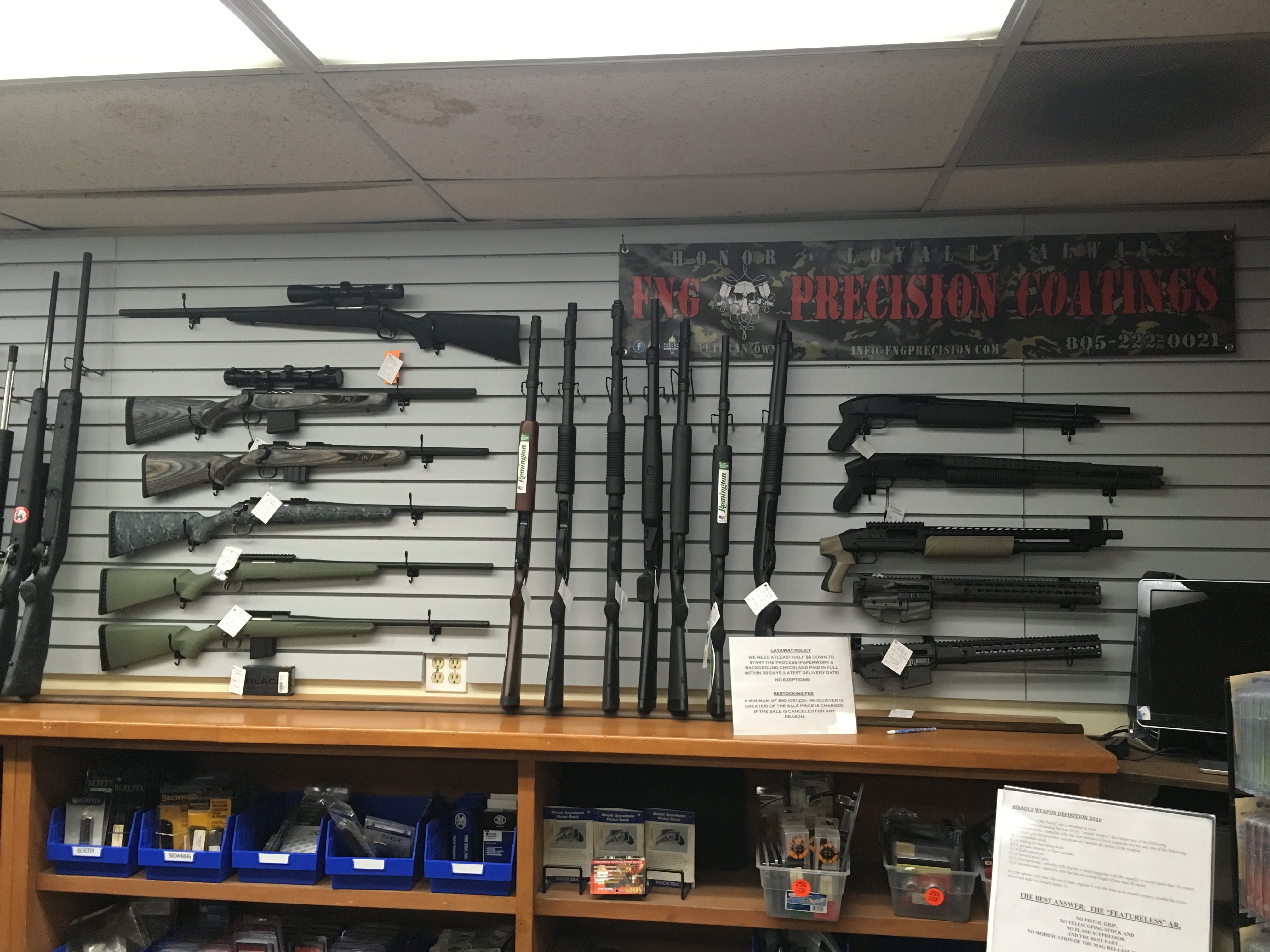
For long guns (rifles and shotguns), while there isn’t an equivalent “roster” as strict as that for handguns, there are still significant restrictions. California has strict definitions of “assault weapons,” which are generally prohibited. These definitions often rely on specific features such as pistol grips, collapsible stocks, flash suppressors, and detachable magazines. Many popular semi-automatic rifles must be modified (e.g., with “featureless” grips or fixed magazines) to comply with state law, commonly referred to as “California compliant” configurations.
Additionally, California has implemented comprehensive regulations regarding ammunition sales. Since 2018, all ammunition purchases must go through an FFL or licensed ammunition vendor, requiring a background check at the point of sale. Importing ammunition purchased outside the state is also generally prohibited.
Prohibited Firearms and Accessories
Beyond specific handgun rosters and long gun features, California explicitly prohibits certain categories of firearms and accessories. This includes machine guns, short-barreled shotguns and rifles, and destructive devices. High-capacity magazines (those capable of holding more than 10 rounds) are also generally illegal to buy, sell, or possess, with limited exceptions. Owners of such magazines acquired prior to certain dates face complex legal nuances regarding their continued possession. Understanding these prohibitions is vital to avoid inadvertent violations of the law.
Post-Purchase Responsibilities and Best Practices
Acquiring a firearm in California is merely the first step in responsible gun ownership. The state places significant emphasis on how firearms are stored, transported, and handled to minimize accidents and prevent misuse. Adhering to these post-purchase responsibilities is as crucial as navigating the initial buying process.
Safe Storage and Transportation
California law mandates that firearms must be stored in a safe manner to prevent access by prohibited individuals, especially minors. This typically means storing firearms unloaded in a locked container or secured with a DOJ-approved trigger lock, cable lock, or similar safety device. Storing loaded firearms where a child could gain access is a criminal offense.
When transporting firearms, they must generally be unloaded and kept in a locked container. Handguns, specifically, must be transported in a locked container and may not be carried openly in public. Ammunition must be transported separately from the firearm, typically in its own container. These rules apply even when transporting firearms to and from shooting ranges or hunting grounds.
Ongoing Compliance and Regulations
California’s gun laws are dynamic and subject to frequent legislative changes and judicial challenges. Responsible gun owners must stay informed about updates to laws regarding registration, sales, prohibited items, and storage. Membership in firearm owner associations or subscribing to legal updates can be invaluable resources for staying compliant. For example, recent years have seen major changes in ammunition background checks, “ghost gun” regulations, and age restrictions.
Navigating the Landscape of Gun Ownership in California
The journey to buying a gun in California is undoubtedly a detailed and sometimes arduous one, reflecting the state’s proactive stance on firearm regulation. It requires patience, meticulous attention to legal requirements, and a firm commitment to responsible ownership. While the process may seem daunting to newcomers, it is designed to ensure that firearms are acquired and possessed by eligible individuals who demonstrate a clear understanding of safety and legal compliance. By carefully following each step—from obtaining the FSC and understanding the Roster of Approved Firearms, to navigating the DROS process and adhering to storage laws—prospective gun owners can successfully and legally acquire firearms in the state of California, becoming part of a community that prioritizes safety and adherence to the law within their lifestyle.
LifeOutOfTheBox is a participant in the Amazon Services LLC Associates Program, an affiliate advertising program designed to provide a means for sites to earn advertising fees by advertising and linking to Amazon.com. Amazon, the Amazon logo, AmazonSupply, and the AmazonSupply logo are trademarks of Amazon.com, Inc. or its affiliates. As an Amazon Associate we earn affiliate commissions from qualifying purchases.