
California is a state synonymous with innovation, diverse culture, and a vibrant lifestyle that attracts millions, from tourists exploring its iconic landmarks to professionals seeking career opportunities. Whether you’re considering a business stay, an extended visit, or even relocating for work, understanding the nuances of local labor laws is paramount to a successful and financially sound experience. Among the most critical aspects of employment in the Golden State is overtime pay – a set of regulations designed to ensure fair compensation for work performed beyond standard hours.
Unlike federal standards, California boasts some of the most robust and employee-friendly overtime laws in the United States. For anyone working within its borders, grasping these rules isn’t just about compliance; it’s about protecting your financial well-being and ensuring you receive every dollar you’re rightfully owed. This comprehensive guide will delve into the specifics of California’s overtime landscape, breaking down calculations, exemptions, and what every worker—or prospective worker—needs to know to navigate their earnings effectively.
The Foundation: What Qualifies as Overtime in California?
At its core, overtime pay is additional compensation for working beyond a standard workday or workweek. However, California’s definition goes a step further than many other states, offering enhanced protections that significantly impact earnings.
Daily vs. Weekly Overtime Rules
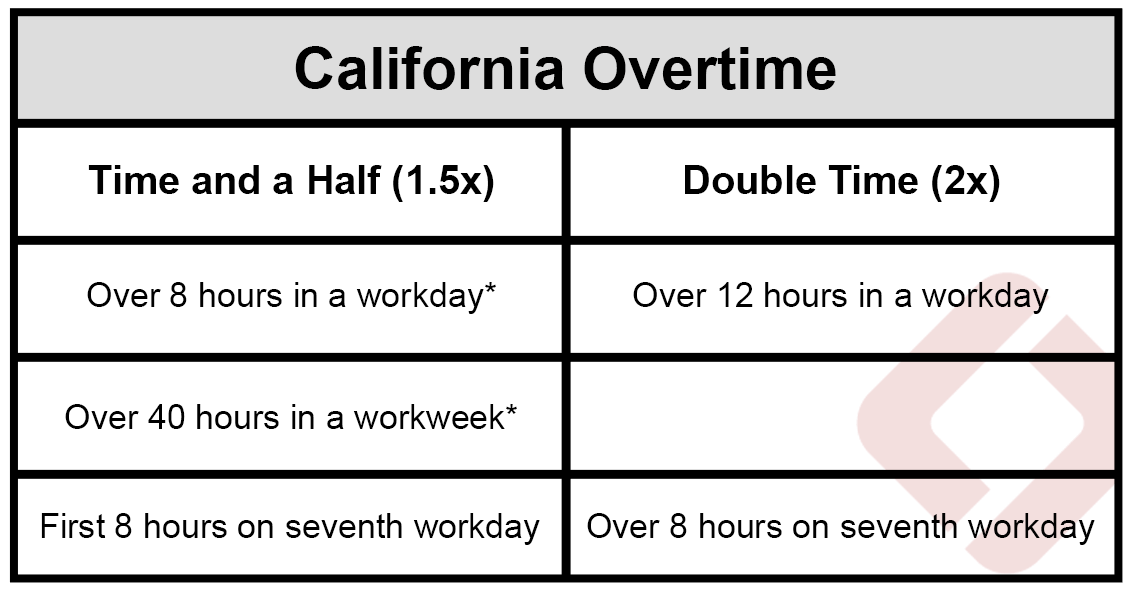
In California, overtime is generally triggered by two primary conditions: daily hours and weekly hours. An employee typically earns overtime for:
- Hours worked over eight (8) in a workday. Once an employee surpasses eight hours of work within a 24-hour period, the subsequent hours are considered overtime.
- Hours worked over forty (40) in a workweek. Even if daily overtime hasn’t been triggered, any hours exceeding 40 within a defined seven-day workweek will also qualify for overtime.
- Working on the seventh consecutive day. This is a unique California provision that mandates overtime for all hours worked on the seventh consecutive day of work in a workweek.
It’s crucial to understand that these conditions are not mutually exclusive; an employee can earn both daily and weekly overtime, but the same hour cannot be counted twice for different overtime calculations. For instance, if you work 10 hours in a day, the 2 hours beyond the 8-hour mark are paid as daily overtime. Those 2 hours then count towards your 40-hour weekly total at their overtime rate.
The Golden State’s Unique Approach
California’s approach to overtime pay is notably more protective than the federal Fair Labor Standards Act (FLSA). While the FLSA generally only requires overtime for hours worked over 40 in a workweek, California adds the daily overtime and seventh-day rules, ensuring workers are compensated for extended shifts within any given day, not just over the course of a week. This distinction is vital for anyone on a business trip or considering temporary work, as it can significantly impact total earnings.
Calculating Your Overtime: The Rates Defined
Understanding when overtime kicks in is only half the battle; knowing how much you’ll be paid for those hours is equally important. California recognizes two primary overtime rates: time and a half, and double time.
Time and a Half (1.5x Regular Rate)
The standard overtime rate in California is one and one-half times (1.5x) an employee’s regular rate of pay. This rate applies to:
- Hours between 8 and 12 in a workday: Any hours worked after 8 hours, up to and including 12 hours in the same workday, are paid at 1.5 times the regular rate.
- First 8 hours on the seventh consecutive day of work: If an employee works seven consecutive days in a workweek, the first 8 hours worked on that seventh day must be compensated at 1.5 times the regular rate.
- Hours between 40 and 48 in a workweek: Hours worked over 40 in a workweek, up to and including 48 hours, are paid at 1.5 times the regular rate, provided they haven’t already been counted as daily overtime.
Double Time (2x Regular Rate)
California also mandates double time, meaning twice (2x) an employee’s regular rate of pay, in specific scenarios:
- Hours exceeding 12 in a workday: Any hours worked beyond 12 hours in a single workday must be paid at double the regular rate.
- Hours exceeding 8 on the seventh consecutive day of work: If an employee works more than 8 hours on the seventh consecutive day of work in a workweek, those hours exceeding 8 on that seventh day must be paid at double the regular rate.
Determining Your “Regular Rate of Pay”
Calculating the “regular rate of pay” isn’t always as simple as looking at an hourly wage. California law requires that all non-discretionary forms of compensation be included when determining the regular rate. This means that in addition to the hourly wage, things like:
- Non-discretionary bonuses (e.g., production bonuses, attendance bonuses)
- Commissions
- Shift differentials
- On-call pay
- The fair market value of meals and lodging, if provided by the employer
must be factored into the average hourly rate used for overtime calculations. For employees receiving fluctuating pay or various types of compensation, calculating the regular rate can be complex, often requiring division of total weekly earnings (excluding true overtime premiums) by the total hours worked in that week. This ensures that the overtime premium is based on an employee’s true average earnings.
Beyond Standard Hours: Exemptions and Special Scenarios
While California’s overtime rules are broad, not every employee is automatically eligible. Certain positions and work arrangements have specific exemptions or modified rules.

Who is Exempt? The “White Collar” Exemptions
The most common exemptions from California overtime laws are the “white collar” exemptions for executive, administrative, and professional employees. To qualify for these exemptions, an employee must meet stringent criteria related to:
- Salary Basis Test: They must earn a salary that is at least two times the state minimum wage for full-time employment (which equates to a significant annual salary, adjusted annually).
- Duties Test: Their primary duties must involve executive, administrative, or professional tasks, exercising discretion and independent judgment, and regularly performing non-manual work.
Other notable exemptions include outside salespersons, certain computer software employees, licensed physicians and surgeons, and some employees covered by collective bargaining agreements. It’s crucial for both employers and employees to understand that merely holding a “manager” title or being paid a salary does not automatically make one exempt. The actual duties performed are the key factor.
Alternative Workweek Schedules (AWS)
California law also allows for Alternative Workweek Schedules (AWS), where employees can work longer shifts (e.g., four 10-hour days) without triggering daily overtime, provided certain conditions are met. These schedules must be:
- Voluntarily adopted: Approved by a two-thirds vote of affected employees in a secret ballot election.
- Properly implemented: Filed with the Division of Labor Standards Enforcement (DLSE).
- Within limits: Typically up to 10 hours a day, 40 hours a week, without daily overtime. Overtime still applies for hours exceeding the regular AWS daily schedule (e.g., over 10 hours) and over 40 hours in the workweek. Double time applies to hours exceeding 12 in a day or 8 on a regularly scheduled day off.
AWS offers flexibility for some industries and lifestyles but requires strict adherence to legal procedures.
Travel Time and On-Call Pay
For those on business stays or frequently traveling for work within California, understanding how travel time and on-call periods are treated is essential. Generally:
- Travel Time: If an employee is required to travel for work during normal working hours, that time is considered compensable work time and counts towards overtime. Travel from home to a fixed workplace is typically not compensable, but travel between job sites during the workday usually is.
- On-Call Pay: If an employee is required to remain on the employer’s premises or so restricted that they cannot effectively use the time for their own purposes, that “on-call” time is generally compensable and counts toward overtime. Less restrictive “stand-by” time, where an employee can engage in personal activities, may not be.
These considerations are vital for business travelers to accurately track their hours and ensure proper compensation.
Protecting Your Rights and Ensuring Fair Pay
California’s robust labor laws place significant responsibilities on employers and provide strong protections for employees. Understanding these mechanisms is key to safeguarding your earnings.
Employer Responsibilities
Employers in California are obligated to:
- Accurately Track Hours: Maintain precise records of all hours worked by non-exempt employees, including start and end times, and meal/rest breaks.
- Properly Calculate Overtime: Ensure that overtime rates are correctly applied based on the regular rate of pay, including all non-discretionary compensation.
- Timely Payment: Pay all wages, including overtime, at least twice during each calendar month on designated paydays.
Failure to meet these responsibilities can result in significant penalties for employers, including back pay, liquidated damages, and interest.
What to Do If You Suspect Underpayment
If you believe your employer has miscalculated or failed to pay your overtime wages, California provides several avenues for recourse. You can:
- Communicate with your employer: Sometimes, it’s an honest mistake that can be resolved directly.
- File a wage claim: The California Labor Commissioner’s Office (part of the Department of Industrial Relations) handles wage claims and can investigate and adjudicate disputes.
- Consult with an attorney: For complex cases or larger sums, an employment law attorney specializing in wage and hour disputes can provide guidance and representation.
Acting promptly is important, as there are statutes of limitations for filing wage claims.
Impact on Your California Lifestyle/Budget
For those exploring [California](https://lifeoutofthebox.com/california] as a place to live, work, or embark on a business venture, a thorough understanding of overtime pay isn’t merely a legal formality; it’s a practical financial tool. The cost of living in many California cities, such as Los Angeles or San Francisco, can be substantial. Knowing your rights regarding overtime ensures that every hour you dedicate to work is appropriately compensated, directly impacting your disposable income, savings, and overall budget for enjoying all that the Golden State has to offer. Whether you’re planning weekend excursions to San Diego, exploring Yosemite National Park, or dining in Napa Valley, maximizing your earnings through proper overtime compensation can significantly enhance your California lifestyle.

Conclusion
California’s overtime laws are designed to provide robust protection for workers, ensuring that those who put in extra hours are fairly compensated for their effort. For anyone considering or currently undertaking employment in the state, whether as a resident, a temporary worker, or on a long-term business stay, a clear understanding of these regulations is indispensable. By knowing the daily and weekly thresholds, the differing rates of time and a half and double time, and the various exemptions, individuals can confidently navigate the complexities of their earnings. This knowledge not only secures fair pay but also empowers you to manage your finances effectively, contributing to a more rewarding and stable experience in one of the most dynamic states in the nation. Always stay informed and advocate for your rightful compensation; it’s a fundamental pillar of the California employment landscape.
LifeOutOfTheBox is a participant in the Amazon Services LLC Associates Program, an affiliate advertising program designed to provide a means for sites to earn advertising fees by advertising and linking to Amazon.com. Amazon, the Amazon logo, AmazonSupply, and the AmazonSupply logo are trademarks of Amazon.com, Inc. or its affiliates. As an Amazon Associate we earn affiliate commissions from qualifying purchases.