
Understanding the S Corporation Structure
The decision to form an S corporation in California is a strategic one for many business owners, offering a unique blend of corporate liability protection and pass-through taxation. Unlike a traditional C corporation, an S corporation does not pay corporate income tax. Instead, profits and losses are passed through directly to the shareholders’ personal income, avoiding the “double taxation” often associated with C corporations. This structure can be particularly appealing for small businesses looking to optimize their tax burdens while maintaining a formal business entity.
Key Advantages of an S Corporation
The primary allure of the S corporation structure lies in its tax treatment. By electing S status, your business avoids the separate federal income tax levied on corporate profits. This means profits are taxed only once, at the individual shareholder level. This can lead to significant tax savings, especially if the business is profitable and its owners are in lower individual tax brackets than the corporate tax rate.
Beyond taxation, an S corporation provides limited liability protection. This means that the personal assets of the shareholders are generally protected from business debts and lawsuits. If the business incurs debt or faces legal action, creditors and claimants can typically only pursue the assets of the corporation, not the personal homes, savings, or other assets of the owners. This separation of personal and business finances is a cornerstone of corporate structures and offers crucial peace of mind.
Disadvantages and Considerations
Despite its advantages, the S corporation structure is not without its drawbacks. The IRS imposes strict eligibility requirements. For instance, S corporations must have no more than 100 shareholders, all of whom must be individuals, certain trusts, or estates, and must be U.S. citizens or residents. Corporations, partnerships, and most LLCs cannot be shareholders of an S corporation. Additionally, S corporations can only have one class of stock, though differences in voting rights are permissible.
Another consideration is the administrative overhead. While not as complex as a C corporation, an S corporation still requires more formal record-keeping and compliance than a sole proprietorship or partnership. This includes holding regular board and shareholder meetings, maintaining corporate minutes, and filing separate tax returns. The cost of setting up and maintaining an S corporation, including legal and accounting fees, should also be factored into the decision.
Steps to Form an S Corporation in California
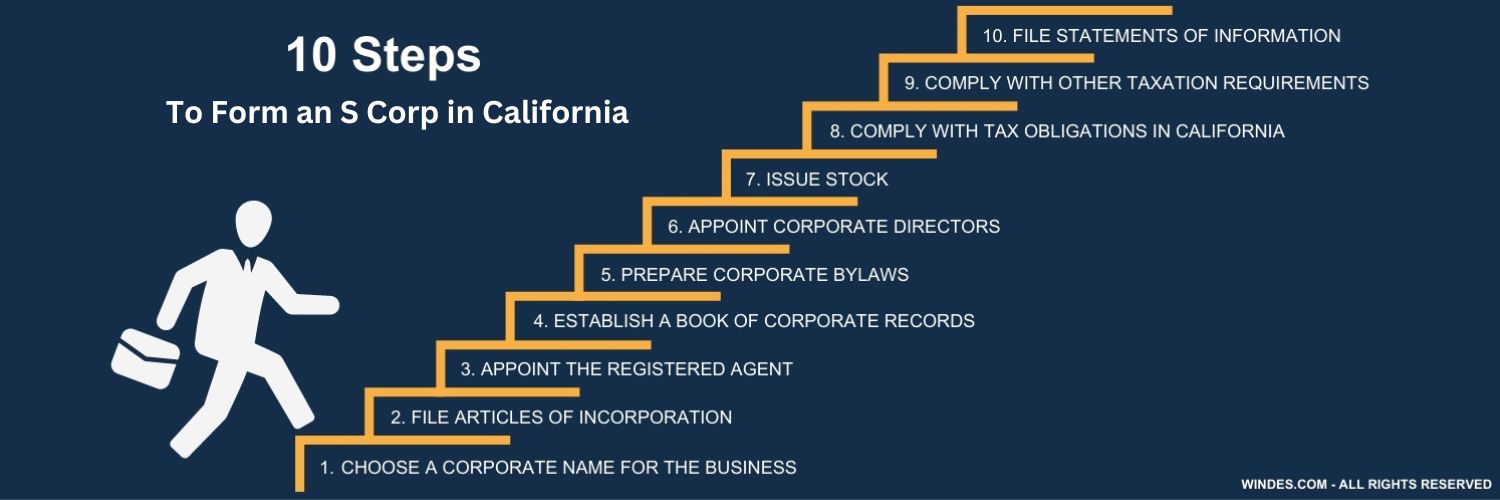
Creating an S corporation in California involves a multi-step process, beginning with the establishment of a legal entity and culminating in the election of S corporation status with the Internal Revenue Service (IRS). Understanding each phase is critical for a smooth and compliant formation.
1. Form a Corporation or LLC in California
The first foundational step is to establish a legal business entity in California. You can choose between forming a traditional corporation or a Limited Liability Company (LLC).
Forming a California Corporation
To form a corporation, you will need to file Articles of Incorporation with the California Secretary of State. This document includes essential information such as the corporation’s name, the street address of its principal office, the name and address of its registered agent for service of process, and the number of shares the corporation is authorized to issue. The corporation’s name must be unique and comply with California naming conventions.
Forming a California LLC
Alternatively, you can form an LLC by filing Articles of Organization with the California Secretary of State. An LLC offers flexibility in management and taxation. While an LLC can elect to be taxed as an S corporation, it must first be established as an LLC.
2. Obtain an Employer Identification Number (EIN)
Once your corporation or LLC is established, you will need to obtain an Employer Identification Number (EIN) from the IRS. This is a unique nine-digit number assigned to business entities operating in the United States for tax purposes. You can apply for an EIN online through the IRS website. An EIN is crucial for tax filings, opening business bank accounts, and hiring employees.
3. Draft Corporate Bylaws or an LLC Operating Agreement
For corporations, Bylaws are essential governing documents that outline the internal rules and procedures for the corporation’s operation. They cover details such as the election of directors, the responsibilities of officers, and the procedures for conducting board and shareholder meetings.
For LLCs, an Operating Agreement serves a similar purpose. This document details the ownership structure, member responsibilities, profit and loss distribution, and management protocols. While not always mandatory by California law, a well-drafted operating agreement is highly recommended to prevent future disputes and clearly define the LLC’s operations.
4. Hold an Initial Board of Directors Meeting (for Corporations)
If you have formed a corporation, the initial board of directors must convene a meeting. During this meeting, key organizational matters are addressed, including adopting the bylaws, electing corporate officers, authorizing the issuance of stock, and setting up the corporate bank account. Minutes of this meeting should be meticulously kept.
5. Elect S Corporation Status with the IRS
The critical step in becoming an S corporation is filing Form 2553, Election by a Small Business Corporation, with the IRS. This form officially elects your corporation or LLC to be treated as an S corporation for federal tax purposes.

Eligibility Requirements for S Election
Before filing Form 2553, ensure your entity meets all IRS eligibility criteria:
- Number of Shareholders: No more than 100 shareholders.
- Shareholder Type: Shareholders must be individuals, certain trusts, or estates. Partnerships, corporations, and non-resident aliens cannot be shareholders.
- Stock Classes: Only one class of stock is permitted, though differences in voting rights are allowed.
- Residency: All shareholders must be U.S. citizens or resident aliens.
Filing Form 2553
Form 2553 can be filed online, by mail, or by fax. It must be signed by all shareholders and the corporation’s officers. There are specific deadlines for filing Form 2553 to ensure the election is effective for the current tax year. Generally, it must be filed within two months and 15 days after the beginning of the tax year the election is to take effect, or at any time during the tax year preceding the year it is to take effect.
6. File Form 3520-I with the California Franchise Tax Board
In addition to federal election, California has its own requirements. While California does not have a separate S corporation tax status at the state level, an entity electing S corporation status federally must still file Form 3520-I, Information Return for Taxpayers Electing S Corporation Status, with the California Franchise Tax Board. This form informs the state of your federal S election.
Ongoing Compliance and Management for S Corporations
Operating as an S corporation in California requires ongoing attention to legal and tax compliance. Neglecting these duties can lead to penalties, loss of liability protection, or even the termination of your S corporation status. Staying informed about your obligations is paramount.
Tax Filings and Obligations
S corporations are required to file an annual information return with the IRS, typically Form 1120-S, U.S. Income Tax Return for an S Corporation. This form reports the corporation’s income, deductions, gains, and losses. Shareholders receive a Schedule K-1, which details their proportionate share of the corporation’s income, losses, and deductions, which they then report on their individual federal income tax returns.
In California, S corporations are subject to an annual minimum franchise tax, which is currently $800. This tax is due whether the corporation is profitable or not. The state also requires S corporations to file Form 100S, California S Corporation Franchise or Income Tax Return.
Maintaining Corporate Formalities
To preserve the limited liability protection afforded by the S corporation structure, it is crucial to maintain corporate formalities. This includes:
- Regular Meetings: Holding regular meetings of the board of directors and shareholders (or members for an LLC electing S status) and documenting these meetings with minutes.
- Separate Bank Accounts: Maintaining distinct business bank accounts, separate from personal accounts, for all corporate transactions.
- Accurate Record-Keeping: Keeping meticulous financial records, including balance sheets, income statements, and tax returns.
- Avoiding Commingling of Funds: Strictly avoiding the commingling of personal and business assets.
Compensation of Shareholder-Employees
A critical aspect of S corporation management involves the compensation of shareholder-employees. The IRS requires that shareholder-employees be paid a “reasonable salary” for the services they provide to the business. This salary is subject to payroll taxes (Social Security and Medicare). Any remaining profits can be distributed to shareholders as dividends, which are not subject to self-employment taxes. This distinction is a key tax advantage of the S corporation structure, but it requires careful planning and accurate reporting to avoid IRS scrutiny. Consulting with a tax professional is highly recommended to determine a reasonable salary for your specific business and role.
State-Specific Requirements and Nuances
While federal S corporation status is governed by the IRS, California has its own regulatory framework. Understanding these state-specific requirements is vital for compliance. For instance, California does not recognize S corporation status at the state level for income tax purposes in the same way the federal government does. However, entities that elect federal S status must inform the California Franchise Tax Board via Form 3520-I. The state generally taxes income passed through from an S corporation to its shareholders as it would from any other pass-through entity.
Expert Advice and Considerations for S Corporation Formation
The process of forming and managing an S corporation involves intricate legal and tax considerations. While this guide provides a comprehensive overview, seeking professional advice is essential to ensure optimal compliance and to leverage the structure effectively for your business goals.
Consulting with Legal Counsel
An experienced business attorney can guide you through the initial formation of your corporation or LLC, ensuring that all legal documents, such as Articles of Incorporation or Organization, Bylaws, and Operating Agreements, are drafted correctly and comply with California law. They can also advise on shareholder agreements and other corporate governance matters, helping to prevent future disputes among owners. Furthermore, legal counsel can assist in ensuring that the corporate veil remains intact by advising on the maintenance of corporate formalities.
Engaging Tax Professionals
Tax professionals, including Certified Public Accountants (CPAs) and Enrolled Agents (EAs), are indispensable when navigating the complexities of S corporation taxation. They can:
- Advise on Eligibility: Help determine if your business meets the strict eligibility requirements for S corporation status.
- Assist with Form Filing: Ensure that Form 2553 and California specific forms like 3520-I are filed accurately and on time.
- Optimize Compensation: Advise on setting a reasonable salary for shareholder-employees to maximize tax benefits while remaining compliant with IRS regulations.
- Tax Planning: Provide ongoing tax planning advice to help your S corporation remain tax-efficient throughout its lifecycle.
- Annual Tax Filings: Prepare and file annual federal (Form 1120-S) and state (Form 100S) tax returns.

Long-Term Strategic Benefits
Choosing to form an S corporation in California is not just a procedural step; it is a strategic decision that can significantly impact your business’s financial health and operational framework. The ability to avoid double taxation, coupled with limited liability protection, provides a robust foundation for growth and stability. By understanding the requirements, diligently adhering to compliance, and seeking expert guidance, business owners can effectively utilize the S corporation structure to their advantage, fostering a more secure and prosperous future for their enterprise.
LifeOutOfTheBox is a participant in the Amazon Services LLC Associates Program, an affiliate advertising program designed to provide a means for sites to earn advertising fees by advertising and linking to Amazon.com. Amazon, the Amazon logo, AmazonSupply, and the AmazonSupply logo are trademarks of Amazon.com, Inc. or its affiliates. As an Amazon Associate we earn affiliate commissions from qualifying purchases.