
Understanding your paycheck can feel like deciphering a secret code, especially when navigating the intricacies of California and federal taxes. For residents of the Golden State, this process involves a unique blend of state-specific deductions and the overarching requirements of the U.S. federal tax system. This guide aims to demystify your pay stub, empowering you to understand where your hard-earned money is going and how it contributes to various tax obligations.
Decoding Your Gross Pay and Deductions
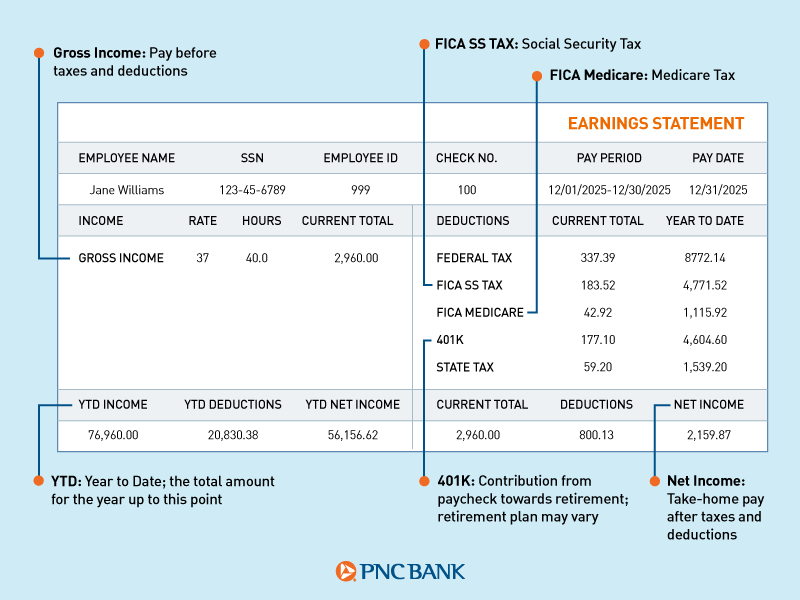
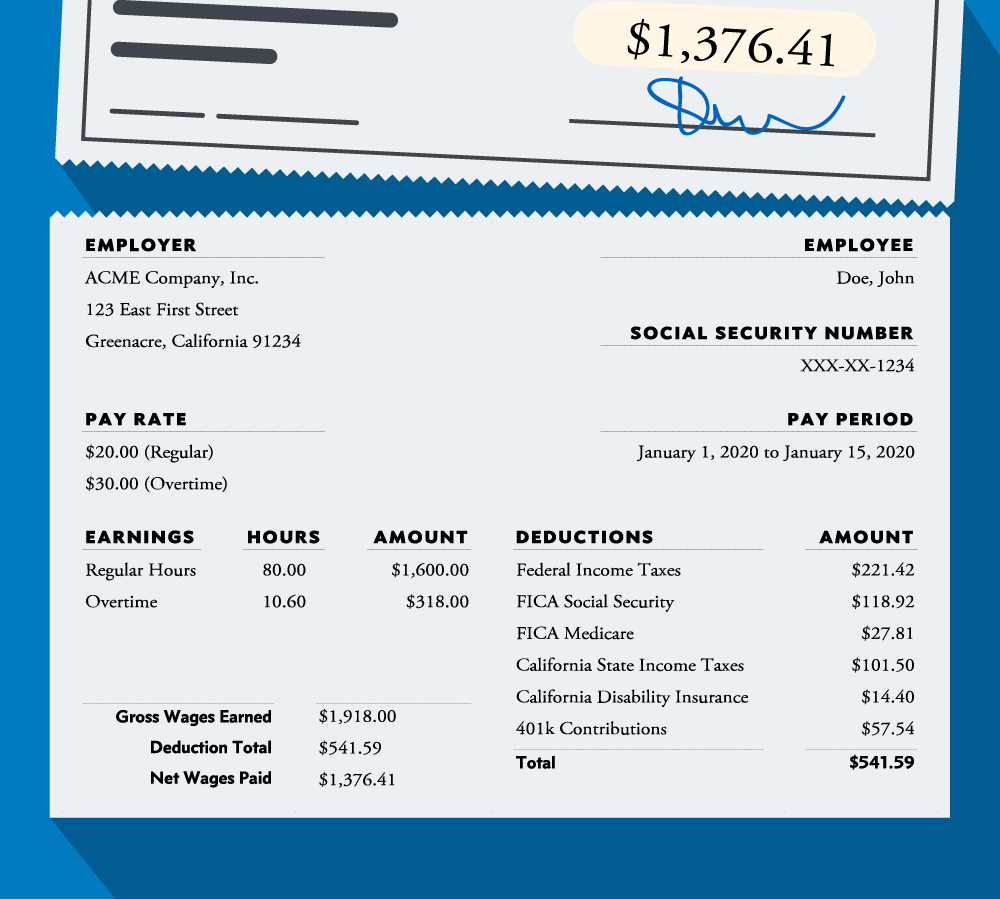
The first step in understanding your paycheck is to identify your gross pay. This is the total amount you earned before any deductions are taken out. It typically includes your regular wages, overtime pay, commissions, and any bonuses. Once gross pay is established, deductions begin to reduce this amount to your net pay, or take-home pay. These deductions can be broadly categorized into taxes, benefits, and other withholdings.
Essential Gross Pay Components
- Base Salary/Wages: This is the fixed amount you receive for your regular working hours.
- Overtime Pay: If you work beyond your standard hours, you’ll often receive a premium rate for this additional time, commonly 1.5 times your base hourly rate.
- Commissions: These are payments based on a percentage of sales or revenue generated.
- Bonuses: Additional payments awarded for performance or as a holiday incentive.
- Tips: For service industry workers, tips are considered income and are subject to taxation.
Understanding Pre-Tax Deductions
Before taxes are calculated, certain deductions can reduce your taxable income. These are known as pre-tax deductions and significantly impact the amount of tax you owe.
- Health Insurance Premiums: Contributions towards your employer-sponsored health, dental, or vision insurance plans are often deducted before taxes. This reduces your taxable income.
- Retirement Contributions: Contributions to plans like a 401(k) or 403(b) are typically made pre-tax. For example, contributing to a Traditional 401(k) lowers your current tax liability.
- Flexible Spending Accounts (FSAs) & Health Savings Accounts (HSAs): Funds set aside for healthcare expenses (FSAs) or medical savings (HSAs) are also usually deducted pre-tax.
Federal Income Tax Withholding
Federal income tax is a significant deduction on your paycheck, calculated based on your earnings, filing status, and the information you provide on your IRS Form W-4. The W-4 form is crucial as it informs your employer how much federal income tax to withhold from each paycheck.
The Importance of Form W-4
The W-4 form allows you to indicate:
- Filing Status: Whether you are Single, Married Filing Separately, Married Filing Jointly, Head of Household, or a Qualifying Widow(er). This status dictates the tax brackets and standard deduction amounts used to calculate your tax liability.
- Dependents: You can claim credits for qualifying children and other dependents, which reduces your total tax liability.
- Other Income: If you have significant income from other sources (e.g., self-employment, investments), you may need to adjust your withholding to avoid underpayment penalties.
- Deductions: If you plan to claim itemized deductions that exceed the standard deduction, you can adjust your withholding accordingly.
The IRS also offers a withholding estimator tool on its website, which can help you determine the most accurate W-4 settings. For those living in states with no state income tax, the federal withholding is the primary tax deduction for income. However, California has its own state income tax.
Understanding Tax Brackets and Rates
Federal income tax is progressive, meaning that higher portions of your income are taxed at higher rates. Your W-4 settings help your employer estimate your annual income tax liability and withhold a portion of it from each paycheck. The actual tax owed is calculated annually when you file your federal tax return. Any discrepancies between what was withheld and what you owe are resolved through a refund or additional payment.
California State Income Tax
As a resident of California, you are subject to state income tax in addition to federal taxes. The California Franchise Tax Board (FTB) administers these taxes. Similar to federal taxes, California income tax is progressive.
California Form DE 4
Your withholding for California state income tax is determined by the information you provide on California Form DE 4, Employee’s Withholding Allowance Certificate. This form is analogous to the federal W-4 and allows you to specify your filing status, claim allowances for dependents, and account for other income or deductions relevant to California tax law.
Key Differences from Federal Withholding
While the principles of withholding are similar, there are nuances between federal and California state taxes:
- Tax Brackets and Rates: California has its own set of income tax brackets and rates, which differ from federal rates. The state’s top marginal tax rate is often higher than the federal rate for comparable income levels.
- Standard Deduction: California has its own standard deduction amounts, which may differ from the federal standard deduction.
- Exemptions and Credits: The state offers its own personal exemptions and tax credits that can reduce your tax liability.
- Specific State Deductions: Certain deductions or credits unique to California might influence your withholding.
It is essential to ensure both your federal W-4 and your California DE 4 are up-to-date and accurately reflect your personal and financial situation. Incorrect information on either form can lead to over-withholding (resulting in a larger tax refund but less take-home pay) or under-withholding (resulting in owing taxes and potential penalties at tax time).
Other Common Deductions
Beyond federal and state income taxes, your paycheck will likely show other deductions related to employment benefits, legal obligations, or voluntary contributions.
Social Security and Medicare Taxes (FICA)
These are federal payroll taxes that fund Social Security and Medicare programs.
- Social Security Tax: A portion of your earnings is subject to Social Security tax, up to an annual income limit. For 2024, this rate is 6.2% for both the employee and employer, with an earnings limit.
- Medicare Tax: A tax of 1.45% is applied to all your earned income. There is no income limit for this tax. High-income earners may also be subject to an Additional Medicare Tax.
These taxes are mandatory and are not affected by your W-4 or DE 4 withholdings for income tax.
State Disability Insurance (SDI) – California Specific
California has a State Disability Insurance (SDI) program, which is funded by employee payroll deductions. This program provides temporary wage replacement benefits to eligible workers who are unable to work due to non-work-related illness or injury, or for bonding with a new child. The SDI tax rate and the maximum taxable earnings are set annually by the state. This deduction is typically listed separately from income tax withholdings.
Voluntary Deductions and Benefits
- Garnishees: If you owe money for child support, alimony, or unpaid debts, a portion of your wages may be legally attached and sent directly to the creditor. This is known as a wage garnishment.
- Union Dues: If you are a member of a labor union, your union dues are often deducted from your paycheck.
- Other Benefits: Deductions for life insurance, accident insurance, transportation benefits, or charitable contributions, if offered and elected by the employee, will also appear here.

Understanding Your Net Pay and Paystub Details
After all taxes and deductions have been accounted for, the remaining amount is your net pay. This is the actual money deposited into your bank account or issued as a check. Your pay stub typically provides a detailed breakdown of all these figures, often including:
- Employee Information: Your name, employee ID, and sometimes your Social Security number.
- Pay Period: The dates covered by this paycheck.
- Pay Rate: Your hourly rate or salary.
- Hours Worked: Regular hours, overtime hours.
- Earnings: A breakdown of gross pay components.
- Deductions: Itemized lists of all taxes and other deductions, with amounts.
- Year-to-Date (YTD) Totals: These show the cumulative amounts for earnings and deductions throughout the calendar year. This is particularly useful for tracking your progress towards tax limits (like the Social Security limit) or for tax planning purposes.
- Net Pay: The final amount you receive.
By carefully reviewing each section of your paystub, you can gain a comprehensive understanding of your compensation and the tax landscape in California and at the federal level. This knowledge is essential for personal financial management and accurate tax preparation.
LifeOutOfTheBox is a participant in the Amazon Services LLC Associates Program, an affiliate advertising program designed to provide a means for sites to earn advertising fees by advertising and linking to Amazon.com. Amazon, the Amazon logo, AmazonSupply, and the AmazonSupply logo are trademarks of Amazon.com, Inc. or its affiliates. As an Amazon Associate we earn affiliate commissions from qualifying purchases.