
The Legacy of a Battleship: An Introduction to the USS Arizona Memorial
The USS Arizona stands as one of the most poignant and historically significant landmarks in the United States. More than just the wreck of a ship, it is a solemn tomb and a permanent memorial, forever intertwined with the tragic events of December 7, 1941, which propelled the United States into World War II. Located in Pearl Harbor, Hawaii, the memorial serves as a powerful testament to the sacrifice of those who perished during the surprise attack, drawing millions of visitors annually to reflect on history, heroism, and the profound cost of conflict.

As a landmark, the USS Arizona Memorial transcends its physical form, embodying a pivotal moment in global history. Its stark white structure, suspended gracefully above the submerged hull, does not merely commemorate; it educates, inspires, and ensures that the lessons of the past are never forgotten. It is a site of pilgrimage, offering a tangible connection to the past, reminding visitors of the fragility of peace and the resilience of the human spirit. The decision to leave the ship largely undisturbed on the seabed, transforming it into a gravesite, underscores its unique status as a living, breathing piece of history, where the memories of those lost continue to resonate.
A Glimpse into Naval History: The Ship’s Life and Demise
To fully appreciate the significance of the USS Arizona Memorial, one must first understand the life and ultimate fate of the battleship itself. Before its tragic end, the USS Arizona was a proud symbol of American naval power, a formidable vessel with a distinguished, albeit short, career.
From Commissioning to Peacetime Service
Commissioned in October 1916, the USS Arizona was a Pennsylvania-class battleship, an advanced dreadnought of its era. With its twelve 14-inch guns and imposing presence, it represented the cutting edge of naval technology and strategic might. For much of its early service, the battleship operated with the Atlantic Fleet, primarily conducting training exercises and participating in various naval demonstrations. It notably sailed to France at the end of World War I, albeit too late to see combat, to escort President Woodrow Wilson to the Paris Peace Conference.
In the interwar years, the USS Arizona became a vital component of the Pacific Fleet, often based at San Pedro, California. It participated in numerous fleet problems and training maneuvers, showcasing American naval strength and readiness. By 1940, in a strategic move to deter Japanese aggression, the entire Pacific Fleet, including the USS Arizona, was permanently relocated from its customary base on the West Coast to Pearl Harbor, Hawaii. This relocation placed the fleet closer to potential conflict zones but also made it a more concentrated and vulnerable target. The battleship, having undergone modernization in the 1930s, remained a formidable vessel, serving as the flagship for various divisions, and continued its routine of drills and maintenance, unaware of the impending catastrophe that lay just over the horizon.
The Attack on Pearl Harbor
The morning of December 7, 1941, began like any other Sunday in Pearl Harbor. Many of the USS Arizona’s crew were either preparing for shore leave or still asleep. The battleship was moored at “Battleship Row,” alongside other capital ships, undergoing repairs to an auxiliary engine. At approximately 7:55 AM, the tranquility was shattered by the roar of Japanese aircraft and the explosion of bombs and torpedoes.
The USS Arizona became a primary target in the second wave of the attack. At around 8:06 AM, a Japanese B5N “Kate” horizontal bomber released an armor-piercing bomb that struck the battleship near the forward magazines. The impact ignited a catastrophic explosion, estimated to be equivalent to half a million pounds of TNT, tearing through the ship. The explosion lifted the enormous vessel out of the water, breaking its keel and creating an inferno that raged for days. Within nine minutes of the bomb strike, the USS Arizona sank, taking with it 1,177 of its crew members—more than half of the total casualties suffered at Pearl Harbor. The blast was so immense that it obliterated the forward part of the ship, creating a scene of unimaginable devastation and marking the single greatest loss of life on any U.S. Navy ship in history. The USS Arizona was deemed unsalvageable and became a permanent underwater grave, its sunken form a stark and enduring symbol of the attack.
The USS Arizona Memorial: A Testament to Sacrifice
The decision to leave the USS Arizona’s hull in Pearl Harbor transformed it into a unique and profoundly moving landmark. The memorial built above it does not glorify war but quietly honors those who gave their lives, offering a space for remembrance and reflection.
Design and Construction of the Memorial
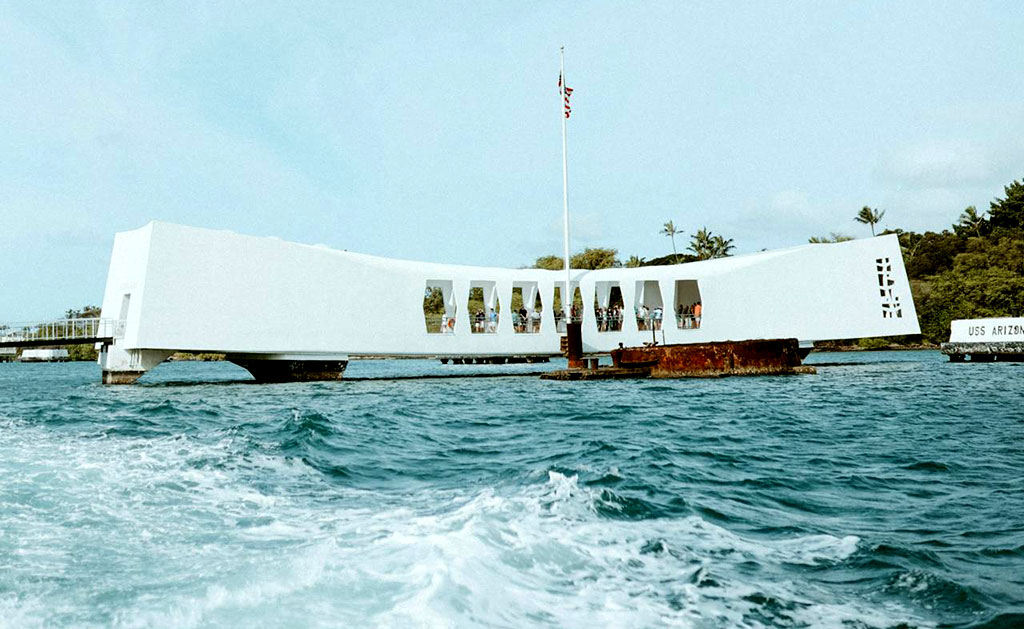
The USS Arizona Memorial was designed by Alfred Preis, an Austrian-born architect who fled the Nazis and settled in Honolulu. Completed in 1962 and dedicated in 1962, the structure is an Ewa-style memorial—a white, floating concrete and steel structure spanning the midship section of the sunken battleship without touching it. Preis’s design is deeply symbolic: “The memorial, in its design, …sags in the center and stands strong and vigorous at the ends, expressing initial defeat and ultimate victory.” This architectural metaphor perfectly encapsulates the narrative of the attack and the nation’s subsequent triumph in World War II.

The memorial is divided into three main parts: the entry, the assembly room, and the shrine room. The entry and exit rooms serve as transitional spaces, preparing visitors for the solemnity of the central area. The assembly room features seven large open windows on either side, representing the date of the attack. The shrine room, the most sacred part, houses the “Black Wall,” a marble wall engraved with the names of the 1,177 crewmen who perished aboard the USS Arizona. These names, arranged by rank, serve as a tangible reminder of the immense human cost of that fateful day.
Key Features and Interpretive Elements
One of the most compelling and enduring features of the USS Arizona Memorial is the oil that continues to seep from the sunken battleship. Often referred to as “black tears” or “tears of the Arizona,” these iridescent drops rise to the surface of the water, creating a ghostly sheen. This oil, nearly eight decades later, is a potent visual reminder of the ship’s destruction and the lives lost, serving as a constant, tangible link to the past.
Above the water, a flagpole is attached to the mainmast of the sunken battleship, where the American flag flies daily. This flag, fluttering over the watery grave, symbolizes the ship’s continuing commission and the enduring spirit of its crew. Visitors observe the wreckage beneath the surface from openings in the memorial’s floor, including parts of the barbettes, gun turrets, and other structural elements, often seeing schools of fish swimming through the sunken ship. The experience is both humbling and awe-inspiring, fostering a deep sense of connection to the historical event.
The memorial experience begins at the Pearl Harbor National Memorial Visitor Center on shore, where visitors can explore museum exhibits, view a documentary film about the attack, and engage with interpretive displays before taking a short boat ride to the memorial structure itself. This comprehensive approach ensures that visitors understand the context and magnitude of the tragedy before they reach the hallowed site.
The Living Memorial: Continuing Presence
The USS Arizona Memorial is not merely a static monument; it is a living memorial. A unique tradition allows surviving crew members of the USS Arizona to have their ashes interred within the sunken hull upon their passing, joining their shipmates in their final resting place. This practice ensures a continuous connection between the living and the dead, reinforcing the memorial’s role as a sacred tomb. These interment ceremonies are profound events, emphasizing the enduring brotherhood of the crew and the timeless respect for their sacrifice. The site also hosts annual commemoration ceremonies on December 7, drawing veterans, dignitaries, and the public to honor the fallen and reflect on the “Day of Infamy.”
Planning Your Visit to this Hallowed Ground
Visiting the USS Arizona Memorial is a deeply moving experience that offers profound historical insight. As a critical landmark, it is essential to plan your visit thoughtfully to ensure a respectful and meaningful journey.
Location and Accessibility
The USS Arizona Memorial is part of the broader Pearl Harbor National Memorial, located on the island of Oahu near Honolulu, Hawaii. It is easily accessible by car, taxi, or public transportation from most parts of Oahu. The site is open most days of the year, with specific operating hours for the Visitor Center and boat tours. Given its popularity and the solemn nature of the site, visitors are encouraged to check the official website for current hours, reservation requirements, and any special guidelines.
What to Expect
A visit to the USS Arizona Memorial typically involves a boat ride to the offshore structure. Due to high demand, securing timed tickets or reservations well in advance is highly recommended, especially during peak travel seasons. Upon arrival at the Pearl Harbor National Memorial Visitor Center, visitors will pass through security, watch a 23-minute documentary film about the attack, and then board a U.S. Navy launch for the short ride to the memorial.
While on the memorial, visitors are encouraged to maintain a respectful demeanor, as it is a place of profound loss and remembrance. Photography is generally permitted, but silence and reverence are expected. Beyond the USS Arizona Memorial, the Pearl Harbor National Memorial complex offers several other significant landmarks, including the Battleship Missouri Memorial (where the Japanese surrender formally ended World War II), the Pacific Aviation Museum Pearl Harbor, and the USS Bowfin Submarine Museum & Park. These additional sites provide a broader context to the war and offer diverse perspectives on naval history, making a full day at Pearl Harbor a comprehensive historical experience.
The Enduring Impact
The USS Arizona Memorial continues to be an indispensable landmark for understanding a pivotal chapter in American and world history. It stands as a powerful reminder of the human cost of war, the fragility of peace, and the resilience of a nation united in grief and resolve. For those seeking to connect with profound historical narratives, to honor immense sacrifice, and to reflect on the events that shaped the modern world, the USS Arizona Memorial offers an unparalleled and deeply impactful experience. Its enduring presence ensures that the legacy of those lost on December 7, 1941, will continue to inform and inspire future generations.
LifeOutOfTheBox is a participant in the Amazon Services LLC Associates Program, an affiliate advertising program designed to provide a means for sites to earn advertising fees by advertising and linking to Amazon.com. Amazon, the Amazon logo, AmazonSupply, and the AmazonSupply logo are trademarks of Amazon.com, Inc. or its affiliates. As an Amazon Associate we earn affiliate commissions from qualifying purchases.